Forked Rush
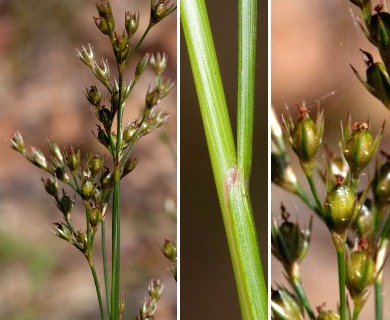
Forked Rush, scientifically known as Juncus dichotomus, is a perennial herbaceous plant belonging to the Juncaceae family. This plant is commonly found in wetlands, marshes, and other moist environments across North America. Its unique structure and ecological significance make it an interesting subject for botanists and ecologists alike.
Description
Forked Rush is characterized by its slender, cylindrical stems that can grow up to 1 meter in height. The stems are typically green and smooth, with a distinctive forked or branched appearance, which gives the plant its common name. The leaves are reduced to sheaths at the base of the stems, and the plant lacks true leaves, a common trait among rushes.
The inflorescence of Forked Rush is a loose, open cluster of small, brownish flowers. Each flower is composed of six tepals (three sepals and three petals that are similar in appearance), six stamens, and a single pistil. The flowers are wind-pollinated, and the plant produces small, dry capsules containing numerous tiny seeds.
Habitat and Distribution
Forked Rush is widely distributed across North America, from Canada to the southern United States. It thrives in a variety of wetland habitats, including:
- Marshes
- Swamps
- Wet meadows
- Ditches
- Pond margins
The plant prefers full sun to partial shade and can tolerate a range of soil types, from sandy to clayey, as long as the soil remains moist. Forked Rush is often found in areas with fluctuating water levels, making it an important species for stabilizing soil and preventing erosion in wetland environments.
Ecological Importance
Forked Rush plays a crucial role in wetland ecosystems. Its dense root system helps to stabilize soil and reduce erosion, particularly in areas with fluctuating water levels. The plant also provides habitat and food for a variety of wildlife, including insects, birds, and small mammals.
- Soil Stabilization: The extensive root system of Forked Rush binds soil particles together, reducing the risk of erosion and promoting the formation of stable wetland habitats.
- Wildlife Habitat: The dense growth of Forked Rush provides cover and nesting sites for birds and small mammals. The plant's seeds are also a food source for various species.
- Water Filtration: Forked Rush can help to filter and purify water by trapping sediments and absorbing nutrients, contributing to the overall health of wetland ecosystems.
Cultivation and Uses
While Forked Rush is not commonly cultivated for ornamental purposes, it can be used in wetland restoration projects and for erosion control in moist environments. The plant is relatively easy to grow from seed or by division of established clumps.
Growing Conditions
- Light: Full sun to partial shade
- Soil: Moist to wet, can tolerate a range of soil types
- Water: Requires consistent moisture, can tolerate periodic flooding
Propagation
Forked Rush can be propagated by seed or division. Seeds should be sown in a moist, well-drained substrate and kept consistently moist until germination. Division of established clumps can be done in the spring or fall, with each division containing several stems and a portion of the root system.