Black Bindweed
Constituents
- Three new flavonoids from the active extract of *Fallopia convolvulus
- 2,3-*cis*-2R,3R-(−)-epiafzelechin-3-*O*-p-coumarate, a novel flavan-3-ol isolated from *Fallopia convolvulus* seed, is an estrogen receptor agonist in human cell …
- Chemical constituents from the roots of *Fallopia convolvulus*(L.) A. Löve
Fallopia convolvulus, commonly known as black bindweed or wild buckwheat, is a species of flowering plant in the family Polygonaceae. This annual vine is native to Europe, but it has been introduced to other parts of the world, including North America, where it is considered an invasive weed.
Appearance and Growth Habit
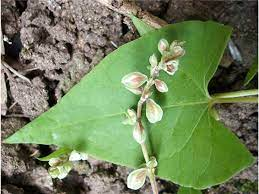
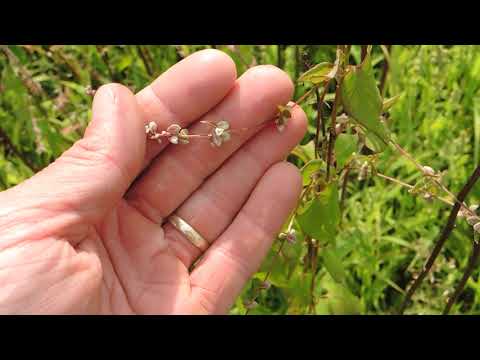
Black bindweed has a twining growth habit, meaning it wraps itself around other plants or structures for support as it grows. The stems are slender and can reach lengths of up to 2 meters. The leaves are arrowhead-shaped and alternate along the stem. They are typically dark green in color and have a pointed tip. The flowers of Fallopia convolvulus are small and inconspicuous, with greenish-white petals. They are arranged in clusters and bloom from June to September. The fruit is a small, triangular achene that turns black when ripe.
Habitat and Distribution
This plant thrives in a variety of habitats, including agricultural fields, gardens, waste areas, and disturbed sites. It prefers full sun but can tolerate some shade. Black bindweed is adaptable to different soil types and can grow in both moist and dry conditions. It is commonly found in temperate regions, including Europe, Asia, and North America.
Ecological Impact
Fallopia convolvulus is considered an invasive species in many parts of the world. It competes with native plants for resources such as light, water, and nutrients, often outcompeting them. Its twining habit allows it to climb and smother other plants, reducing their growth and reproductive success. This can have negative effects on biodiversity and ecosystem function. Additionally, black bindweed can be a host for certain plant diseases, further impacting agricultural crops.
Control and Management
Controlling the spread of black bindweed can be challenging due to its ability to produce copious amounts of seeds and its deep root system. Mechanical methods, such as hand-pulling or mowing, can be effective for small infestations. However, care must be taken to remove the entire root system to prevent regrowth. Chemical control methods, such as herbicides, can also be used but should be applied carefully to avoid harming desirable plants. Preventing the spread of seeds is crucial in managing black bindweed, so regular monitoring and removal of seedlings is recommended.
Benefits and Uses
While black bindweed is primarily considered a weed, it does have some beneficial uses. In traditional medicine, the plant has been used to treat various ailments, including digestive disorders and skin conditions. It has also been used as a laxative and diuretic. Additionally, the seeds of Fallopia convolvulus are edible and can be ground into flour or used as a coffee substitute.
CULINARY USES
Fallopia convolvulus — also known as black bindweed or wild buckwheat — does have documented edible uses, but they are limited, historical, and seed‑based. It is not used as a leafy green or vegetable.
The seeds of Fallopia convolvulus are edible and were used as a food crop in the Bronze Age, but the plant is now considered too low‑yielding for practical use.
EDIBLE USES OF FALLOPIA CONVOLVULUS
1. Seeds (Primary Edible Part)
The plant produces small triangular achenes, each containing one edible seed.
Historical evidence shows:
- Seeds were eaten as a grain in prehistoric Europe
- Archaeological remains appear in Bronze Age middens
- Seeds were likely:
- ground into meal
- mixed with other grains
- used in porridges or coarse breads
Because the seeds are extremely small, they require winnowing and grinding to be useful.
Modern status:
The species is not cultivated today because the seeds are too small and low‑yielding to be a viable crop.
PRACTICAL FORAGING NOTES
If someone wanted to experiment with the seeds:
- Harvest when the achenes turn dark
- Dry fully
- Rub to release seeds
- Winnow chaff
- Grind into a coarse flour
Expect very small yields — this is more of a historical curiosity than a practical wild food.
⚠️ SAFETY & IDENTIFICATION NOTES
- Belongs to Polygonaceae (knotweed family), not true bindweeds
- Seeds are safe; plant is not known to contain toxic compounds
- Do not confuse with toxic Convolvulaceae bindweeds — though Fallopia convolvulus is botanically distinct and has ocrea at the nodes (a key ID feature)