Thyme EO
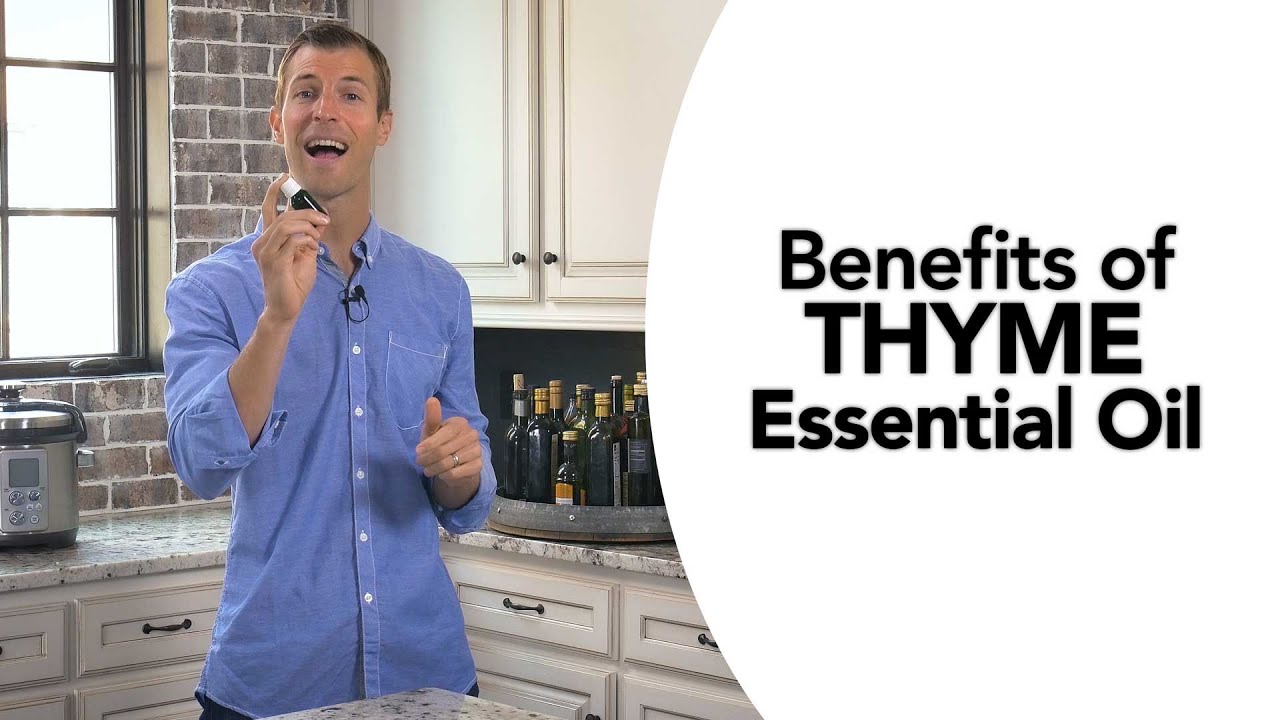
Thyme essential oil has an irritating effect on the skin and mucous membrane because of its high phenol content. Essential oil of white (soft) thyme is the least irritating and should always be used in preference. Internal use should only be in a gelatin capsule with some olive oil. For skin conditions use the oil only in a % dilution with a carrier oil.
Thyme is a plant phytoprogesterone and may be used to help balance the hormones. Applied to the thyroid it may assist with thyroid problems.
The essential oil, diluted to 1% or less, can be used in mouthwashes or vaginal douches for yeast infections.
Thyme ct Linalool - Organic- from Spain - Eden Botanicals
Essential oil of Thyme
Botanical name: Thymus vulgaris L. and Thymus zygis L. (family Lamiaceae)
Common names: Thyme oil, Oil of Thyme (red or white depending on rectification).
Part of plant used: Flowering tops (aerial parts, partially dried leaves and flowering tops).
Production method: Steam distillation. Red thyme oil is the direct distillate (higher phenol content, reddish); white thyme oil is often rectified to reduce phenols and lighten color.
CAS Registry Number: 8007-46-3 (or 84929-51-1 for Thymus vulgaris flower/leaf oil).
FEMA Number: 3064 (GRAS).
EINECS/EC Number: 284-535-7. ISO Reference: ISO 19817:2017 (Essential oil of thyme [Thymus vulgaris L. and Thymus zygis L.], thymol type). ISO 4720 for nomenclature.
Note on Chemotypes: Thyme exhibits multiple chemotypes (e.g., thymol, carvacrol, linalool, geraniol). This monograph primarily addresses the common thymol type per ISO 19817:2017, which is the most commercially significant for its strong antimicrobial profile.
Origin and Geographical Distribution
Native to the Mediterranean region (Southern Europe, North Africa). Major production in Spain, France, Portugal, Germany, Hungary, Poland, and other Mediterranean countries. T. zygis is particularly important in Spain and Portugal.
Appearance and Organoleptic Characteristics
- Appearance: Mobile liquid.
- Color: Yellow to red (red thyme); can be pale yellow or almost colorless when rectified (white thyme).
- Odor: Aromatic, phenolic, herbaceous with a slightly spicy base; characteristic warm, medicinal thyme aroma.
Physical Properties (Thymol Type per ISO 19817:2017)
- Relative density (d₂₀²⁰): 0.910–0.937 (ISO 279).
- Refractive index (n_D²⁰): 1.494–1.504 (ISO 280).
- Optical rotation (α_D²⁰): Between –6° and 0° (ISO 592).
- Solubility: Miscible with 80% ethanol (1 volume oil in ≤3 volumes ethanol at 20°C; opalescence may occur with more ethanol) (ISO 875).
- Flashpoint: Information provided in relevant standards (typically flammable).
Commercial samples may show slight variations depending on chemotype and origin.
Chemical Composition (Chromatographic Profile – Thymol Type)Per ISO 19817:2017, the characteristic components determined by GC (ISO 11024) must fall within these ranges (percentages by integrator):
- Thujene: 0.5–1.5%
- α-Pinene: 0.5–2.5%
- β-Myrcene: 1.0–2.8%
- α-Terpinene: 0.9–2.6%
- γ-Terpinene: 4.0–13.0%
- p-Cymene: 14.0–28.0%
- Linalool: 0.5–6.5%
- Terpinen-4-ol: 0.1–2.5%
- Thymol: 35.0–55.0% (principal component)
- Carvacrol: 0.5–5.5%
- β-Caryophyllene: 0.5–4.0%
trans-Sabinene hydrate: traces–0.5%; other minor components include carvacrol methyl ether (0.1–1.5%). Thymol and precursors (p-cymene, γ-terpinene) dominate the thymol chemotype. Other chemotypes (e.g., linalool-rich) show different profiles and are gentler.
Note on Authenticity: GC-MS or GC-FID is standard. Adulteration with synthetic thymol or other oils should be checked via isotopic analysis or full profiling if needed.
Tests for Identity and Purity
- Chromatographic profile: Must comply with ISO 19817 Table 2 (normative).
- Phenol content: Often ≥40% (thymol + carvacrol) in pharmacopoeial specs.
- General tests: Relative density, refractive index, optical rotation, ethanol solubility per ISO methods.
- Impurities: Limits on heavy metals, pesticides, and residual solvents per regulatory requirements. No foreign matter.
- Stability: Store protected from light and air; phenols can oxidize. Shelf life typically 2–4 years.
Storage and Handling Per ISO/TS 210 and ISO/TS 211:
Use airtight, preferably amber glass or suitable containers, in a cool, dry place away from heat and light.
Safety, Hazards, and Use Precautions
- Hazards: Phenol-rich (thymol/carvacrol) oils are skin and mucous membrane irritants. Potential for sensitization. May inhibit blood clotting.
- Dermal use: Maximum recommended dilution often 1–1.3% for thymol/carvacrol types (lower for sensitive skin). Avoid undiluted application.
- Contraindications: Avoid in pregnancy, breastfeeding, children under certain ages, or with bleeding disorders, anticoagulant use, or stomach ulcers. Caution with hypersensitive individuals or Lamiaceae allergies. Not for internal use without professional supervision.
- Regulatory: GRAS as flavoring in low concentrations. Restricted in cosmetics depending on jurisdiction.
First Aid: Dilute with carrier oil for skin contact; seek medical advice for ingestion or severe irritation.
Applications
- Flavoring: In foods, beverages, and oral care (low levels).
- Fragrance/Aromatherapy: Antimicrobial, expectorant, and topical uses in blends for respiratory or muscular support (properly diluted).
- Other: Preservative, disinfectant, or pharmaceutical applications due to strong antibacterial/antifungal properties (thymol and carvacrol).
Note: This monograph synthesizes data from ISO standards, pharmacopoeial references, and scientific literature. For commercial certification or regulatory compliance, consult the latest ISO 19817:2017, European Pharmacopoeia, or local authorities and perform batch-specific testing. Chemotype specification is critical for consistent quality and safety. Quality varies with origin, harvest, and distillation conditions.
ARTICLES/STUDIES
- Development of kinetic model for testing antifungal effect of Thymus vulgaris L. and Cinnamomum cassia L. essential oils on Aspergillus flavus spores and application for optimization of synergistic effect
- Synergistic Antifungal, Allelopatic and Anti-Proliferative Potential of Salvia officinalis L., and Thymus vulgaris L. Essential Oils
- Preliminary Investigation on Antimycotic Synergism of Raw Honey and Essential Oil of Thyme (Thymus vulgaris L.)
Antibacterial
- Antibacterial activity of Thymus vulgaris essential oil vapours.
- Thymus vulgaris L. and thymol assist murine macrophages (RAW 264.7) in the control of in vitro infections by Staphylococcus aureus, Pseudomonas aeruginosa, and Candida albicans
- Enhanced bactericidal effect of enterocin A in combination with thyme essential oils against L. monocytogenes and E. coli O157:H7.
- Microencapsulation of essential thyme oil by spray drying and its antimicrobial evaluation against Vibrio alginolyticus and Vibrio parahaemolyticus
- Antibacterial Investigation of Thyme Essential Oil and Its Main Constituents in Combination with Tetracycline
- The volatile oils exhibited considerable inhibitory effects against all the organisms under test.
- A review of the antimicrobial activity of basil, oregano, and thyme essential oils.
- Thyme oil exhibited broad-spectra activity against food borne bacteria.
Antifungal
Cancer
The essential oil of thyme is cytotoxic to human ovarian cancer cells resistant to chemotherapy.