Sub-Aerial Stem Modifications
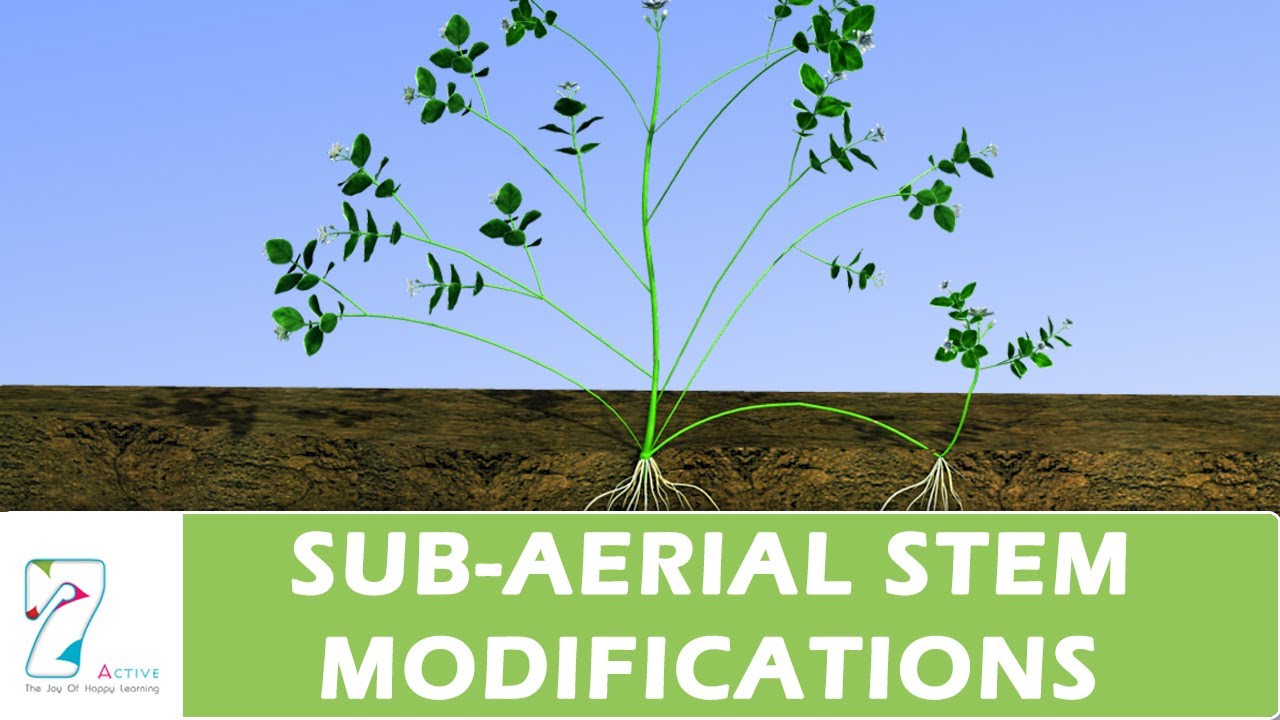
Sub-aerial stem modifications are fascinating adaptations in plants that allow them to thrive in various environmental conditions. These modifications occur in the stem, which is the main structural axis of a plant, and are visible above the ground. They play a crucial role in the plant's survival, reproduction, and interaction with its environment.
Types of Sub-Aerial Stem Modifications
Sub-aerial stem modifications can be broadly categorized into several types, each serving a unique function. The primary types include:
1. Runner (Stolon)
Runners, also known as stolons, are horizontal stems that grow along the surface of the soil. They are characterized by their ability to produce new plants at nodes along their length. This type of modification is common in plants like strawberries and grasses. Runners help in vegetative propagation, allowing the plant to spread rapidly over a large area.
2. Sucker
Suckers are shoots that arise from the base of the stem or from underground parts of the plant. They grow vertically and can develop into new plants. This modification is often seen in plants like mint and raspberry. Suckers help in the propagation of the plant and can also aid in the recovery of the plant if the main stem is damaged.
3. Offset
Offsets are short, thickened horizontal stems that grow at the base of the parent plant. They are typically found in rosette-forming plants such as water hyacinth and some species of cacti. Offsets are capable of producing new plants, thus aiding in vegetative reproduction. They are an efficient way for plants to colonize new areas.
4. Stolon
Stolons are similar to runners but differ in that they are typically found in plants that grow in water or very moist environments. They are horizontal stems that can root at nodes to form new plants. Stolons are common in plants like the spider plant and certain types of grasses. They help in spreading the plant over a wide area and are an effective means of asexual reproduction.
Functions and Advantages
Sub-aerial stem modifications offer several advantages to plants:
- Vegetative Propagation: These modifications allow plants to reproduce asexually, producing genetically identical offspring. This is advantageous in stable environments where the parent plant is well-adapted.
- Resource Allocation: By spreading out, plants can access more resources such as light, water, and nutrients, which can enhance their growth and survival.
- Survival and Recovery: In the event of damage to the main plant, sub-aerial modifications can help the plant recover by producing new growth from undamaged parts.
- Colonization: These modifications enable plants to colonize new areas quickly, which can be beneficial in competitive environments.
Ecological and Evolutionary Significance
Sub-aerial stem modifications are not only important for individual plant survival but also have broader ecological and evolutionary implications. They contribute to the genetic diversity of plant populations by allowing for the spread of successful genotypes. Additionally, these modifications can influence plant community dynamics by affecting competition and resource distribution.
From an evolutionary perspective, sub-aerial stem modifications represent adaptations that have evolved in response to specific environmental pressures. They demonstrate the plasticity of plant structures and the ability of plants to modify their growth patterns to optimize survival and reproduction.