Stem Structure
Plant Growth: How Stem Cells Make Stems

Dicot Stem Structure and Function
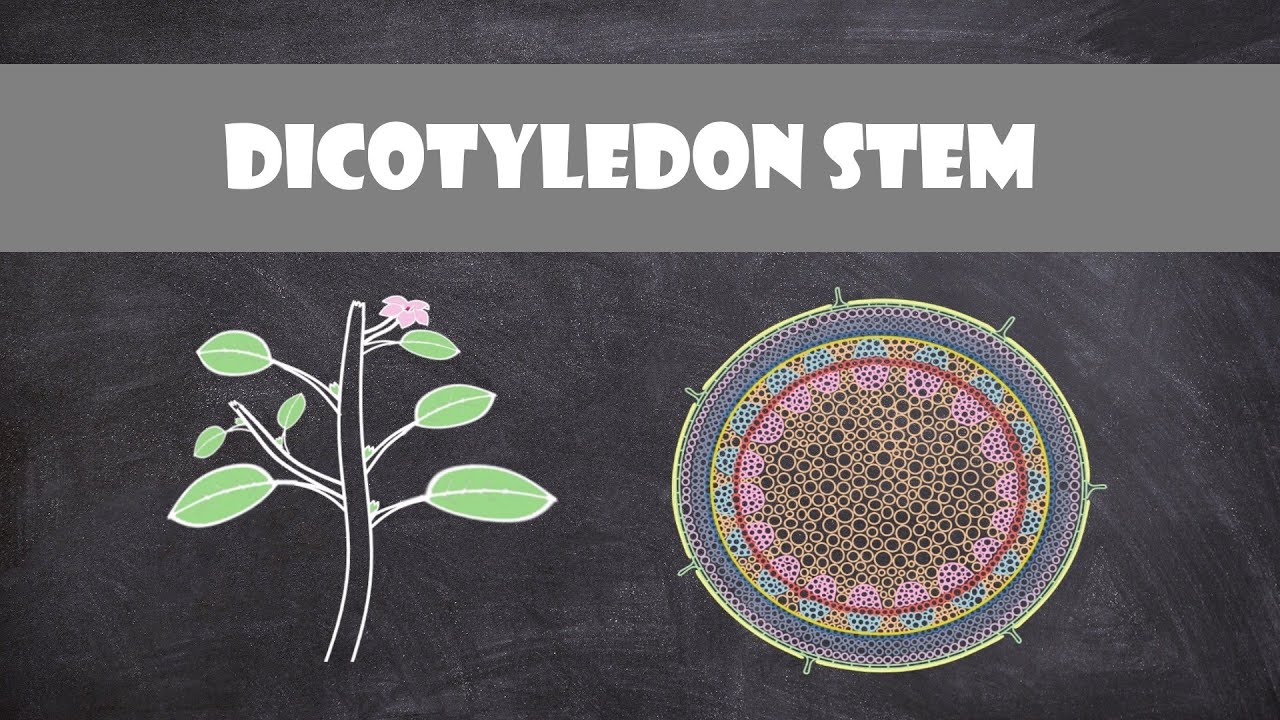
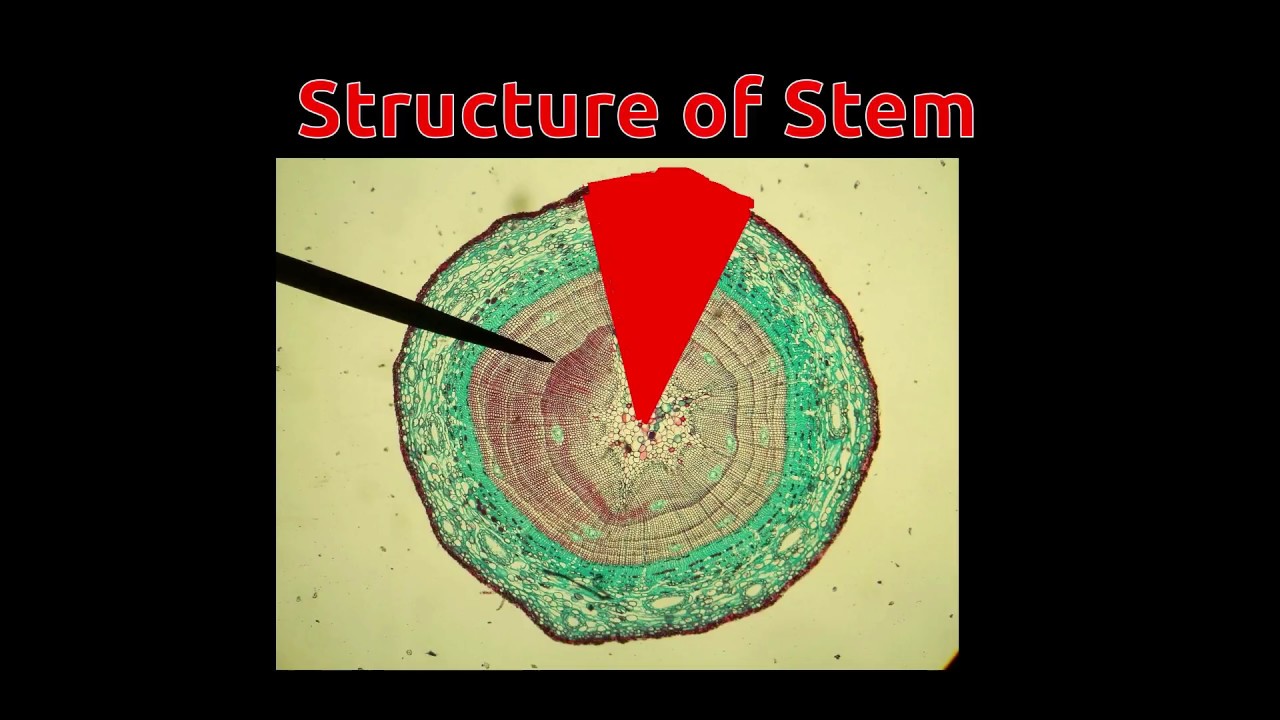
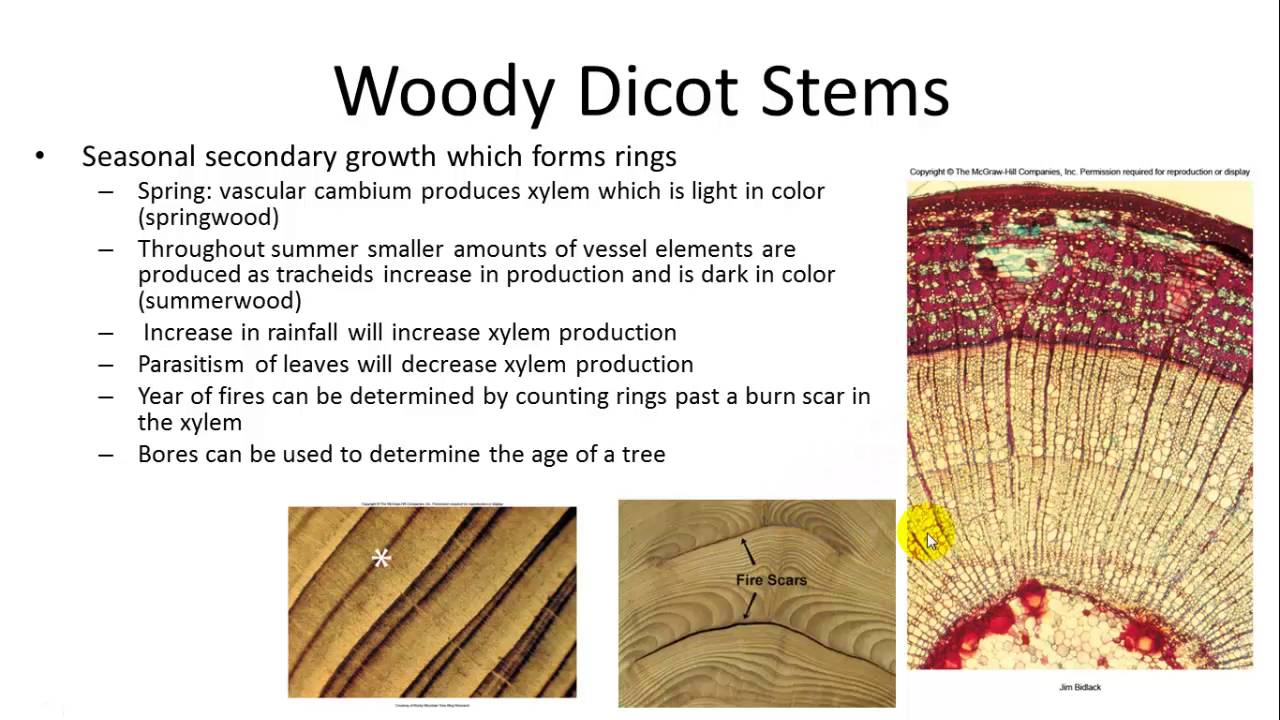
Stems are a part of the shoot system of a plant. Their main function is to provide support to the plant, holding leaves, flowers and buds.Of course they also connect the roots to the leaves, transporting absorbed water and minerals from the roots to the rest of the plant, and transporting sugars from the leaves (the site of photosynthesis) to desired locations throughout the plant. They may range in length from a few millimeters to hundreds of meters, and also vary in diameter, depending on the plant type. Stems are usually above ground, although the stems of some plants, such as the potato, also grow underground.
Stems can be of several different varieties:
- Herbaceous stems are soft and typically green
- Woody stems are hard and wooded
- Unbranched stems have a single stem
- Branched stems have divisions and side stems
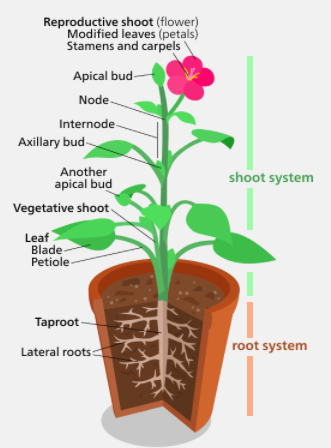
Plant stems, whether above or below ground, are characterized by the presence of nodes and internodes (shown below). Nodes are points of attachment for leaves and flowers; internodes are the regions of stem between two nodes. The tip of the shoot contains the apical meristem within the apical bud. An axillary bud is usually found in the area between the base of a leaf and the stem where it can give rise to a branch or a flower.