Cellular Communication
Alpha-carotene: stimulates intercellular communication.
Videos
Lipid Droplets in Endothelial cells
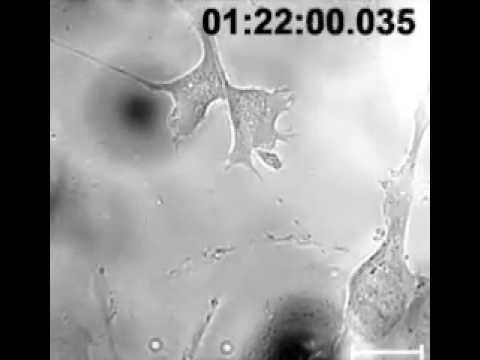
Cell Signal Transduction
The Mysterious Nanotube Network Connecting Cells
Tunneling Nanotubes
Your Cells Send Trillions of Messages Every Second, Here’s How
Stanford Researchers Discover a New Type of Cellular Communication
Understanding Cellular Communication
Cellular communication is a fundamental process that allows cells to interact with each other and their environment. This intricate system is essential for the coordination of various biological functions, from growth and development to immune responses and homeostasis. Here, we delve into the mechanisms, types, and significance of cellular communication.
Mechanisms of Cellular Communication
Cells communicate through several mechanisms, primarily involving chemical signals. These mechanisms can be broadly categorized into:
1. Direct Cell-to-Cell Communication
This involves direct physical contact between cells. Key structures facilitating this type of communication include:
- Gap Junctions: Channels that allow the direct transfer of ions and small molecules between neighboring cells.
- Plasmodesmata: Similar to gap junctions but found in plant cells, allowing the movement of substances between plant cells.
2. Paracrine Signaling
In paracrine signaling, cells release signaling molecules that affect nearby target cells. This type of communication is crucial for local cellular responses and includes:
- Growth Factors: Proteins that stimulate cell proliferation and differentiation.
- Cytokines: Small proteins important in cell signaling, particularly in immune responses.
3. Autocrine Signaling
Here, cells respond to signals they themselves release. This self-signaling mechanism is vital for processes like cell growth and apoptosis.
4. Endocrine Signaling
Endocrine signaling involves the release of hormones into the bloodstream, which can then travel to distant target cells. This type of communication is essential for regulating long-term processes such as metabolism, growth, and reproduction.
5. Synaptic Signaling
Specific to the nervous system, synaptic signaling involves the release of neurotransmitters from neurons to communicate with other neurons, muscle cells, or glands.
Types of Signaling Molecules
The molecules involved in cellular communication are diverse and include:
- Hormones: Chemical messengers produced by endocrine glands and transported through the bloodstream.
- Neurotransmitters: Chemicals released by neurons to transmit signals across synapses.
- Ions: Charged particles that play a role in electrical signaling, particularly in neurons and muscle cells.
- Proteins and Peptides: These include growth factors, cytokines, and other signaling proteins that regulate various cellular functions.
Receptors and Signal Transduction
For a cell to respond to a signaling molecule, it must have a specific receptor. These receptors are typically proteins located on the cell surface or within the cell. The binding of a signaling molecule to its receptor initiates a cascade of events known as signal transduction, which ultimately leads to a cellular response.
Types of Receptors
- G-Protein-Coupled Receptors (GPCRs): These receptors activate G-proteins, which then trigger various intracellular signaling pathways.
- Receptor Tyrosine Kinases (RTKs): These receptors phosphorylate tyrosine residues on themselves and other proteins, leading to the activation of signaling cascades.
- Ion Channel Receptors: These receptors open or close ion channels in response to ligand binding, altering the cell's membrane potential.
- Intracellular Receptors: Located within the cell, these receptors typically bind to steroid hormones and other lipophilic molecules, directly influencing gene expression.
Importance of Cellular Communication
Cellular communication is vital for maintaining the body's internal environment and coordinating complex biological processes. Some key roles include:
- Development and Differentiation: Communication between cells guides the development of tissues and organs.
- Immune Response: Cells of the immune system communicate to identify and eliminate pathogens.
- Homeostasis: Cells work together to maintain stable internal conditions, such as temperature and pH.
- Tissue Repair: Signaling molecules coordinate the repair and regeneration of damaged tissues.
Articles/Studies
Once called cellular debris, tiny bubbles may play key role in understanding, treating diseases
Real Time Spying on the Symphony of Cellular Signals That Drive Biology
Scientists show how cells communicate
The art of cellular communication: tunneling nanotubes bridge the divide
Extracellular Vesicles, Tunneling Nanotubes, and Cellular Interplay: Synergies and Missing Links
Intercellular communication, NO and the biology of Chinese medicine
How molecules in cells 'find' one another and organize into structures A longstanding mystery in biology is how the millions of molecules bumping around in a cell "find" one another and organize into functional structures. So it was a big surprise in 2008 when participants in the Marine Biological Laboratory (MBL) Physiology course realized that simple phase separations -- like oil separating from water -- may be one important way to create order inside a cell.
While not without controversy, this idea has taken cell biology by storm. In the past decade, scientists have watched protein and RNA molecules condensing into droplets, or membrane-free condensates, in many kinds of cells, from bacterial to human. They have also noted that the same proteins that form liquid droplets in healthy cells can "solidfy" in the context of disease, such as neurodegenerative disorders. But what makes certain molecules come together in the same droplet, while others are excluded, has been unexplained.
This week in Science, a team shows for the first time that RNA molecules recognize one another to condense into the same droplet due to specific 3D shapes that the molecules assume. The study's senior author, Amy S. Gladfelter of University of North Carolina, Chapel Hill, began this work as part of the HHMI / HCIA Summer Institute at the MBL, a group of 70 scientists who explored this emerging paradigm of cellular organization over five summers of intense, synergistic research.
Working with fungus cells, Gladfelter (an MBL Fellow), Erin M. Langdon and colleagues show that RNA molecules end up in the same droplet if their 3D structures allow them to bind together through complementary base-pairing.
"RNA molecules will end up in different droplets if their secondary (3D) structures are shielding any complementarity. But with the RNAs that condense into the same droplet, their complementary sequences are really exposed, so they can find each other and base pair to make a higher-order interaction," Gladfelter says.
This finding is important in that it reveals a selective mechanism for forming these RNA-protein condensates -- which scientists are seeing everywhere in cells but whose function is still unclear. The condensates may serve as "crucibles" for enhancing biological reactions by concentrating specific molecules together. Or they may sequester molecules that the cell doesn't need for a particular biological process.
Gladfelter has previously demonstrated in fungus that it's critical that the cell undergo a liquid-liquid phase separation in order for two different biological process to occur. "But we need more examples of where it really matters for cell function," Gladfelter says. The field needs evidence "that this is not just something that proteins and RNAs can do, but that nature has selected for it," she says.
There are also indications that transition of these liquid condensates to a more solid state may be a factor in protein aggregation diseases, such as Alzheimer's, Parkinson's and Huntington's diseases, ALS, and prion diseases. The current finding, Gladfelter says, "helps us understand how the right components get recruited to droplets so cells can potentially avoid this transition to an aberrant, solid state."