MAPK/ERK pathway
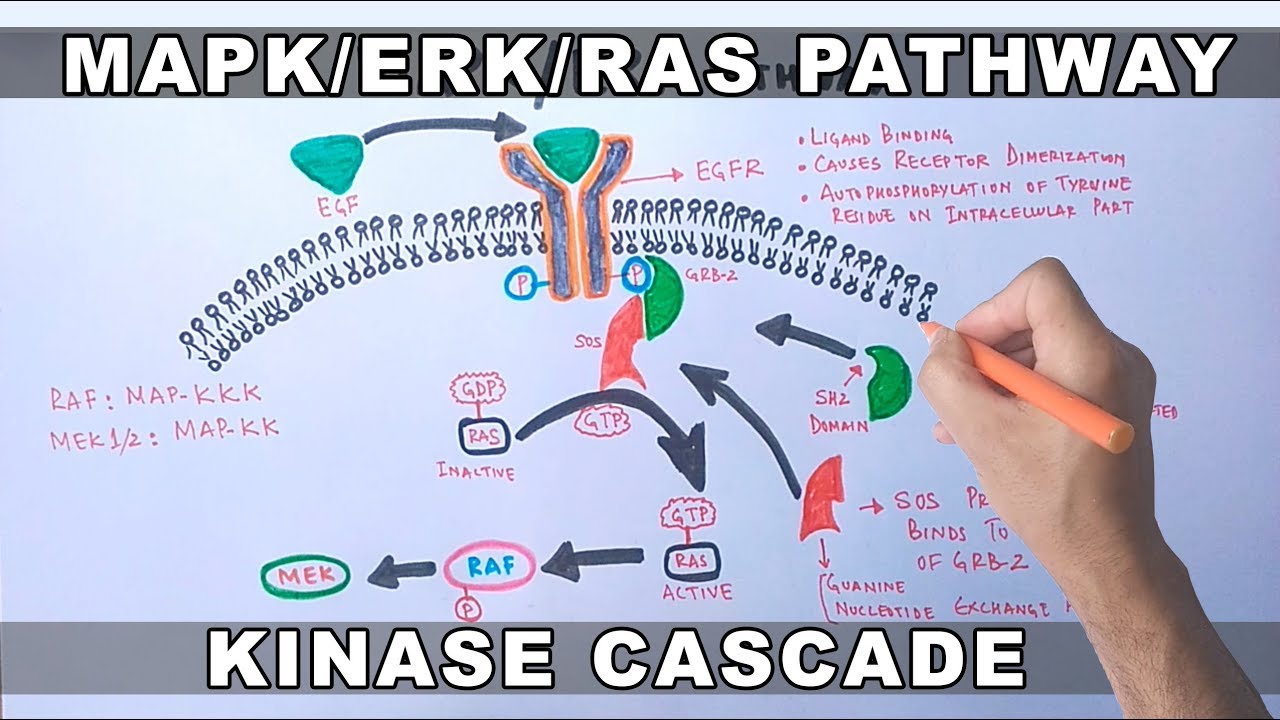
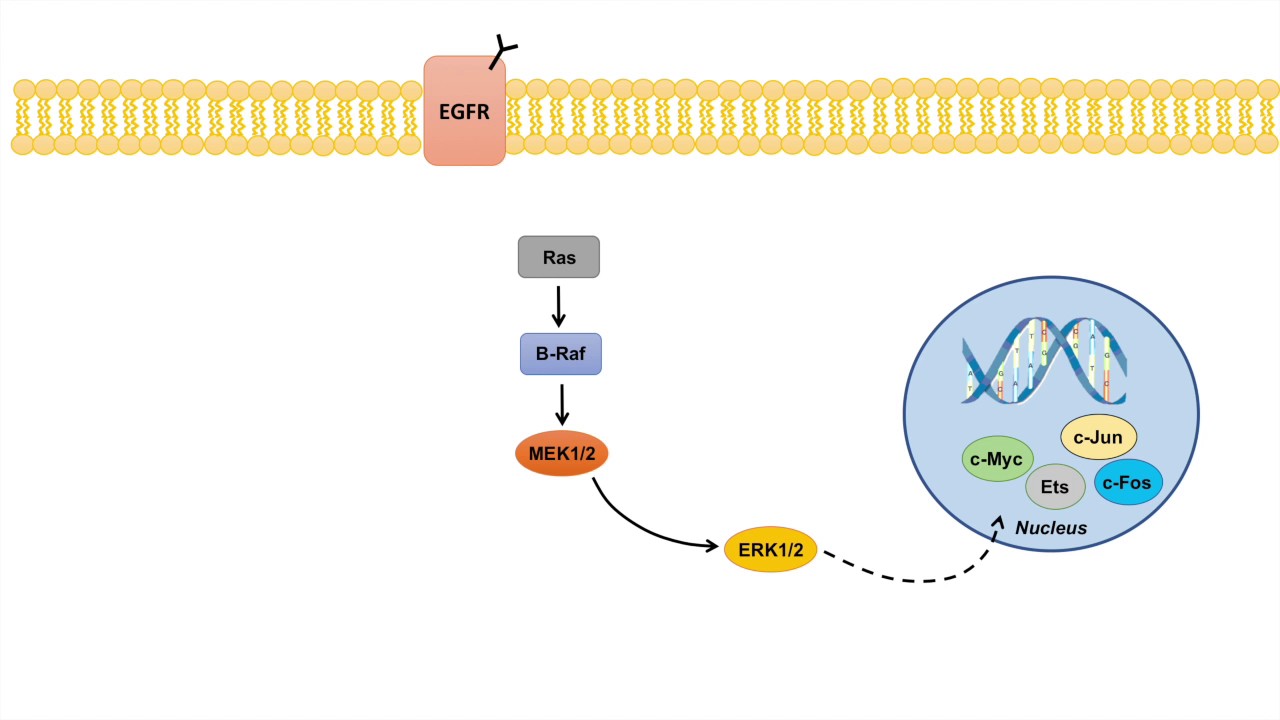
The Mitogen-Activated Protein Kinase/Extracellular Signal-Regulated Kinase (MAPK/ERK) pathway is a critical signaling cascade that plays a pivotal role in various cellular processes. This pathway is essential for regulating cell division, differentiation, and survival, making it a focal point of study in cell biology and oncology.
Key Components of the MAPK/ERK Pathway
The MAPK/ERK pathway involves a series of proteins that communicate signals from receptors on the cell surface to the DNA in the nucleus. The primary components include:
- Receptor Tyrosine Kinases (RTKs): These are cell surface receptors that, upon binding with growth factors, undergo autophosphorylation and activate the downstream signaling cascade.
- Ras: A small GTPase that acts as a molecular switch, cycling between an active GTP-bound state and an inactive GDP-bound state.
- Raf: A serine/threonine-specific protein kinase that is activated by Ras. Raf then phosphorylates and activates MEK.
- MEK (MAPK/ERK Kinase): A dual-specificity kinase that phosphorylates and activates ERK.
- ERK (Extracellular Signal-Regulated Kinase): A protein kinase that, once activated, translocates to the nucleus to regulate gene expression by phosphorylating various transcription factors.
Activation and Signal Transduction
The activation of the MAPK/ERK pathway begins with the binding of a ligand, such as a growth factor, to an RTK. This binding induces dimerization and autophosphorylation of the receptor, creating docking sites for adaptor proteins like Grb2. Grb2, in turn, recruits SOS (Son of Sevenless), a guanine nucleotide exchange factor that activates Ras by facilitating the exchange of GDP for GTP.
Activated Ras then interacts with and activates Raf, which subsequently phosphorylates MEK. MEK, being a dual-specificity kinase, phosphorylates ERK on both threonine and tyrosine residues. Activated ERK translocates to the nucleus, where it phosphorylates various transcription factors, leading to changes in gene expression that drive cellular responses.
Biological Functions
The MAPK/ERK pathway is involved in several critical cellular functions:
- Cell Proliferation: By regulating the expression of cyclins and other cell cycle-related proteins, the pathway promotes cell division.
- Differentiation: It influences the differentiation of various cell types by modulating the activity of specific transcription factors.
- Survival: The pathway can promote cell survival by upregulating anti-apoptotic proteins and downregulating pro-apoptotic proteins.
- Development: It plays a crucial role in embryonic development and tissue homeostasis.
Clinical Implications
Given its central role in cell proliferation and survival, dysregulation of the MAPK/ERK pathway is implicated in various diseases, particularly cancer. Mutations in components of the pathway, such as Ras, Raf, and MEK, can lead to uncontrolled cell growth and tumorigenesis. For instance, mutations in the B-Raf gene (a member of the Raf family) are common in melanoma and other cancers.
Therapeutic Targeting
The MAPK/ERK pathway is a target for cancer therapy. Inhibitors targeting specific components of the pathway, such as B-Raf inhibitors (e.g., Vemurafenib) and MEK inhibitors (e.g., Trametinib), have been developed and are used in clinical settings. These inhibitors can effectively reduce tumor growth and improve patient outcomes, although resistance to these therapies can develop.
Articles/Studies
ERK/MAPK Is Essential for Endogenous Neuroprotection in SCN2.2 Cells
Thymoquinone activates MAPK pathway in hippocampus of streptozotocin-treated rat model
Lycium barbarum polysaccharide stimulates proliferation of MCF-7 cells by the ERK pathway.
Cannabis & Cancer study:
Trastuzumab downregulates neuregulin-1 (NRG-1), which is essential for the activation of cell survival pathways in cardiomyocytes and the maintenance of cardiac function. NRG-1 activates the MAPK pathway and the PI3K/AKT pathway as well as focal adhesion kinases (FAK). These are all significant for the function and structure of cardiomyocytes. Trastuzumab can therefore lead to cardiac dysfunction