Witherod Viburnum
See also: Viburnum (genus)
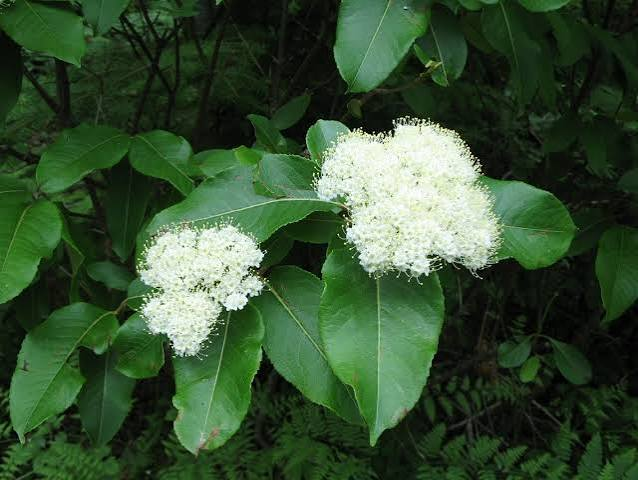
Witherod viburnum is a deciduous North American shrub in the Adoxaceae family. It is valued both as an ornamental plant and as a traditional food and medicinal plant. The berries often remain attached into winter, providing an extended seasonal display and a late source of food for wildlife.
Identification note: Common names can overlap among viburnum species. Confirm the botanical identity before using any plant medicinally.
Identification and ecology
- Shrub with opposite leaves and clusters of small, typically white flowers.
- Smooth, often reddish to purplish fruits mature in clusters and may persist after the leaves fall.
- The oval fruit is approximately 10 mm long and contains a single large seed.
- It grows in moist habitats, including swamps, wet woods, bog margins, and stream edges, depending on variety and region.
Food uses
The fruit may be eaten raw or cooked. The flesh is scant but reported to be sweet and well flavored. Fruits can remain on the plant well into winter. Use only positively identified, fully ripe fruit, and discard any spoiled or moldy material.
The leaves have also been used as a tea substitute. A traditional preparation steams the leaves over boiling water, rolls them between the fingers, allows them to stand overnight, and then dries them in an oven for later use. This historical practice should not be treated as evidence of safety for regular consumption.
Traditional therapeutic uses
Traditional sources describe the bark and root bark as:
- antispasmodic;
- diaphoretic;
- febrifuge; and
- tonic.
An infusion has historically been used for recurrent spasms, fevers, smallpox, and ague. It has also been used externally as a wash for a sore tongue.
These uses are ethnobotanical records, not clinical recommendations. There is insufficient information here to establish effective doses, preparation standards, contraindications, interactions, or safety. Do not use bark or root bark medicinally without guidance from a qualified clinician or experienced herbal practitioner. Fever, spasms, and persistent mouth or tongue lesions require medical evaluation; smallpox is eradicated, and “ague” is an historical term that may refer to several febrile illnesses.
Constituents
The constituent profile should be verified against current authoritative databases and primary literature. Historical reports of medicinal activity do not by themselves identify the active compounds or establish therapeutic effectiveness.
References and identification
Safety and documentation notes
- Viburnum taxonomy is complex, and species, varieties, and common names should be checked carefully.
- Do not assume that all viburnum fruits, leaves, bark, or roots have identical properties.
- Record the plant part, preparation, amount, date, and source whenever documenting a traditional use.
- Avoid self-treatment during pregnancy, breastfeeding, childhood, or when taking prescription medicines unless a qualified professional confirms that use is appropriate.