Memory
VIDEOS:
Memory: Hippocampus, Amygdala, and Consolidation Potentiation
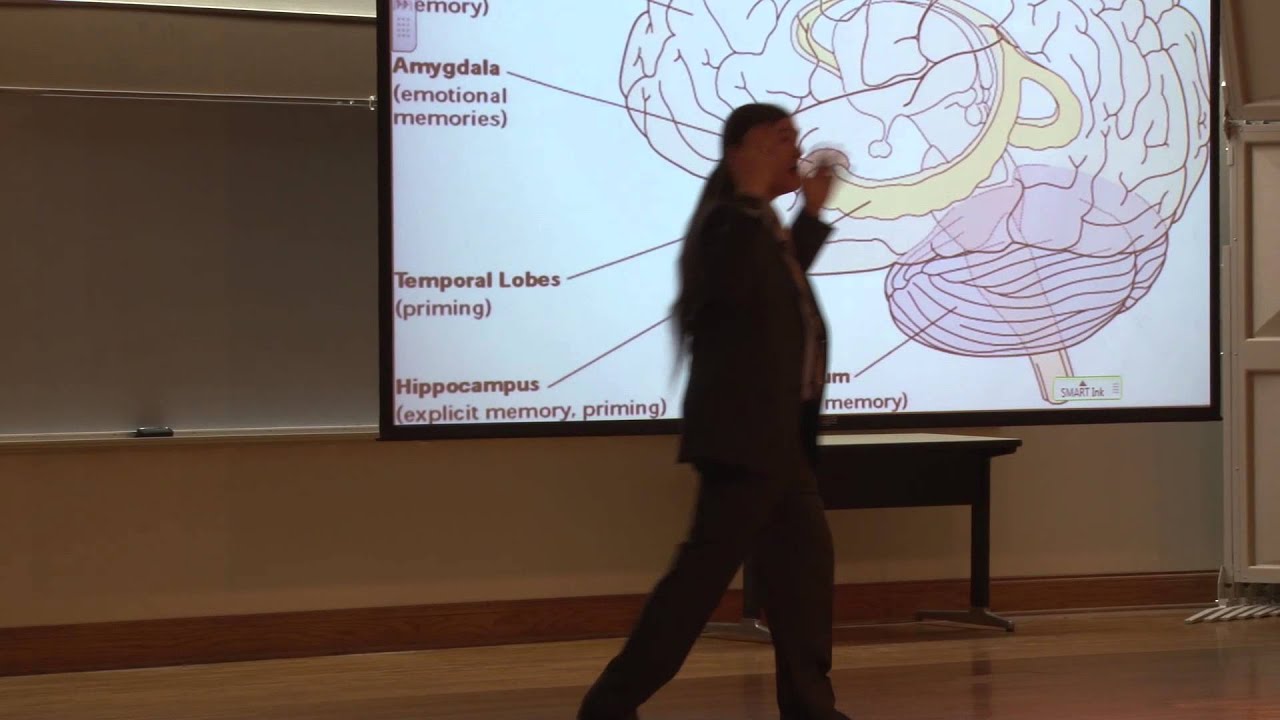
Memory: The Hidden Pathways That Make Us Human
Exploring Biological Significance in Human Memory and a Bias Towards Remembering
How an ancient virus spread the ability to remember
02/09/2019 Daniel Colon-Ramos - Using Worms to Understand Memory
101st Birthday of World's Top Expert on Memory
Flexible Memory Processing and the Brain: The Impact of Aging
How I remember everything I read
The surprising link between stress and memory - Elizabeth Cox
Exercise for Memory: Just 30 Minutes a Day
Articles/Studies
- Memories found to be stored in other places besides the brain
- How the brain decides which moments you’ll never forget Emotional events enhance memory retention. Boston University researchers found that ordinary moments can gain staying power if they’re connected to significant emotional events. Using studies with hundreds of participants, they showed that the brain prioritizes fragile memories when they overlap with meaningful experiences.
- They knew the pill was fake but their memory still improved. Placebo boosts elderly memory. Healthy older adults experienced measurable improvements in memory, physical performance, and stress after taking placebo pills for just three weeks. The most surprising finding was that the placebo often worked even when participants knew the pills were completely inactive.
- Why some memories last a lifetime while others fade fast. Brain uses molecular timers for memory. Scientists have uncovered a stepwise system that guides how the brain sorts and stabilizes lasting memories. By tracking brain activity during virtual reality learning tasks, researchers identified molecules that influence how long memories persist. Each molecule operates on a different timescale, forming a coordinated pattern of memory maintenance.
- Are your memories real? Physicists revisit the Boltzmann brain paradox. A new analysis of the “Boltzmann brain” paradox suggests our memories and sense of reality could, in theory, be random illusions born from cosmic chaos. By uncovering circular reasoning in how physicists think about time and entropy, the study raises fresh doubts about what we can truly know about the past.
- Scientists just solved a major mystery about how your brain stores memories. Scientists have found that your brain separates memories into “what” and “where/when” using two different groups of neurons. One set responds to specific objects or people, while another tracks the context or situation. When you remember something correctly, these groups briefly connect and reconstruct the full memory.
- This brain discovery is forcing scientists to rethink how memory works. Memory types share brain areas. A new brain imaging study reveals that remembering facts and recalling life events activate nearly identical brain networks. Researchers expected clear differences but instead found strong overlap across memory types. The finding challenges decades of memory research. It may also help scientists better understand conditions like Alzheimer’s and dementia.
- How Stress Is Quietly Rewriting Your Brain’s Memories
- Mind-Blowing Discovery: Scientists Discover That Memories Are Not Only in the Brain
- The role of left prefrontal cortex in language and memory
- Unlocking the Brain’s Memory Puzzle with New Neural Model
- Astrocytes Remember: A New Layer of Immune Memory Uncovered
- Sleep Enhances Complex Memory Integration
- Fatty Acids in Brain Key in Memory Formation
- Mouse study reveals key brain process for memory
- Ripples of Recall: Brain Waves Play Key Role in Memory
- When Memories Clash: How the Brain Chooses Between Love and Hunger
- What You Choose to Remember Shapes Memory More Than Emotion
Instructions enhance memory more than sleep. A study reveals that intentional memory control—deciding what to remember or forget—is more powerful than emotional influence when forming long-term memories. Participants were more likely to recall words they were told to remember than those carrying emotional weight, even though emotion sometimes strengthened recall or caused false memories.
- Stimulation of the Cerebellum Improves Episodic Memory in Older People
- Memory Traces Unbound The idea that new memories are initially ‘labile’ and sensitive to disruption before becoming permanently stored in the wiring of the brain has been dogma for >100 years. Recently, we have revisited the hypothesis that reactivation of a consolidated memory can return it to a labile, sensitive state – in which it can be modified, strengthened, changed or even erased! The data generated from some of the best-described paradigms in memory research, in conjunction with powerful neurobiological technologies, have provided striking support for a very dynamic neurobiological basis of memory, which is beginning to overturn the old dogma.
- Genetic variability of memory performance is explained by differences in the brain’s thalamus
- Long-suspected turbocharger for memory found in brain cells of mice (https://www.sciencedaily.com/releases/2022/03/220317143228.htm) Scientists have long known that learning requires the flow of calcium into and out of brain cells. But researchers have now discovered that floods of calcium originating from within neurons can also boost learning. The finding emerged from studies of how mice remember new places they explore.
- How the Action of the Eye Triggers Brain Waves to Help Remember Socially Important Information A new study uncovers how the amygdala reacts and triggers memory-making activity when the eyes come to rest on a face versus another object or image.
- People With Less Memory Loss in Old Age Gain More Knowledge
- Study Addresses Major Outstanding Question in Theoretical Models of Memory Communication between the medial temporal lobe and prefrontal cortex determines how our experiences become memories. As the brain areas mature, the precise way they interact allows for the better formation of long-term memory.
- Study detects how a genetic variant modifies the brain stimulation impact on memory (https://www.sciencedaily.com/releases/2022/01/220125093009.htm) The gene of the brain-derived neurotrophic factor (BDNF) is associated with several processes related to memory and brain plasticity. Now, a new article reveals that it is easier to alter the cognitive activity through transcranial magnetic stimulation (TMS) in people with the genetic variant Val/Val for the BDNF gene.
- In Visual Memory, Size Matters In natural vision, visual memories of an image are affected by the size of the vision on the retina.
- Scientists Figured Out Why Some Random Moments Stick With You Forever
Boston University researchers have found that emotional events can strengthen memories of ordinary moments, giving them lasting power. The brain seems to “rescue” weak memories when they are tied to a significant or surprising experience. This new understanding of how emotion shapes recall could lead to better memory treatments and smarter learning strategies. Why Some [...]
- A protein in your brain behaves like a virus, infecting your cells with memories
- How does the brain link events to form a memory? Study reveals unexpected mental processes (https://www.sciencedaily.com/releases/2020/05/200508112903.htm)
- Brain's 'updating mechanisms' may create false memories (https://www.sciencedaily.com/releases/2020/05/200521151837.htm)
- Neurobiology: The chemistry of memory (https://www.sciencedaily.com/releases/2017/11/171123095409.htm)
- An update on memory formation and retrieval: An engram‐centric approach
- WE MAY FINALLY HAVE A MAP THAT SHOWS HOW MEMORIES ARE MADE
- Study finds forgetting makes you smarter
- Lifetime of Knowledge Can Clutter Memories of Older Adults
- Making new memories is a balancing act (https://www.sciencedaily.com/releases/2018/03/180314125446.htm)
- Long-Term Potentiation: Importance & 17 Ways to Increase It
- Superaging: why some 80 year olds have the memory capacity of 20 year olds
- PLAY THE GAME: HOW MOVEMENT MAKES MEMORIES STICK
- Intermittent Electrical Brain Stimulation Improves Memory
- CAN A BRAIN ZAP REALLY BOOST YOUR MEMORY?
- Study shows how memories ripple through the brain
- Whole-brain map of electrical connections key to forming memories constructed by researchers (https://www.sciencedaily.com/releases/2017/11/171122093036.htm)
- Sleep 'prioritises memories we care about'
- New insights into why sleep is good for our memory (https://www.sciencedaily.com/releases/2017/11/171114123323.htm)
- Memory: Recognizing images seen briefly ten years previously (https://www.sciencedaily.com/releases/2017/11/171110133145.htm)
- Potential mediator for social memory formation (https://www.sciencedaily.com/releases/2017/11/171115130842.htm)
- To forget or to remember? Memory depends on subtle brain signals
- Memory Recall Influence By Prior Context Return
- Detecting misinformation can improve memory later on (https://www.sciencedaily.com/releases/2017/01/170103084604.htm)
- When The Brain Scrambles Names, It's Because You Love Them
Effects on Memory
See also: Nootropics. Cognitive Enhancement and Nutrients for Memory
- Top 21 Nootropics to Improve Memory
- Extracts from spearmint and rosemary have beneficial effects on learning and memory and brain tissue markers of oxidation.
- Ketogenic diets initiated in late mid-life improved measures of spatial memory.
- Do memory supplements help boost memory (oh how I wish)
- Improved working memory performance following administration of a single dose of American ginseng (Panax uinuefolius) to healthy middle-age adults
- Brain stimulation used like a scalpel to improve memory (https://www.sciencedaily.com/releases/2017/01/170119134537.htm)
- How the brain maintains useful memories (https://www.sciencedaily.com/releases/2017/02/170214092659.htm)
- Immune system, brain structure and memory linked (https://www.sciencedaily.com/releases/2017/04/170426092340.htm)
- Your Brain Operates Backwards To Retrieve Memories
- Chewing gum and context-dependent memory: the independent roles of chewing gum and mint flavour.
- 7 Kitchen Ingredients To Improve Memory, No. 5 Will Surprise You
- Epicatechin enhances memory formation if it is applied during the memory consolidation period.
- Can Brain Stimulation Improve Memory Formation? Electrical stimulation improves verbal memory for those with responsive neurostimulation implants when activated during certain memory tasks.
- Memory and cognition enhancing effects of combination of Melissa officinalis and Panax ginseng.
- Love Hormone Oxytocin Plays Key Role in Memory and Learning