Dudley's Rush
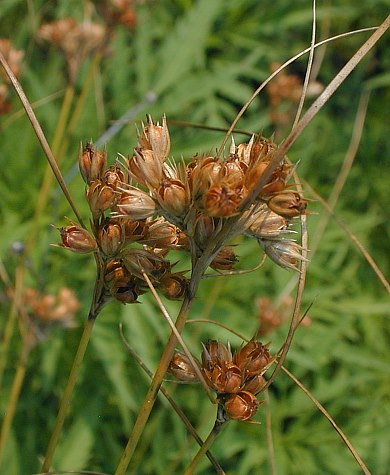
Dudley's Rush, scientifically known as Juncus dudleyi, is a perennial herbaceous plant belonging to the Juncaceae family. This species is native to North America and is commonly found in wetland habitats, including marshes, wet meadows, and along the edges of streams and ponds. It is named in honor of William Russel Dudley, a notable American botanist.
Description
Dudley's Rush is characterized by its slender, erect stems that can grow up to 1 meter (approximately 3 feet) in height. The stems are typically smooth and cylindrical, with a green to reddish-brown coloration. The plant produces small, inconspicuous flowers that are clustered in dense, rounded heads. These flower heads are usually brownish or greenish in color and appear at the tips of the stems.
The leaves of Juncus dudleyi are reduced to sheaths that wrap around the base of the stems. This adaptation is common among rushes and helps the plant conserve water in its wetland environment. The root system of Dudley's Rush is fibrous and shallow, allowing it to anchor firmly in the soft, saturated soils of its habitat.
Habitat and Distribution
Dudley's Rush is widely distributed across North America, from Canada to the United States. It thrives in a variety of wetland habitats, including:
- Marshes
- Wet meadows
- Stream banks
- Pond edges
- Ditches
The plant prefers full sun to partial shade and can tolerate a range of soil types, from sandy to clayey, as long as the soil remains moist. It is often found in areas with standing water or where the water table is close to the surface.
Ecological Importance
Juncus dudleyi plays a crucial role in wetland ecosystems. Its dense root system helps stabilize soil and prevent erosion, particularly along stream banks and pond edges. The plant also provides habitat and food for a variety of wildlife, including insects, birds, and small mammals.
The flowers of Dudley's Rush attract pollinators such as bees and flies, which are essential for the reproduction of many wetland plants. Additionally, the plant's seeds are consumed by birds and other animals, aiding in seed dispersal and the propagation of the species.
Conservation Status
Dudley's Rush is not currently listed as a threatened or endangered species. However, like many wetland plants, it faces challenges from habitat loss and degradation. Wetlands are often drained or filled for agricultural, industrial, and residential development, which can lead to a decline in populations of Juncus dudleyi and other wetland species.
Conservation efforts aimed at protecting and restoring wetland habitats are essential for the continued survival of Dudley's Rush. These efforts include:
- Wetland restoration projects
- Protection of existing wetlands through legislation and conservation easements
- Public education and awareness campaigns about the importance of wetlands
Uses and Cultural Significance
Historically, various Native American tribes utilized rushes, including Juncus dudleyi, for a variety of purposes. The stems were often woven into mats, baskets, and other items. While Dudley's Rush is not as commonly used today, it remains an important part of the cultural heritage of many indigenous communities.
In modern times, Dudley's Rush is sometimes used in wetland restoration and landscaping projects. Its ability to thrive in wet conditions and stabilize soil makes it a valuable plant for erosion control and habitat enhancement.
Identification Tips
To identify Dudley's Rush in the field, look for the following characteristics:
- Slender, erect stems that are smooth and cylindrical
- Small, dense flower heads at the tips of the stems
- Reduced leaves that form sheaths around the base of the stems
- Green to reddish-brown stem coloration
When observing the plant, take note of its habitat. Dudley's Rush is typically found in wet, marshy areas with standing water or saturated soil.