Perforating Dermatoses
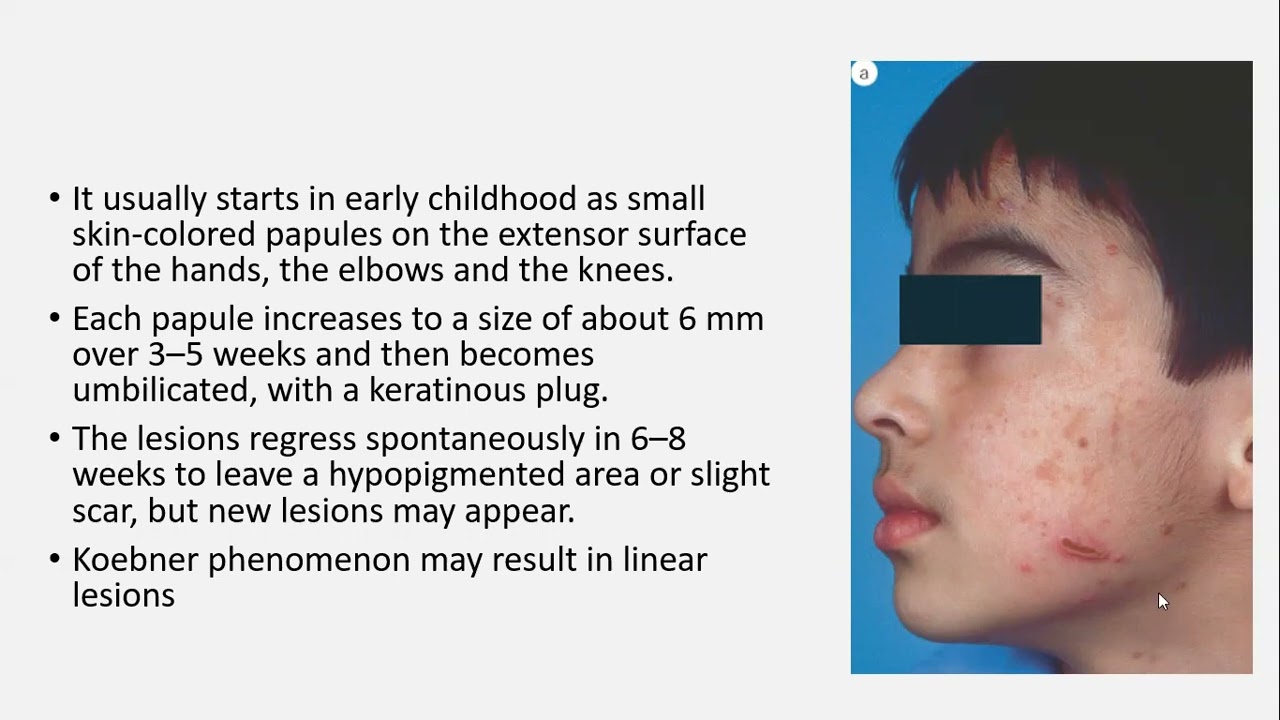
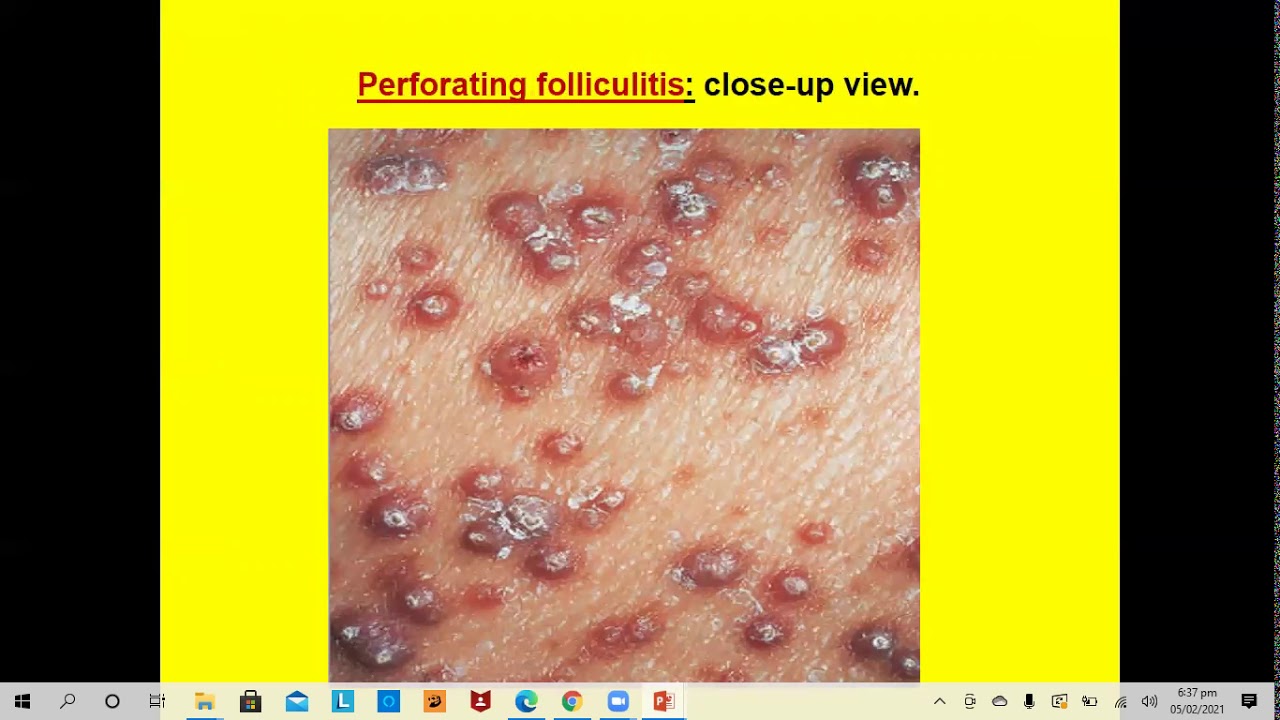
Perforating dermatoses are a group of skin diseases with different causes, characterized by elimination of certain skin components (such as elastic fibers and collagen fibers). Some of these diseases are hereditary and appear during childhood, while others arise in adulthood and may be secondary to skin infections, systemic diseases, drugs, and trauma. In some cases no cause can be identified. Acquired perforating dermatoses, the most frequent group of perforating dermatoses arising in adults, are usually associated with diabetes mellitus and/or chronic renal failure on dialysis.
Etiology
- Most of the perforating dermatoses are acquired
- The clinical appearance results from the transepidermal elimination of altered collagen and elastic fibers through the epidermis
Clinical findings
- Several acquired types of perforating dermatoses have been identified, eg Kyrle's disease, elastosis perforans serpiginosa and reactive perforating collagenosis, the clinical boundary between these can be blurred and as such the term acquired perforating dermatosis is sometimes used to encompass this group of conditions
- Clinically the acquired perforating dermatoses are characterised by multiple, hyperpigmented, scaly papules and nodules. Lesions are typically found on hair-bearing areas of the arms, thighs and buttocks, although other sites can be affected. The pattern of lesions in elastosis perforans serpiginosa is different, with grouped arcuate or serpiginous keratotic papules