Thyroid Nodules
See also: Thyroid Cancer
Videos
Cancer Risk Factors
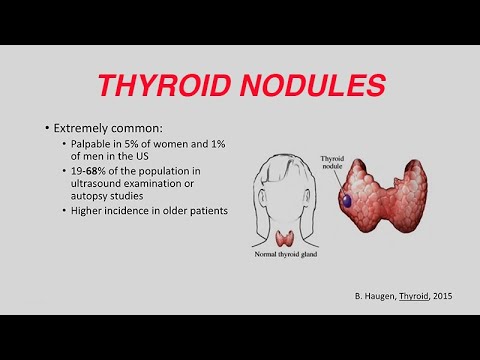
Approach to a Thyroid Nodule - causes, investigation and treatment
Thyroid Lumps: When is Surgery Necessary?
'Magic' Trio for Suppressing Growth of Thyroid Nodules
Thyroid nodules are solid or fluid-filled lumps that form within your thyroid, a small gland located at the base of your neck, just above your breastbone.
Most thyroid nodules aren't serious and don't cause symptoms. Only a small percentage of thyroid nodules are cancerous.
You often won't know you have a thyroid nodule until your doctor discovers it during a routine medical exam. Or your doctor may uncover it during a scan that was done for another health reason. Some thyroid nodules, however, may become large enough to be visible or make it difficult to swallow or breathe.
Treatment options depend on the type of thyroid nodule you have.
Symptoms
Most thyroid nodules don't cause signs or symptoms. But occasionally some nodules become so large that they can:
- Be felt
- Be seen, often as a swelling at the base of your neck
- Press on your windpipe or esophagus, causing shortness of breath or difficulty swallowing
In some cases, thyroid nodules produce additional thyroxine, a hormone secreted by your thyroid gland. The extra thyroxine can cause symptoms of an overproduction of thyroid hormones (hyperthyroidism), such as:
- Unexplained weight loss
- Increased sweating
- Tremor
- Nervousness
- Rapid or irregular heartbeat
Only a small number of thyroid nodules are cancerous. But determining which nodules are cancerous can't be done by evaluating your symptoms alone. Most cancerous thyroid nodules are slow growing and may be small when your doctor discovers them. Aggressive thyroid cancers are rare with nodules that may be large, firm, fixed and rapid growing.
When to see a doctor
Although most thyroid nodules are noncancerous and don't cause problems, ask your doctor to evaluate any unusual swelling in your neck, especially if you have trouble breathing or swallowing. It's important to evaluate the possibility of cancer.
Seek medical care if you develop signs and symptoms of hyperthyroidism, such as:
- Sudden weight loss even though your appetite is normal or has increased
- A pounding heart
- Trouble sleeping
- Muscle weakness
- Nervousness or irritability
Also see your doctor if you have signs and symptoms that may mean your thyroid gland isn't making enough thyroid hormone (hypothyroidism), which include:
- Feeling cold
- Feeling tired more easily
- Dry skin
- Memory problems
- Depression
- Constipation
ARTICLES/STUDIES
Clinical efficacy of Chinese and Western medicine in the treatment of benign thyroid nodules.
Treatment for benign thyroid nodules with a combination of natural extracts.
Acupuncture for thyroid nodule treatment.
Safety and efficacy of Prunella vulgaris preparation in adjuvant treatment of thyroid nodules.