Oxidative Phosphorylation
Important complexes are created:
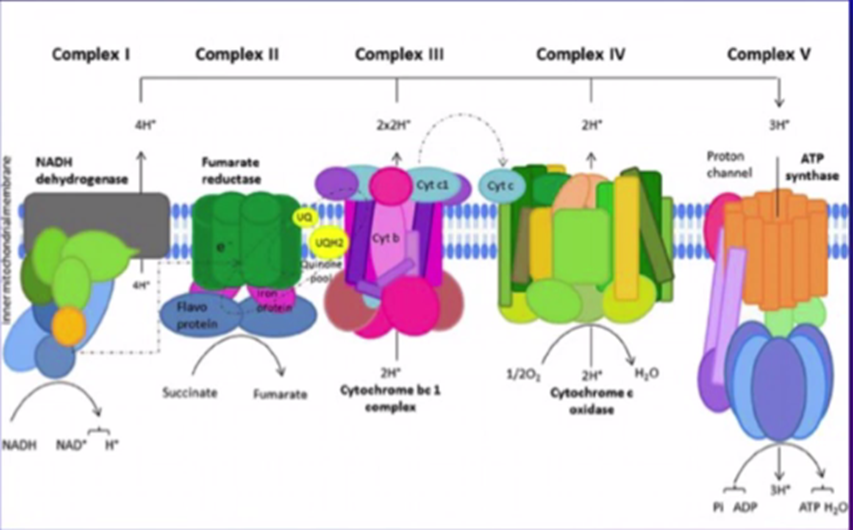
It starts with NADH to NAD (vitamin B3) in complex I. Co-Q10 comes in through complex II and III. At Complex V we see the nano-turbine that spins at the end of the electron transport chain, spitting out ATP. FAD (riboflavin) is also involved.
ENERGY FLOW:
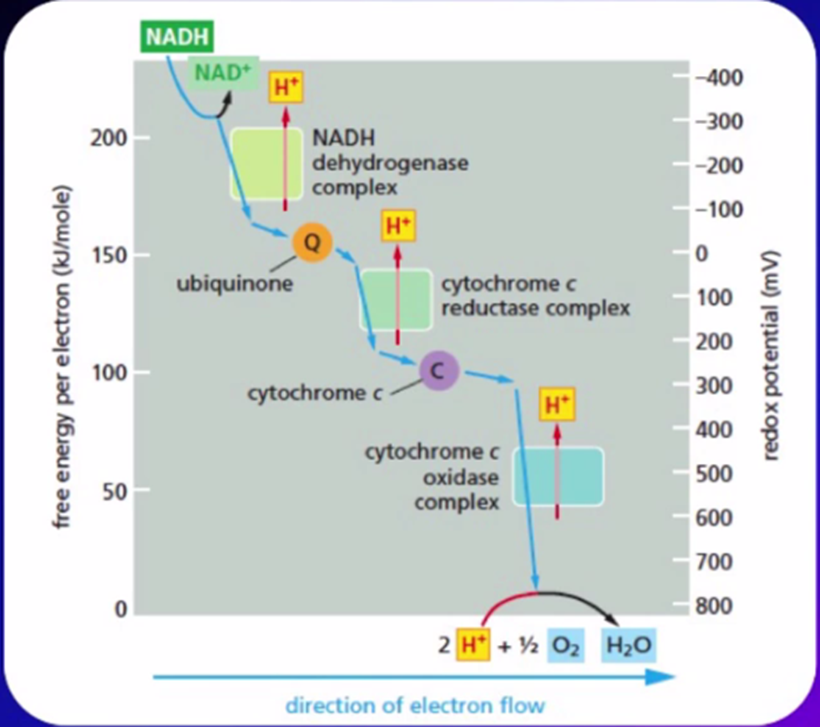
Oxidative phosphorylation is a crucial metabolic pathway that plays a vital role in the production of adenosine triphosphate (ATP), the energy currency of the cell. This process occurs in the mitochondria, the powerhouse of the cell, and is the final stage of cellular respiration. It involves a series of redox reactions that ultimately lead to the synthesis of ATP from adenosine diphosphate (ADP) and inorganic phosphate (Pi).
The Role of the Electron Transport Chain
At the heart of oxidative phosphorylation is the electron transport chain (ETC), a series of protein complexes and other molecules embedded in the inner mitochondrial membrane. The ETC is responsible for transferring electrons from electron donors, such as NADH and FADH2, to electron acceptors like oxygen. This transfer of electrons occurs through a series of redox reactions, releasing energy that is used to pump protons (H+) across the mitochondrial membrane, creating a proton gradient.
Key Components of the Electron Transport Chain
- Complex I (NADH: Ubiquinone Oxidoreductase): This complex accepts electrons from NADH, transferring them to ubiquinone (coenzyme Q), and pumps protons into the intermembrane space.
- Complex II (Succinate Dehydrogenase): Unlike Complex I, Complex II receives electrons from FADH2 and transfers them to ubiquinone without pumping protons.
- Complex III (Cytochrome bc1 Complex): This complex transfers electrons from reduced ubiquinone to cytochrome c, while also contributing to the proton gradient.
- Complex IV (Cytochrome c Oxidase): The final complex in the chain, it transfers electrons to oxygen, the terminal electron acceptor, forming water. This step is crucial for maintaining the flow of electrons through the chain.
- ATP Synthase (Complex V): Although not part of the electron transport chain, ATP synthase uses the proton gradient created by the ETC to synthesize ATP from ADP and Pi.
Chemiosmotic Theory
The chemiosmotic theory, proposed by Peter Mitchell, explains how the energy from the electron transport chain is used to produce ATP. According to this theory, the energy released during electron transfer is used to pump protons across the inner mitochondrial membrane, creating an electrochemical gradient known as the proton motive force. This gradient drives protons back into the mitochondrial matrix through ATP synthase, which harnesses the energy to convert ADP and Pi into ATP.
Importance of Oxygen
Oxygen plays a critical role in oxidative phosphorylation as the final electron acceptor in the electron transport chain. Without oxygen, the chain would halt, preventing the formation of the proton gradient and, consequently, ATP synthesis. This is why oxygen is essential for aerobic respiration and why cells can only survive for a short time without it.
Regulation of Oxidative Phosphorylation
The rate of oxidative phosphorylation is tightly regulated to meet the energy demands of the cell. Several factors influence this process:
- ADP Availability: The presence of ADP is a key regulator, as ATP synthase requires ADP to produce ATP. High levels of ADP stimulate oxidative phosphorylation, while low levels slow it down.
- NADH and FADH2 Levels: These electron carriers provide the electrons needed for the electron transport chain. Their availability directly affects the rate of oxidative phosphorylation.
- Oxygen Concentration: As the terminal electron acceptor, oxygen levels can limit the rate of the electron transport chain and ATP production.
- Feedback Inhibition: High levels of ATP can inhibit components of the electron transport chain, reducing the rate of oxidative phosphorylation.
Clinical Relevance
Defects in oxidative phosphorylation can lead to a range of mitochondrial diseases, often characterized by muscle weakness, neurological disorders, and metabolic issues. These conditions arise from mutations in mitochondrial DNA or nuclear genes encoding components of the electron transport chain or ATP synthase.
Additionally, oxidative phosphorylation is a target for various drugs and toxins. For example, cyanide and carbon monoxide inhibit cytochrome c oxidase, blocking electron transfer to oxygen and halting ATP production. Understanding these interactions is crucial for developing treatments for poisoning and other related conditions.