Buttonbush

About the plant
Cephalanthus occidentalis, commonly known as the Buttonbush, is a fascinating plant species that belongs to the Rubiaceae family. This native North American shrub is renowned for its unique appearance, ecological significance, and diverse range of uses.
Description and Characteristics
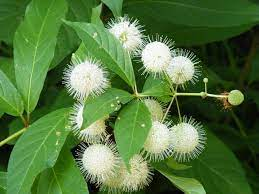
The Buttonbush is a deciduous shrub that typically grows to a height of 6 to 12 feet, though it can sometimes reach up to 20 feet in optimal conditions. Its distinctive spherical flower heads, which resemble small buttons, are a defining feature of this plant. These clusters of tiny white or creamy flowers bloom from late spring to early fall, attracting a myriad of pollinators such as bees, butterflies, and hummingbirds.
The glossy green leaves of Cephalanthus occidentalis are arranged oppositely along the stems, providing an attractive backdrop to the striking flower clusters. In the fall, the foliage transforms into shades of yellow and brown, adding a touch of autumnal beauty to the landscape. The bark of the Buttonbush is smooth and gray when young, eventually developing a rough texture as the plant matures.
Habitat and Distribution
Buttonbush is a versatile species that thrives in a variety of wetland habitats, including swamps, marshes, and the edges of ponds and streams. Its preference for moist soils makes it an excellent choice for rain gardens and riparian restoration projects. Cephalanthus occidentalis is native to North America, with its range extending from the eastern United States to parts of Canada and Mexico.
Ecological Importance
The Buttonbush plays a crucial role in supporting biodiversity and ecosystem health. Its flowers provide nectar for pollinators, while the seeds are a valuable food source for birds and other wildlife. The dense foliage and branching structure of Cephalanthus occidentalis offer shelter and nesting sites for various species, contributing to the overall richness of wetland ecosystems.
Furthermore, the roots of the Buttonbush help stabilize soil along waterways, reducing erosion and improving water quality. This plant's ability to thrive in waterlogged conditions also makes it effective at filtering excess nutrients and pollutants from runoff, thereby enhancing the ecological resilience of aquatic environments.
Landscaping and Horticultural Uses
In addition to its ecological benefits, Cephalanthus occidentalis is a popular choice for landscaping and horticultural purposes. Its attractive flowers and foliage make it a visually appealing addition to wet gardens, ponds, and water features. The Buttonbush is also well-suited for planting in rain gardens and bioswales, where it can help manage stormwater and prevent flooding.
Gardeners and landscapers appreciate the low maintenance requirements of the Buttonbush, as well as its tolerance for a wide range of soil types. Whether used as a focal point in a garden design or as part of a larger restoration project, Cephalanthus occidentalis offers both aesthetic value and environmental benefits.
Cultural Significance
Beyond its ecological and horticultural value, the Buttonbush holds cultural significance in various indigenous traditions. Native American tribes have long recognized the medicinal properties of Cephalanthus occidentalis, using different parts of the plant to treat ailments such as fever, inflammation, and digestive issues. The bark, leaves, and roots of the Buttonbush contain compounds with potential therapeutic benefits, highlighting the plant's importance in traditional medicine.
Cephalanthus occidentalis, commonly known as "Buttonbush," has a history of traditional uses in some indigenous cultures.
Native American Uses
KOASATI-rheumatism-See *Bignonia capreolata
KOASATI-enlarged muscles-A decoction, made by boiling the root, is drunk in cases of enlarged muscles
CHICKASAW-eye trouble-The roots are warmed and put on the head to relieve eye trouble.
CHOCTAW-sore eyes-The bark is boiled and the decoction is used to bathe the eyes when they are sore
CHOCTAW-toothache-The bark is chewed to relieve toothache.
The Physiomedical Dispensatory by William Cook, M.D., 1869
The bark is quite bitter, and yields its properties to water, and to water and alcohol.
Properties and Uses: The bark is a slow, but quite decided tonic, of the stimulating and moderately relaxing class. It gives vigor to the stomach and bowels in atonic conditions, and slightly promotes the alvine and hepatic functions, and also that of the kidneys. In some sections a very strong decoction of it is a popular remedy in intermittents, both to sustain the portal circulation and secure a laxative action of the bowels. Several intelligent gentlemen have told me that it is much depended on as an antiperiodic in the southwestern States; and some observations of my own assure me that it will prove an excellent tonic in the treatment of agues. A warm decoction promotes the action of the skin, much as boneset does. In my earlier practice, I noticed some New England farmers gave it to their cattle, to hasten the ejection of the placenta; and this led me to its use in uterine weakness and prolapsus, with leucorrhea, for all which I have found it decidedly valuable. It has been commended for weakness of the kidneys, achings in the small of the back, and chronic coughs. I am fully satisfied that this article will be found a desirable one, and would respectfully urge its investigation by the profession.
In using it an ounce of the bark may be boiled in a pint of water, strained, and evaporated to half a pint. Of this two fluid drachms may be given three times a day, to promote digestion; or a fluid ounce every second hour, commencing eight hours before the chill, as an antiperiodic. I once prepared a Fluid Extract, in the same manner as for boneset, and found it a serviceable preparation.
Physio-Medical Therapeutics, Materia Medica and Pharmacy BY T. J. LYLE, A.M.M. 1897
The bark is a moderately stimulating tonic influencing chiefly the alvine mucous membrane and the secernents.
In hot infusion it promotes diaphoresis. With eupatorium pupureum it assists in diuresis. With helonias dioica, aletris farinosa or mitchella it influences the generative organs, relieves the aching back, tones the uterus and vagina and increases the general tone and vigour of the whole system. With taraxacum or euonymous it influences the liver, promotes digestion, increases appetite and is somewhat antiperiodic. Dr. F. G. Hamer says it will remove hydro-pneumonia and chronic hydro-asthmatic spasms and thereby reduce swelling of the chest.