Stress
Overview
Stress is a coordinated physiological and psychological response to perceived threat, demand, or loss of control. It can be adaptive in the short term—mobilizing attention, energy, and behavior—but repeated, intense, or unresolved stress may contribute to allostatic load, the cumulative wear associated with chronic activation of stress-response systems.
Stress can arise from emotional experiences, trauma and PTSD, infection, inflammation, sleep disruption, metabolic strain, environmental exposures, and social conditions. These influences may interact rather than act independently.
Important qualification: Stress does not simply “rewrite the genetic code.” Research supports more nuanced possibilities, including changes in gene expression and epigenetic regulation. Some effects may be transmitted across generations in specific experimental contexts, but the magnitude, duration, mechanisms, and relevance to humans remain active areas of research. Epigenetic marks are not equivalent to permanent changes in DNA sequence.
Core Concepts
Acute versus chronic stress
- Acute stress: A short-lived response that can improve focus, energy availability, and immediate survival behavior.
- Chronic stress: Repeated or prolonged activation with insufficient recovery; it may affect sleep, mood, pain sensitivity, immune regulation, cardiovascular function, digestion, and metabolic health.
- Recovery: Sleep, safety, social connection, movement, nutrition, and perceived control can help restore physiological balance.
Stress is shaped by interpretation and context
The same event can produce different responses depending on meaning, predictability, perceived control, prior trauma, social support, and available resources. A useful principle is:
“It’s not stress that kills us but our reaction to it.”
This is best understood as a reminder that appraisal and coping influence outcomes—not as a claim that people are responsible for illness or that stress is harmless.
Stress, pain, and behavior
Stress can amplify pain through changes in attention, threat appraisal, sleep, muscle tension, and nervous-system sensitivity. It may also influence appetite and food choices. During stress, fatty meals may impair aspects of vascular and physiological recovery, according to research summarized below.
Intergenerational and prenatal effects
Prenatal and early-life stress may influence later mental and physical health through developmental, behavioral, social, and biological pathways, including epigenetic regulation. Evidence should be interpreted carefully: associations do not establish simple causation, and findings from animal models cannot automatically be generalized to humans.
Practical Applications
- Identify recurring stressors and distinguish what is controllable, influenceable, or outside immediate control.
- Increase recovery opportunities: consistent sleep, regular movement, daylight exposure, nourishing meals, and restorative social contact.
- Use brief down-regulation practices such as paced breathing, grounding, progressive muscle relaxation, or a short walk.
- Reframe challenges without denying their seriousness; perceived control and realistic next steps can reduce helplessness.
- Consider trauma-informed professional support for PTSD, persistent anxiety, depression, severe sleep disruption, or stress-related impairment.
- Avoid treating stress reduction as a substitute for medical evaluation when symptoms are new, severe, or progressive.
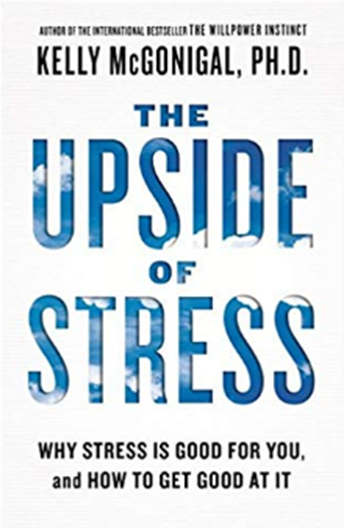
Book: The Upside of Stress
Kelly McGonigal’s The Upside of Stress explores how beliefs about stress, challenge appraisal, and coping can shape the stress response.
VIDEOS
Functional Medicine on Stress, Pain and Addiction
The Four Key Stressors
NOV 2019 Functional Forum - Stress and the Brain: The Four Key Stressors - YouTube
Stress and the Brain #1
Part 2: Deeper Pathways of Interconnection
Stress, Pain and Addiction
Why you shouldn’t eat when stressed
What Doesn’t Kill You... Doesn’t Always Make You Stronger | Shelly Ngo, MBA ’25
ARTICLES/STUDIES
The Ripple Effect of Stress: What Zebra Finches Teach Us About Emotional Contagion
Stress of major life events impacts women more than men, shows poll of 2,000 people
Neural circuit that drives physical responses to emotional stress found
Older People Summon More Positivity in Response to Distress With increasing age, people react more positively to both emotional and neutral stimuli, and are better able to positively reframe a negative experience into a positive one.
New Study Reveals the Anti-Stress Superpower That Gets Stronger With Age
A Penn State study finds that even small boosts in perceived control dramatically increase the likelihood of resolving daily stressors. A tight deadline at work, a plumbing problem at home, or a disagreement with someone close can all turn an ordinary day into a stressful one. When several of these challenges come at once, they [...]
2026 Why middle age is becoming a breaking point in the U.S.. A new international study finds that middle-aged Americans are lonelier, more depressed, and experiencing worse memory and health than earlier generations. Researchers say growing financial strain, weaker social supports, and chronic stress may explain why the U.S. is falling behind other wealthy nations.
Feeling stressed? Science finds a simple way to take back control. Feeling in control may be the key to conquering daily stress. Penn State researchers found that people were 62% more likely to resolve everyday hassles on days when they felt greater control. This link grew stronger over time, suggesting we get better at managing stress as we age. Simple actions like setting priorities and reframing challenges can help boost that sense of control and reduce overall stress.
Stress and Snacks: How Fatty Foods Hinder Recovery Consuming fatty foods during stressful times can hinder the body's recovery from stress effects. Researchers found that high-fat meals, like butter croissants, consumed before a stressful event, reduced vascular function and brain oxygenation, and negatively affected mood.
The impact of stress. An interview with George Chrousos
Stress and Anxiety Solutions: The Top 10 Natural Approaches Backed by Science
How well do we perceive other people's stress levels in the workplace
Age affects how we predict and respond to stress at home
Lingering negative responses to stress linked with health a decade later