Diclofenac
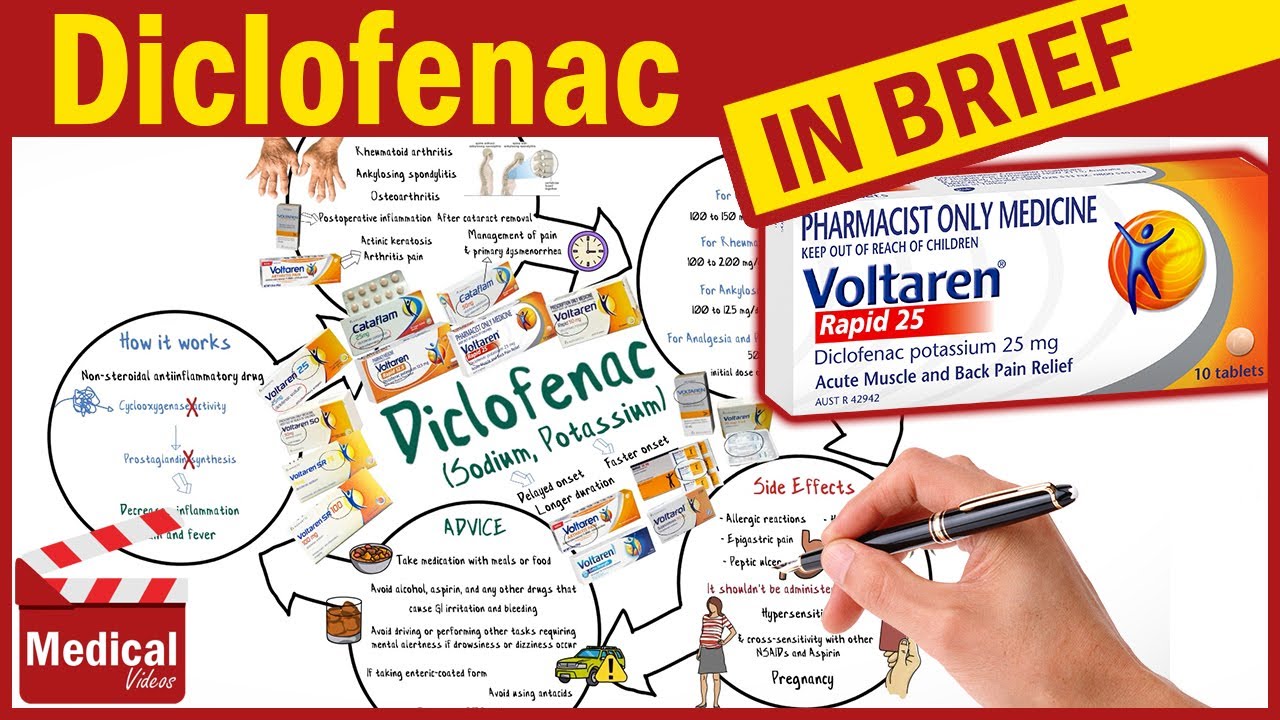

How and When to use Diclofenac? (Voltaren, Cataflam, Cambia, Zorvolex)

Diclofenac is used to treat mild to moderate pain, or signs and symptoms of osteoarthritis or rheumatoid arthritis. The Cataflam brand of this medicine is also used to treat menstrual cramps.
Diclofenac powder (Cambia) is used to treat a migraine headache attack. Cambia will only treat a headache that has already begun. It will not prevent headaches or reduce the number of attacks.
You should not use diclofenac if you have a history of allergic reaction to aspirin or NSAIDs (non-steroidal anti-inflammatory drugs).
Diclofenac can increase your risk of fatal heart attack or stroke, especially if you use it long term or take high doses, or if you have heart disease. Do not use this medicine just before or after heart bypass surgery (coronary artery bypass graft, or CABG).
Diclofenac may also cause stomach or intestinal bleeding, which can be fatal. These conditions can occur without warning while you are using this medicine, especially in older adults
Articles/Studies
Risk Factors
- Cranberry juice suppressed the diclofenac metabolism by human liver microsomes, but not in healthy human subjects.
- Nonsteroidal antinflammatory drugs increase cardiovascular events in patients after hospitalization for serious coronary heart disease.
- Acute renal failure has been associated with non-steroidal anti-inflammatory drugs in healthy children.
- Antipyretic agents are ineffective for the prevention of recurrences of febrile seizures and for the lowering of body temperature in patients with a febrile episode that leads to a recurrent febrile seizure.
- NSAIDs are associated with an increased risk of myocardial infarction and death.
- NSAIDs are frequently used in patients with heart failure and are associated with increased risk of death and cardiovascular morbidity.
- Taking non-aspirin NSAIDs in early pregnancy doubles the risk of miscarriage.
- Use of non-selective NSAIDs was associated with an increased early risk of out-of-hospital cardiac arrest.
Alternatives
- Bromelain has no difference in reducing symptoms of mild-to-moderate knee OA after 4 weeks when compared with diclofenac.
- Curcumin treatment is safe and superior to drug therapy in patients with active RA.
- N. sativa seed oil has clinical effectiveness comparable to topical diclofenac in the treatment of cyclic mastalgia.
- Nigella sativa seeds possess potent anti-inflammatory effects that were not as strong as diclofenac sodium but was more prolonged in effect.
- An oil-based Dill extract used topically was found to be significantly more effective than Diclofenac-gel.
Reduce Harmful Effects
- A fenugreek transdermal patch decreases pain score and demand for morphine in post-surgery patients in comparison to diclofenac patch.
- Melatonin supplementation could prevent the adverse effects of diclofenac sodium.
- Vitamin C and vitamin E might play an important role in reducing oxidative stress and kidney damage induced by diclofenac sodium.
- Sesamol attenuates diclofenac-induced acute gastric mucosal injury.
- Spirulina fusiformis had hepato-renal and gastroprotective activity against Diclofenac-induced toxicity.
- Berberine protects against diclofenac sodium-induced testicular impairment.
- Berberine mitigates diclofenac-induced intestinal mucosal mechanical barrier dysfunction.