Vitamin E
Videos
What is Vitamin E?
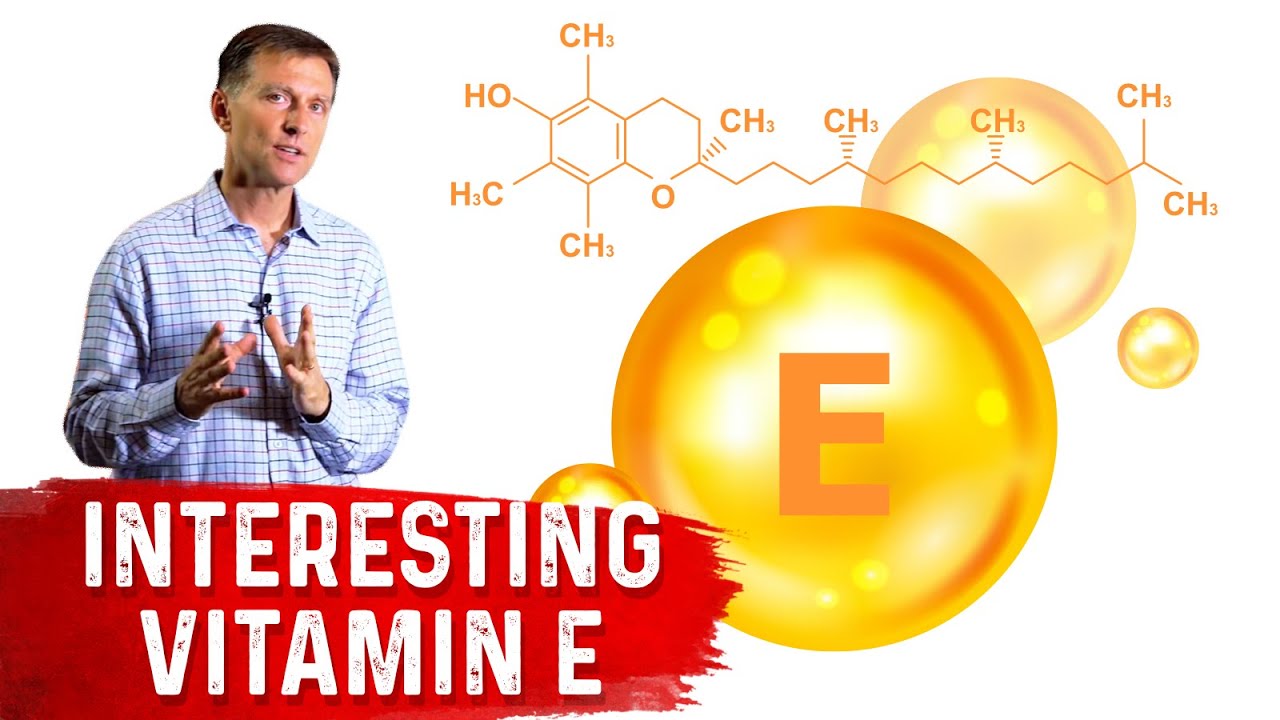
Vitamin E: Setting the Record Straight (video)
Vitamin E | Masterclass With Masterjohn 1.4
Important About Vitamin E
Benefits of Vitamin E
Top 10 Natural Sources
Natural vitamin E supplements that are derived from plant oils contain dalpha-tocopherol, which is believed to be the active form, while synthetic vitamin E supplements are a mixture of d-alpha-tocopherol and l-alphatocopherol (inactive forms).
Although many research protocols use milligrams of vitamin E, most commercial products are sold in international units (IU). One IU natural vitamin E equals 0.67 mg d-alpha-tocopherol and one IU of synthetic vitamin E equals 0.45 mg d-alpha-tocopherol.
Effects on Immune System
Vitamin E supports the integrity of epithelial membranes and increases IL-2 production, NK cell activity, T cell-mediated functions, and lymphocyte proliferation. Furthermore, vitamin E initiates T-cell activation, promotes Th1 proliferation, and inhibits Th2 response ^[R]. Vitamin E supplementation causes more IL-2 and IFN-γ production with a lower lung virus titer in animals with the influenza virus ^[R]. Vitamin E deficiency markedly increases the viral pathogenicity and heart damage in mice infected with Coxsackieviruses-B3 ^[R]. Administration of vitamin E increased lymphocyte proliferation as well as IL-2 and IFN-γ production in healthy individuals and aged mice after influenza infections ^[R]. A modest level of vitamin E supplementation regulates the cellular free radical-antioxidant balance, enhances the antibody response, and activates the immune cells of broilers vaccinated with the infectious bronchitis virus ^[R]. H1N1-infected mice have shown positive associations between anti-inflammatory cytokine IL-10 levels and vitamin E metabolism ^[R].
Vitamin E and selenium exhibit strong control over viral replication and mutation. In a nutritional deficiency condition of these micronutrients, RNA viruses are able to convert to more virulent strains ^[R]. Vitamin E-deficient mice failed to exhibit an appropriate immune response to HSV-1 infection ^[R]. A significant increase in lung and serum vitamin E levels has been observed a few days after infection with the influenza virus in mice ^[R]. Critically ill patients who were admitted to an ICU with ARDS have shown a significant reduction of vitamin E plasma level ^[R]. The use of vitamins E and C in critically ill patients reduced the incidence of ARDS and pneumonia and shortened ICU length of stay ^[R].
Food Sources
Plant-derived oils (wheat germ, soybean, sunflower, almond, safflower, corn),wheat germ, liver, eggs, nuts and seeds, green leafy vegetables, whole grains.
Negative outcomes of recent large-scale intervention studies may be due to use of only the alpha homologue (see explanation below)
Research from the Chicago Health and Aging Project showed that those who ate at least 8mg/day of vitamin E vs those who didn't, cut their risk of Alzheimer's in half. Nature has 8 forms of vitamin E, found in food, not in supplements because supplements can legally be called vitamin E if it only has one form. If you eat too much of one form of vitamin E it reduces your absorption of all the others. If you put some nuts or seeds into the palm of your hand until it reaches your fingers, that's about 1 oz ...about 5mg vitamin E.
Articles/Studies
Uses
To prevent the progression of Alzheimer’s disease
One clinical trial showed that vitamin E helped prevent progression of Alzheimer’s disease. A few population-based studies have suggested that high intake of vitamin E in the diet is associated with a lower risk of developing Alzheimer’s disease.
To treat arthritis
One clinical trial suggested that vitamin E can relieve pain in patients with rheumatoid arthritis, but has no anti-inflammatory effect. No other clinical trials have tested this use.
To prevent cancer
Large population-based studies in Finland found that taking vitamin E supplements reduced the risk of prostate and colorectal cancers in male smokers. However, initial data from the large-scale SELECT (Selenium and Vitamin E Cancer Prevention) Trial shows vitamin E taken alone or with selenium for five years, did not reduce the risk of prostate cancer. Vitamin E supplementation had no effect on lung, urinary tract, pancreas, mouth or stomach cancer risks. Another trial in patients with head and neck cancers found that patients who received vitamin E had a higher rate of second primary cancers compared with those on placebo, and that vitamin E may interfere with radiation therapy.
To manage heart disease
Data from clinical trials show that vitamin E does not help prevent heart disease.
To prevent cataracts
Two clinical trials do not support this use.
To prevent the cardiovascular complications of diabetes
Several clinical trials have shown that vitamin E supplements may be helpful in preventing LDL oxidation in patients with diabetes, which may help prevent progression to atherosclerosis.
To treat liver diseases
Vitamin E can be used to treat fatty liver disease not caused by alcohol in adults
To stimulate the immune system
No scientific evidence supports this use.
To prevent the progression of Parkinson’s disease
Clinical trials do not support this use.
To improve wound healing
No scientific evidence supports this use.
To reduce hot flashes
A clinical trial showed that vitamin E reduces hot flashes in breast cancer survivors somewhat, but most patients did not prefer vitamin E over placebo at the end of the study.
Clinical Summary
See: TOCOPHEROLS AND TOCOTRIENOLS
Vitamin E is a fat-soluble vitamin derived from plant. Natural food sources include plant oils, wheat germ, eggs, green leafy vegetables, and whole grains . Vitamin E acts as an antioxidant and is thought to help prevent and treat many diseases. Although available in a variety of formulations, only the disomer is considered active .
Studies evaluating vitamin E supplementation suggest that it may improve immune response in the elderly. Vitamin E may slow the progression of Alzheimer’s disease ; however, conflicting data from another study does not support the utility of antioxidants (vitamin E, vitamin C, lipoid acid, and Coenzyme Q) . It was also ineffective in arresting the development or progression of macular degeneration and Early Parkinson’s Disease.
Vitamin E did not decrease the incidence of acute respiratory tract infections , reduce mortality, or reduce the risk of cardiovascular death or cerebrovascular accident . When taken along with vitamin C, vitamin E may increase mortality and nonfatal myocardial infarction in patients with coronary artery disease . Further, findings from the recent Physicians’ Health Study II show that neither vitamin E nor C is beneficial in preventing cardiovascular events; vitamin E may actually increase the risk of stroke . The Women’s Health Study also failed to find any benefit of vitamin E supplementation in lowering the risk of heart failure in healthy women . A meta-analysis showed that vitamin E increases the risk for hemorrhagic stroke but reduces the risk of ischemic stroke . Vitamin E can reduce signs and symptoms of nonalcoholic steatohepatitis in adults , but not in children and adolescents.
Vitamin E was shown to reduce the risk of some cancers . It may help to relieve hot flashes in breast cancer survivors , and to reduce the incidence of cisplatin-induced neurotoxicity . However, data suggest that supplementation with vitamins C, E, and beta carotene is not beneficial in preventing cancer incidence or affecting cancer mortality . Furthermore, vitamin E when used alone or with other supplements did not prevent gastrointestinal cancer . A large scale clinical Selenium and Vitamin E Cancer Prevention Trial (SELECT) evaluated the role of vitamin E in prostate cancer prevention. Initial review shows that vitamin E taken alone or with selenium for 5 years did not reduce the risk of prostate cancer ; observational data from 7 years of participant follow-up indicate a significant increase in the risk of prostate cancer with vitamin E supplementation . Vitamin E, when used together with soy and selenium, did not prevent prostate cancer progression . Further, findings from other studies indicate vitamin E may actually increase risk of lung cancer and overall mortality . At the same time, conflicting data suggest an association between dietary tocopherol and a reduction in risk of lung cancer . Also, both dietary and supplemental form of vitamin E may reduce the risk of liver cancer .
Toxicity may occur with chronic supplementation of vitamin E with doses greater than 800 IU. Daily supplementation over 400 IU may increase all-cause mortality . Vitamin E may also enhance the activity of warfarin, but data are inconsistent .
Mechanism of Action
Vitamin E is a fat soluble vitamin that acts as an antioxidant. The natural form of vitamin E is composed of 4 different tocopherols and 4 different tocotrienol homologues (alpha, beta, delta and gamma). All 8 forms have antioxidant activity but recent data indicate that the different homologues have different activities unrelated to antioxidant effects.
Gamma-tocopherol is a stronger inhibitor of cyclooxygenase and traps reactive oxygen species more effectively than alpha-tocopherol. In vitro and in vivo, gamma-tocopherol exhibits anti-proliferative and pro-apoptotic effects where alpha-tocopherol does not . While both alpha- and gamma-tocopherols exhibit anti-inflammatory effects in vitro and in vivo, gamma-enriched mixed tocopherols may be more potent compared to alpha-tocopherols. This may help explain the negative outcomes of recent large-scale intervention studies that used only the alpha homologue.
The d-alpha-tocopherol isomer is believed to be the active principle. Natural vitamin E supplements contain d-alpha-tocopherol derived from plant oil sources, whereas synthetic supplements are composed of a racemic mixture of d- and l-alpha-tocopherols. The major function of d-alpha-tocopherol is to prevent the propagation of free radical reactions by acting as a peroxyl radical scavenger and protecting polyunsaturated fatty acids (PUFAs) within membrane phospholipids and in plasma lipoproteins. Alpha-tocopherol reportedly causes inhibition of protein kinase C activity, which is involved in cell proliferation and differentiation in smooth muscle cells, human platelets, and monocytes. Vitamin E enrichment of endothelial cells, down regulates the expression of intercellular adhesion molecule (ICAM-1) and vascular cell adhesion molecule-1 (VCAM-1), thereby decreasing the adhesion of blood cell
components to the endothelium. Vitamin E also upregulates the expression of cytosolic phospholipase A2 and cyclooxegenase-1, which leads to the release of prostacyclin, a potent vasodilator and inhibitor of platelet aggregation in humans.
In an animal study, vitamin E increased lung cancer cell proliferation due to its antioxidant activity by reducing reactive oxygen species (ROS), DNA damage and p53 expression.
Articles/Studies
- Vitamin E Regulatory Mechanisms
- These Two Doctors Cured Thousands with Vitamin E
- Bioavailability of tocotrienols: evidence in human studies
- Health benefits of vitamin E in grains, cereals and green vegetables
- Natural forms of vitamin E: metabolism, antioxidant, and anti-inflammatory activities and their role in disease prevention and therapy
- Vitamin E and the Role of Water-soluble α- Tocopheryl Phosphate
- Vitamin E: The Importance of Gamma-Tocopherol
- Drs. Wilfrid & Evan Shute Cured Thousands with Vitamin E
Risk Factors
- What Is This Petrochemical "Vitamin" Doing In Infant Brains?
- Vitamin E and Disease Risk: Research Focus Turns on Genetic Polymorphisms and Molecular Mechanisms
- This study suggests that the absence of γ-tocopherol in traditional preparations may be one reason for the lack of consistent salutary effects of vitamin E preparations in clinical trials.
- Vitamin E requirement will increase with an increase in PUFA consumption and with the degree of unsaturation of the PUFA in the diet.
- The prevalence of inadequate vitamin E levels was significantly higher among non users of dietary supplements.
Aging
- Vitamin E in aging, dementia, and Alzheimer's disease
- Vitamin E ingestion improves several immune functions in elderly men and women.
- Vitamin E supplementation and mammalian lifespan
- Immune function in aged women is improved by ingestion of vitamins C and E.
Allergies
Cancer
- Vitamin E: A dark horse at the crossroad of cancer management
- Supplementation of vitamin E may improve the efficacy of standard and experimental cancer therapies by subsiding the toxic effect of the antineoplastic agent. -
Cardiovascular
Depression
Increased vitamin E intake is associated with decreased depressive symptoms.
Diabetes
Vitamin E supplement protects against gestational diabetes mellitus.
Digestive Issues
- Dietary Vitamin E intake is associated with a reduced risk of developing digestive diseases and NAFLD.
- Regulation of gut microbiota by vitamin C, vitamin E and β-carotene.
Hepatoprotective
- Vitamin E has a beneficial effect on nonalcoholic fatty liver disease: A meta-analysis of randomized controlled trials.
- Supplementation of α-tocopherol is beneficial to counter both lead acetate and hypoxia induced hepatic cytotoxicities.
Immune Effects
- Vitamin E-induced decrease in influenza viral titre is mediated through enhancement of Th1 cytokines.
- Diet supplementation with higher than usual levels of vitamin E appears to be beneficial for the immune system.
- The involvement of vitamins C and E in changing the immune response.
Postmenopause
- Vitamin E found to have bone health benefits: Research finds it improves bone density in postmenopausal women
- Vitamin E (mixed-tocopherol) supplementation in postmenopausal osteopenic women may have a preventive effect on bone loss through anti-resorptive activity.
- Effect of vitamin E supplementation on chronic insomnia disorder in postmenopausal women.
Radiation Protection
Other Effects
- α-Tocopherol supplementation of the diets of children with down syndrome may attenuate the oxidative stress at the DNA level.
- -α-tocopherol has protective effects against methyl methanesulfonate induced teratozoospermia in adult rats.
- Vitamin E supplementation effectively inhibit the peroxidation of 7-DHC in SLOS human fibroblasts and newborn Dhcr7-KO mice.
- Vitamin E might have a protective effect against Parkinson's disease.