Ubiquitination
Return to Cellular Biology Menu
Ubiquitination is a post-translational modification (PTM) that regulates the stability and functional activity of proteins. It involves attaching a ubiquitin protein to a substrate protein. Ubiquitin is a small molecule that acts as a tag that signals the protein-transport machinery to ferry the protein to the proteasome for degradation.
Ubiquitination is one of the most important PTMs. It plays a central role in cell cycle transitions and checkpoints by establishing the strict temporal control of proteins such as cyclins, CDKs, CKIs, other kinases and phosphatases. Recent studies have observed that ubiquitination and deubiquitination are involved in the regulation of metabolic reprogramming in cancer cells.
Ubiquitination starts by the transfer of a single ubiquitin to a substrate lysine residue. These monoubiquitination events are abundant in cells and serve many purposes. Ubiquitin can be ubiquitinated on any of the seven Lys residues or on the N-terminus.
Videos
Ubiquitination of Proteins and Protein Degradation
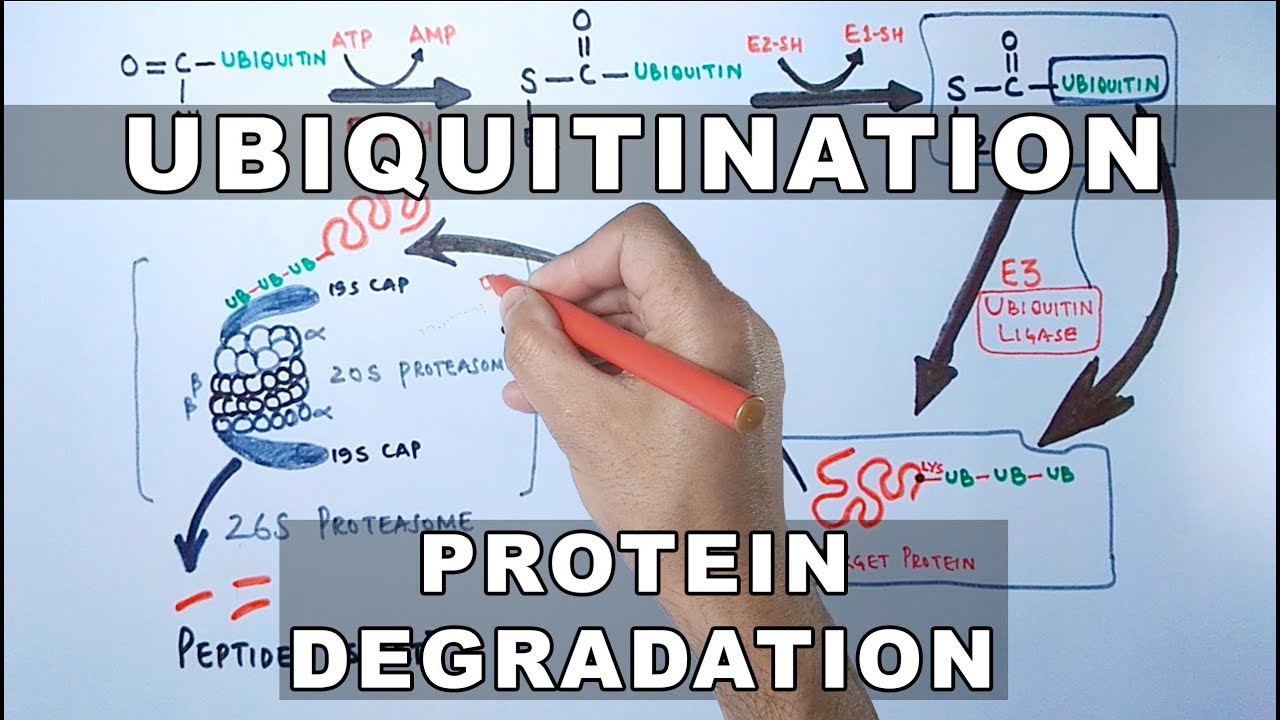
Ubiquitination of Proteins
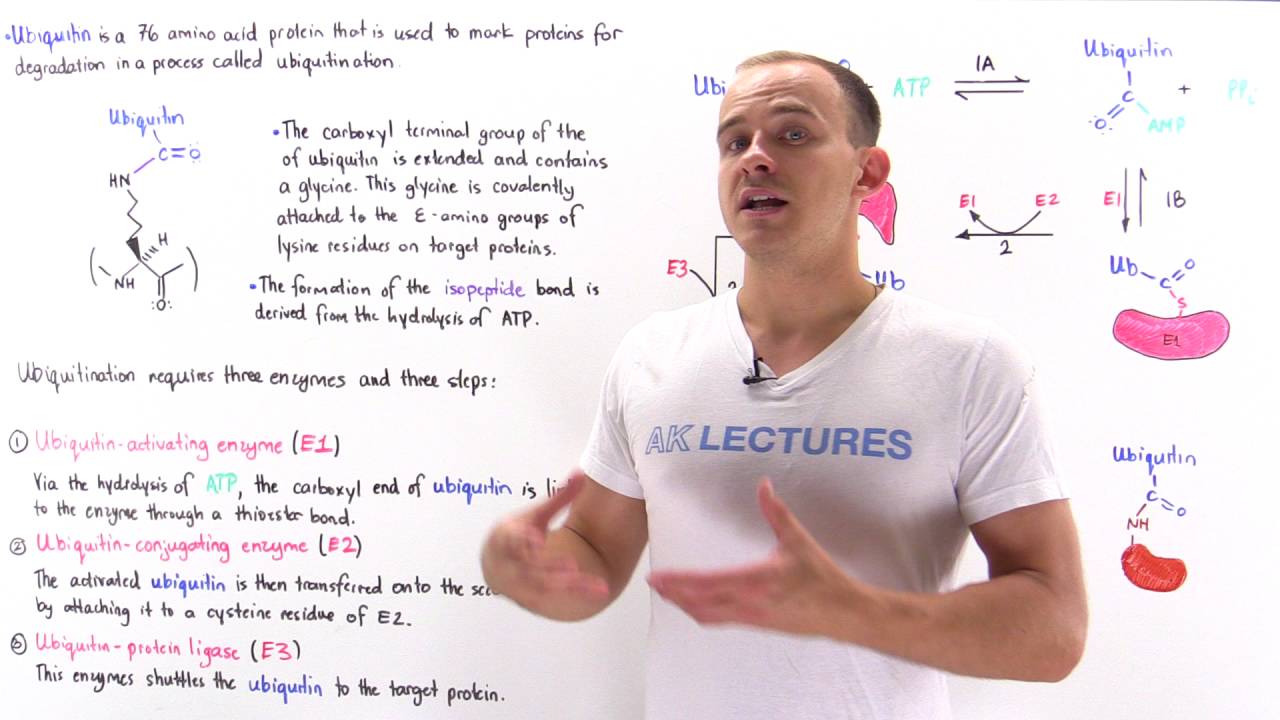
THE PROTEASOME, UBIQUITINATION, AND PROTEIN DESTRUCTION
A Primer on the Ubiquitin-Proteosome System
Articles/Studies
The covalent modification of proteins by ubiquitination is a major regulatory mechanism of protein degradation and quality control, endocytosis, vesicular trafficking, cell-cycle control, stress response, DNA repair, growth-factor signalling, transcription, gene silencing and other areas of biology. A class of specific ubiquitin-binding domains mediates most of the effects of protein ubiquitination Read more...