Root System, Structure and Development


Getting to the root of roots – from fossils to transcription factors

Developmental Zones of the Root
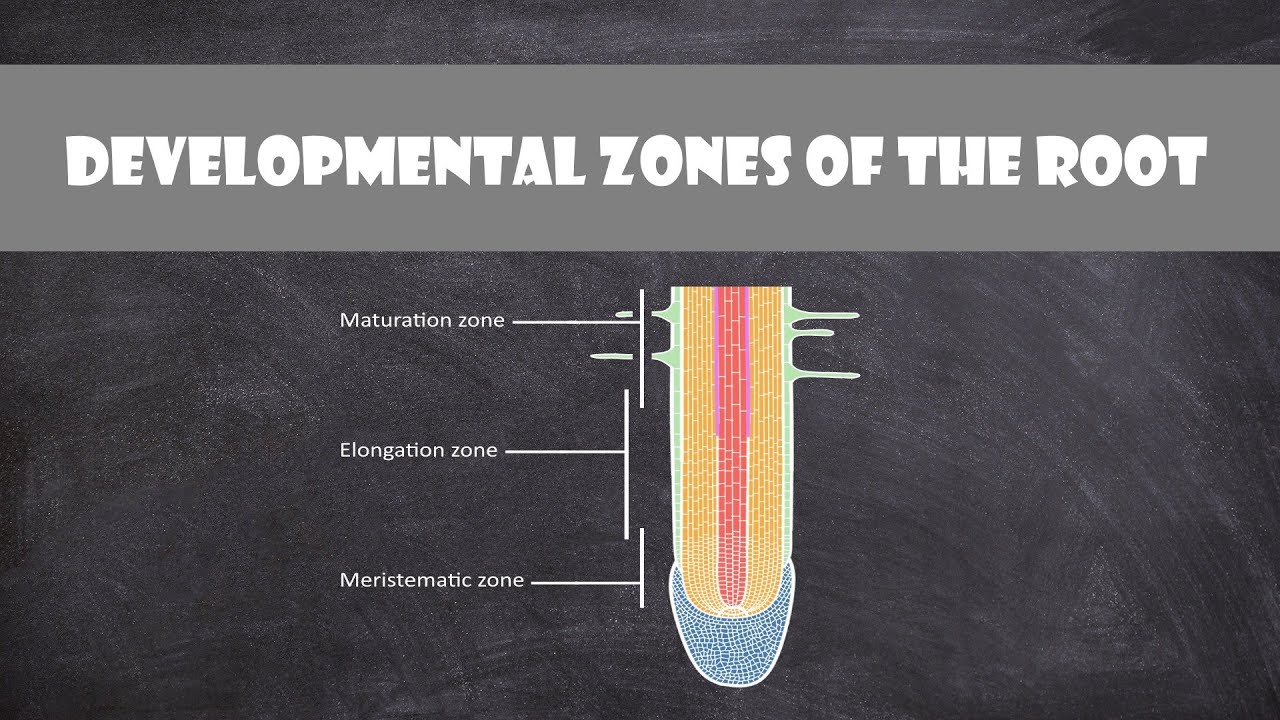
The roots of seed plants have three major functions: anchoring the plant to the soil, absorbing water and minerals and transporting them upwards, and storing the products of photosynthesis. Some roots are modified to absorb moisture and exchange gases. Most roots are underground. Some plants, however, also have adventitious roots, which emerge above the ground from the shoot.
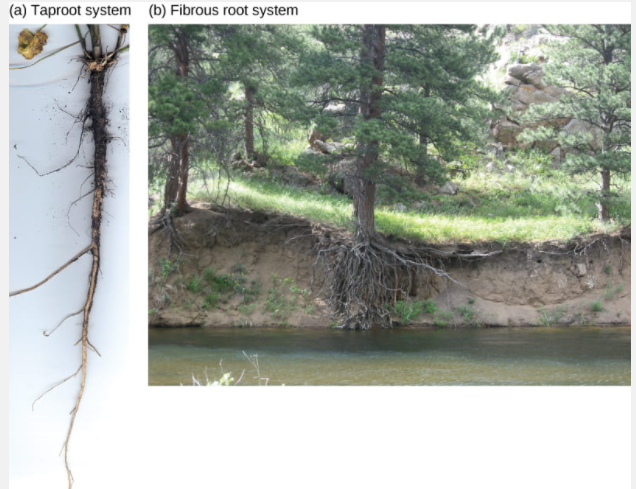
Root systems are mainly of two types (shown below):
- Tap root systems have a main root that grows down vertically, and from which many smaller lateral roots arise. Tap roots penetrate deep into the soil and are advantageous for plants growing in dry soils. Tap roots are typical of dicots such as dandelions.
- Fibrous root systemsare located closer to the surface and have a dense network of roots. Fibrous root systems can help prevent soil erosion. Fibrous roots are typical of monocots such as grasses.
Root structures are evolutionarily adapted for specific purposes:
- Bulbous roots store starch.
- Aerial roots and prop roots are two forms of above-ground roots that provide additional support to anchor the plant.
- Some tap roots, such as carrots, turnips, and beets, are adapted for sugar/starch storage.
- Epiphytic roots enable a plant to grow on another plant