Clostridium difficile (C. diff / Clostridioides difficile )
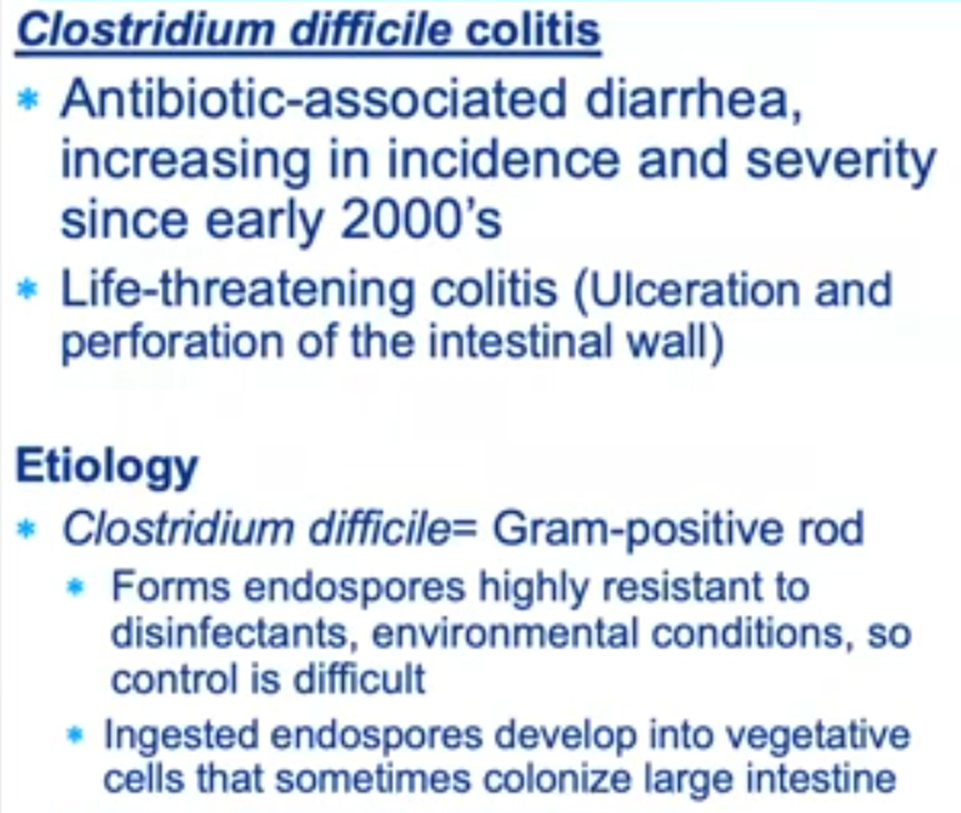
Many strains differ in pathology.

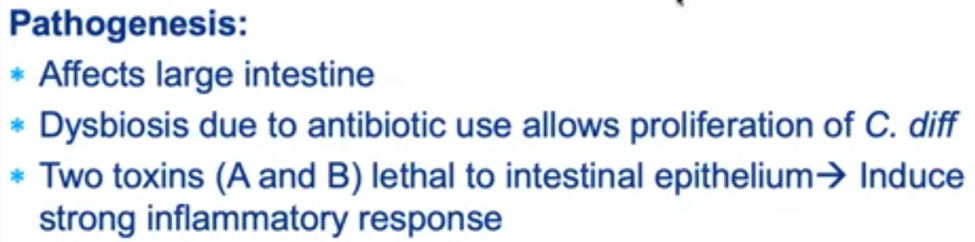
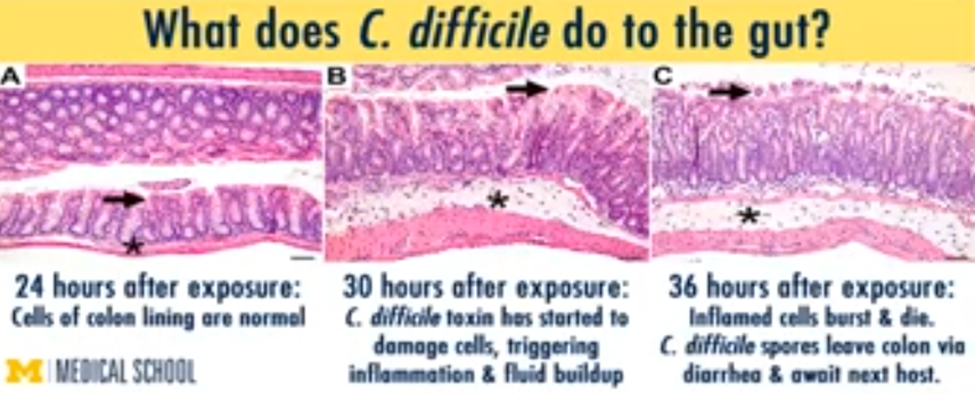
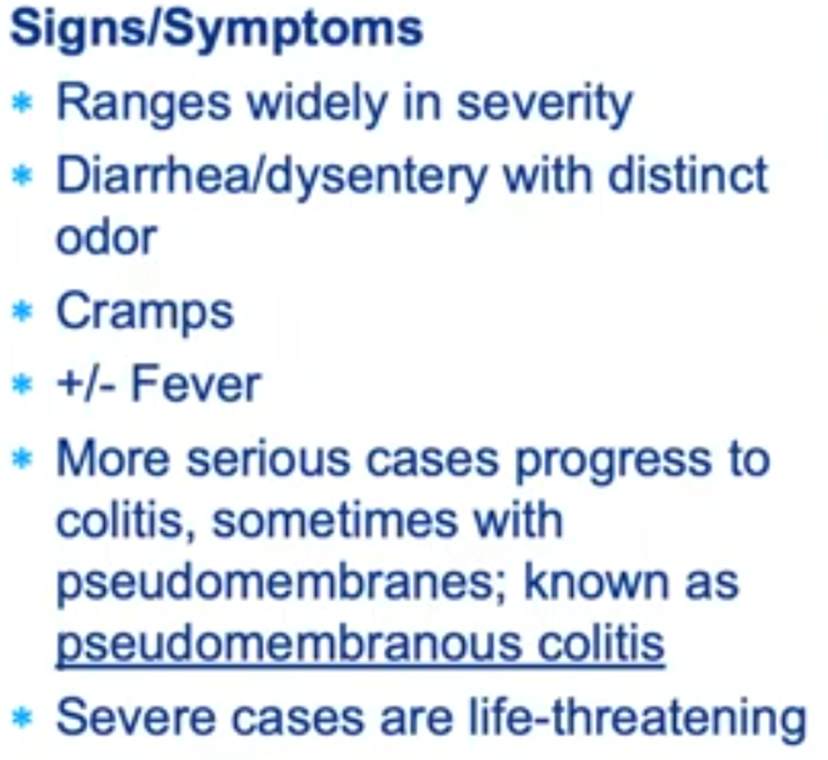
Possible complications;
- Recurrence in 20% of cases
- Pseudomembranous colitis
- Toxic megacolon (toxic colitis, dilation)
VIDEOS:

Advocating for Better Regulatory Rules and Standard of Care for C difficile
Clostridium Difficile Infection: Old Treatments and New Strategies
Binary Toxin - Microbiologists
The growth of Clostridioides difficile
The spore germination of Clostridioides difficile
The Gut Microbiome and C. difficile
How Antibiotics Impact Bile Acid Composition & Result in CDI
Natural Antibiotics for C.Diff
Fecal bacteria C.Diff in Hospital Beds
Can a Fecal Transplant Save You From This Dangerous Bacteria?
Clostridium difficile Associated Diarrhea--Cindy Mayer, DO
Clostridium difficile (Pseudomembranous Colitis) Diagnosis & Treatment
Understanding Clostridium difficile
Clostridium difficile, often abbreviated as C. diff, is a bacterium that can cause symptoms ranging from mild diarrhea to severe life-threatening inflammation of the colon. It is a significant concern in healthcare settings due to its ability to cause outbreaks and its resistance to many antibiotics.
Characteristics of Clostridium difficile
C. diff is a Gram-positive, spore-forming bacterium. Its spores are highly resistant to environmental conditions and can survive on surfaces for extended periods, making it a formidable pathogen in hospitals and long-term care facilities. The bacterium is anaerobic, meaning it thrives in environments devoid of oxygen, such as the human gut.
Transmission and Risk Factors
C. diff is primarily transmitted via the fecal-oral route. This means that the spores can be ingested through contaminated surfaces, hands, or food. The following are key risk factors for C. diff infection:
- Antibiotic Use: The use of broad-spectrum antibiotics can disrupt the normal gut flora, allowing C. diff to proliferate. If you take antibiotics there’s about a 3% chance C. diff will proliferate.
- Hospitalization: Patients in healthcare settings are at higher risk due to increased exposure to the bacterium.
- Age: Older adults, particularly those over 65, are more susceptible.
- Underlying Health Conditions: Individuals with weakened immune systems or chronic illnesses are at increased risk.
Symptoms of Clostridium difficile Infection
The symptoms of a C. diff infection can vary in severity. Common symptoms include:
- Diarrhea: Frequent, watery stools are the most common symptom.
- Abdominal Pain: Cramping and discomfort in the abdomen.
- Fever: A mild to moderate fever may be present.
- Nausea: Some patients experience nausea and loss of appetite.
In severe cases, C. diff can lead to:
- Pseudomembranous Colitis: A severe inflammation of the colon.
- Toxic Megacolon: A rare but life-threatening condition where the colon becomes severely dilated.
- Sepsis: A systemic infection that can be fatal if not treated promptly.
Diagnosis
Diagnosing C. diff involves a combination of clinical evaluation and laboratory tests. The most common diagnostic methods include:
- Stool Tests: Detecting the presence of C. diff toxins in a stool sample.
- Polymerase Chain Reaction (PCR): A more sensitive test that detects the genetic material of the bacterium.
- Endoscopy: In severe cases, a colonoscopy may be performed to assess the extent of colon damage.
Treatment Options
The treatment of C. diff infection typically involves:
- Antibiotics: Paradoxically, specific antibiotics such as metronidazole, vancomycin, or fidaxomicin are used to treat the infection.
- Probiotics: These may help restore the normal gut flora. Reduces with Lactobacillus reuteri
- Fecal Microbiota Transplantation (FMT): In recurrent cases, FMT can be highly effective in restoring healthy gut bacteria.
Prevention Strategies
Preventing C. diff infections is crucial, especially in healthcare settings. Key strategies include:
- Hand Hygiene: Regular handwashing with soap and water is essential, as alcohol-based sanitizers are not effective against C. diff spores.
- Environmental Cleaning: Thorough cleaning and disinfection of surfaces with agents effective against spores.
- Antibiotic Stewardship: Judicious use of antibiotics to minimize disruption of normal gut flora.
ARTICLES/STUDIES
- C. Diff Infections Are Falling, Thanks To Better Cleaning & Fewer Antibiotics
- Laxative Use Does Not Preclude Diagnosis or Reduce Disease Severity in Clostridiodes difficile Infection
- The protective armor of superbug C.difficile revealed The close-knit, flexible outer layer - like chain mail - which protects superbug C.difficile has been unveiled.
Risk Factors
- Children exposed to proton pump inhibitor therapy are at higher risk for the development of Clostridium difficile-associated disease.
- Over-use of proton pump inhibitors may be fueling the current epidemic of Clostridium difficile-associated diarrhoea.
- Prolonged use of a proton pump inhibitor reduces microbial diversity: implications for Clostridium difficile susceptibility.
- Proton pump inhibitor therapy may increased the risk of clostridium difficile-associated diarrhea.
- Clostridium difficile in the Food Supply
Prevention
- Microbial Preparations (Probiotics) for the Prevention of Clostridium difficile Infection in Adults and Children: An Individual Patient Data Meta-analysis of 6,851 Participants.
- Apple polyphenol extract suppresses Clostridioides difficile infection in a mouse model.
- Probiotics useful in the fight against Clostridium difficile infection
- It is likely that a diet rich in fiber, yogurt, and possibly turmeric may have a protective role in decreasing the incidence of CDIs in India.
- Protective effect of baicalin against Clostridioides difficile infection in mice
Treatment
- Clinical practice guidelines for Clostridium difficile infection in adults: 2010 update by the society for healthcare epidemiology of America (SHEA) and the infectious diseases society of America (IDSA)
- Successful holistic treatment of Clostridium Difficile: A case study.
- **Zinplava Drug** May Be New Weapon Against a 'Superbug'
- Microbiota diversity and bacterial load after successful treatment of Clostridioides difficile infection with **honey lavage** in 4 patients.
- The bactericidal activity and spore inhibition effect of **manuka honey** against Clostridioides difficile.
- Biofilm formation of Clostridium difficile and susceptibility to **Manuka honey**.
- Antimicrobial Effects of **Virgin Coconut Oil** and Its Medium-Chain Fatty Acids on Clostridium difficile
- **Whey** may have a therapeutic role in treating Clostridium difficile-associated diarrhea.
- Antibacterial activity of **rhodomyrtone** on Clostridium difficile vegetative cells and spores in vitro.
- **Purified hop compounds** could have use as alternatives for treatment of infections caused by select anaerobic bacteria.
- '**Poop pill' capsule** research paves the way for simpler C. difficile treatment
- **Faecal bacteriotherapy** is a successful and safe therapeutic alternative for recurrent C. difficile infections.
- Clinical efficacy and microbiome changes following **fecal microbiota transplantation** in children with recurrent clostridium difficile infection.
- **Probiotics and Fecal Microbiota Transplant** for Primary and Secondary Prevention of Clostridium difficile Infection.
- These results highlight the potential of **Lactobacillus gasseri APC 678** as a live therapeutic agent to target C. difficile infection.
- **Probiotics** are a promising adjunct therapy for treatment of an initial C. difficile infection.
- Amelioration of Clostridium difficile Infection in Mice by Dietary Supplementation With **Indole-3-carbinol**.
- Curcumin and capsaicin regulate apoptosis and alleviate intestinal inflammation induced by Clostridioides difficile.
- These findings indicate that **vitamin D** administration may be useful in patients with Clostridioides difficile infections.
- Black Seed Oil, Bentonite Clay, and Probiotics: A Comprehensive Holistic Cure for Clostridium difficile Infection in a 2-Year-Old Female Child
Buhner's C. difficile protocol:
Formula one: cryptolepis/berberine plant tincture, equal parts, 1 tsp to 1 tbl, 3-6x daily for 14 to 30 days depending on severity. (A berberine plant is any plant that contains berberine: goldenseal, Oregon grape, barberry, coptis, and so on. Any will do.) Formula two: isatis/lomatium/licorice tincture, equal parts, 1 tsp 6x daily. Formula 3: blackberry root/marshmallow root, strong infusion, to 6 cups daily. If your GI tract is still sensitive, slippery elm/marshmallow infusion will help a lot as will fresh plantain leaf/cabbage juice (one time daily on the latter)
Wikipedia
Clostridium difficile colitis or pseudomembranous colitis is colitis (inflammation of the large intestine) resulting from infection with Clostridium difficile, a spore-forming bacterium.[1] It causes an infectious diarrhea called C. difficileassociated diarrhea (CDAD). Latent symptoms of Clostridium difficile infection (CDI) often mimic some flu-like symptoms and may mimic disease flare-ups in people with inflammatory bowel disease–associated colitis.[2] C. difficilereleases toxins that may cause bloating and diarrhea, with abdominal pain, which may become severe.
The colitis is thought to occur when this bacterium replaces normal gut flora that has been compromised, usually following antibiotic treatment for an unrelated infection. The disturbance of normal healthy bacteria may provide C. difficile an opportunity to overrun the intestinal microbiome.[3] It is a type of antibiotic-associated diarrhea.
Often, mild cases of CDI may be treated by discontinuing the offending antibiotics. More serious cases require targeted antibiotic treatment. Relapses of CDI have been reported in up to 20% of cases.[4] C. difficile infection is a growing problem in health care facilities, killing approximately 29,000 people in the United States in 2011.
Signs and symptoms
Signs and symptoms of CDI range from mild diarrhea to severe life-threatening inflammation of the colon.
In adults, a clinical prediction rule found the best signs to be significant diarrhea ("new onset of more than three partially formed or watery stools per 24-hour period"), recent antibiotic exposure, abdominal pain, fever (up to 40.5 °C or 105 °F), and a distinctive foul odor to the stool resembling horse manure. In a population of hospitalized patients, prior antibiotic treatment plus diarrhea or abdominal pain had a sensitivity of 86% and a specificity of 45%. In this study with a prevalence of positive cytotoxin assays of 14%, the positive predictive value was 18% and the negative predictive value was 94%.
In children, the most prevalent symptom of a CDI is watery diarrhea with at least three bowel movements a day for two or more days, which may be accompanied by fever, loss of appetite, nausea, and/or abdominal pain. Those with a severe infection also may develop serious inflammation of the colon and have little or no diarrhea.
Cause
Infection with C. difficile bacteria is responsible for C. difficile diarrhea.
C. difficile
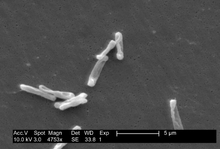
Individual, drumstick-shaped C. difficile bacilli seen through scanning electron microscopy
Clostridia are anaerobic motile bacteria, ubiquitous in nature, and especially prevalent in soil. Under the microscope, they appear as long, irregular (often drumstick- or spindle-shaped) cells with a bulge at their terminal ends. Under Gram staining,C. difficile cells are Gram-positive and show optimum growth on blood agar at human body temperatures in the absence ofoxygen. When stressed, the bacteria produce spores that are able to tolerate extreme conditions that the active bacteria cannot tolerate.[4]
C. difficile may become established in the human colon; it is present in 2–5% of the adult population.[4]
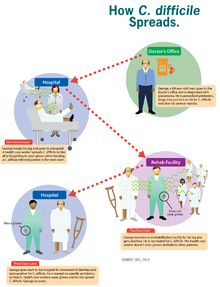
How C. difficile spreads
Pathogenic C. difficile strains produce multiple toxins.[9] The most well-characterized are enterotoxin (Clostridium difficiletoxin A) and cytotoxin (Clostridium difficile toxin B), both of which may produce diarrhea and inflammation in infected patients, although their relative contributions have been debated.[4] Toxins A and B are glucosyltransferases that target and inactivate the Rho family of GTPases. Toxin B (cytotoxin) induces actin depolymerization by a mechanism correlated with a decrease in the ADP-ribosylation of the low molecular mass GTP-binding Rho proteins.[10] Another toxin, binary toxin, also has been described, but its role in disease is not fully understood.[11]
Antibiotic treatment of CDIs may be difficult, due both to antibiotic resistance and physiological factors of the bacteria (spore formation, protective effects of the pseudomembrane).[4] The emergence of a new and highly toxic strain of C. difficile that is resistant to fluoroquinolone antibiotics such as ciprofloxacin and levofloxacin, said to be causing geographically dispersed outbreaks in North America, was reported in 2005.[12] The U.S. Centers for Disease Control and Prevention in Atlanta warned of the emergence of an epidemic strain with increased virulence, antibiotic resistance, or both.[13]
C. difficile is transmitted from person to person by the fecal-oral route. The organism forms heat-resistant spores that are not killed by alcohol-based hand cleansers or routine surface cleaning. Thus, these spores survive in clinical environments for long periods. Because of this, the bacteria may be cultured from almost any surface. Once spores are ingested, their acid-resistance allows them to pass through the stomach unscathed. Upon exposure to bile acids, they germinate and multiply into vegetative cells in the colon.
In 2005, molecular analysis led to the identification of the C. difficile strain type characterized as group BI by restriction endonuclease analysis , as North American pulse-field-type NAP1 by pulsed-field gel electrophoresis and as ribotype 027; the differing terminology reflects the predominant techniques used for epidemiological typing. This strain is referred to as C. difficile BI/NAP1/027.[14]
Risk factors
Antibiotics
C. difficile colitis is associated most strongly with the use of the following antibiotics: fluoroquinolones, cephalosporins, and clindamycin.[15]
Some research suggests the routine use of antibiotics in the raising of livestock is contributing to outbreaks of bacterial infections such as C. difficile.[16]
Healthcare environment
People are most often infected in hospitals, nursing homes, or other medical institutions, although infection outside medical settings is increasing. The rate of C. difficile acquisition is estimated to be 13% in patients with hospital stays of up to two weeks, and 50% with stays longer than four weeks.[17]
Long-term hospitalization or residence in a nursing home within the previous year are independent risk factors for increased colonization.[18]
Acid suppression medication
Increasing rates of community-acquired CDI are associated with the use of medication to suppress gastric acid production: H2-receptor antagonists increased the risk 1.5-fold, and proton pump inhibitors by 1.7 with once-daily use and 2.4 with more than once-daily use.[19][20]
Pathophysiology
The use of systemic antibiotics, including (but not limited to) any penicillin-based antibiotic such as ampicillin, cephalosporins, and clindamycin, causes the normal bacterial flora of the bowel to be altered. In particular, when the antibiotic kills off other competing bacteria in the intestine, any bacteria remaining will have less competition for space and nutrients. The net effect is to permit more extensive growth than normal of certain bacteria. Clostridium difficile is one such type of bacterium. In addition to proliferating in the bowel, C. difficile also produces toxins. Without either toxin A or toxin B, C. difficile may colonize the gut, but is unlikely to cause pseudomembranous colitis.[21] The colitis associated with severe infection is part of an inflammatory reaction, with the "pseudomembrane" formed by a viscous collection of inflammatory cells, fibrin, and necrotic cells.[4]
Diagnosis
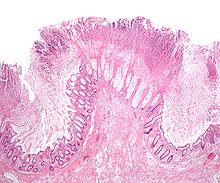
Micrograph of a colonic pseudomembrane in C. difficile colitis, a type of pseudomembranous colitis,H&E stain
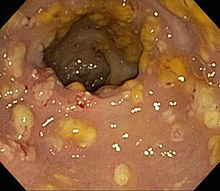
Endoscopic image of pseudomembranous colitis, with yellow pseudomembranes seen on the wall of the sigmoid colon
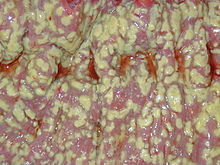
Pathological specimen showing pseudomembranous colitis
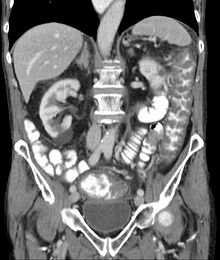
Pseudomembranous colitis on computed tomography
Prior to the advent of tests to detect C. difficile toxins, the diagnosis most often was made by colonoscopy or sigmoidoscopy. The appearance of "pseudomembranes" on the mucosa of the colon or rectum is highly suggestive, but not diagnostic of the condition.[22] The pseudomembranes are composed of an exudate made of inflammatory debris, white blood cells. Although colonoscopy and sigmoidoscopy are still employed, now stool testing for the presence of C. difficile toxins is frequently the first-line diagnostic approach. Usually, only two toxins are tested for—toxin A and toxin B—but the organism produces several others. This test is not 100% accurate, with a considerable false-negative rate even with repeat testing.
Cytotoxicity assay
C. difficile toxins have a cytopathic effect in cell culture, and neutralization of any effect observed with specific antisera is the practical gold standard for studies investigating new CDI diagnostic techniques.[4] Toxigenic culture, in which organisms are cultured on selective media and tested for toxin production, remains the gold standard and is the most sensitive and specific test, although it is slow and labor-intensive.[23]
Toxin ELISA
Assessment of the A and B toxins by enzyme-linked immunosorbent assay (ELISA) for toxin A or B (or both) has a sensitivityof 63–99% and a specificity of 93–100%.
Previously, experts recommended sending as many as three stool samples to rule out disease if initial tests are negative, however, evidence suggests repeated testing during the same episode of diarrhea is of limited value and should be discouraged.[24] C. difficile toxin should clear from the stool of previously infected patients if treatment is effective. Many hospitals only test for the prevalent toxin A. Strains that express only the B toxin are now present in many hospitals, however, so testing for both toxins should occur.[25][26] Not testing for both may contribute to a delay in obtaining laboratory results, which is often the cause of prolonged illness and poor outcomes.
Other stool tests
Stool leukocyte measurements and stool lactoferrin levels also have been proposed as diagnostic tests, but may have limited diagnostic accuracy.[27]
PCR
Testing of stool samples by real-time polymerase chain reaction is able to pick up the disease about 90% of the time and when positive is incorrectly positive about 4% of the time.[28] Multistep PCR testing algorithms can improve overall performance.
Prevention
Antibiotics
The most effective method for preventing CDI is proper antimicrobial prescribing. In the hospital setting, where CDI is most common, nearly all patients who develop CDI are exposed to antimicrobials. Although proper antimicrobial prescribing sounds easy to do, about 50% of antimicrobial use is considered inappropriate. This is consistent whether in the hospital, clinic, community, or academic setting. A decrease in CDI by limiting antibiotics or by limiting unnecessary antimicrobial prescriptions in general, both in an outbreak and non-outbreak setting has been demonstrated to be most strongly associated with reduced CDI. Further, reactions to medication may be severe: CDI infections were the most common contributor to adverse drug events seen in U.S. hospitals in 2011.[29]
Probiotics
Some evidence indicates probiotics may be useful to prevent infection and recurrence.[30][31] Treatment with Saccharomyces boulardii in those who are not immunocompromised with C. difficile also may be useful.[32][33] Initially, in 2010, the Infectious Diseases Society of America recommended against their use due to the risk of complications.[30][32] Subsequent reviews, however, did not find an increase in adverse effects with treatment,[31] and overall treatment appears safe.
Infection control
Rigorous infection protocols are required to minimize this risk of transmission.[35] Infection control measures, such as wearing gloves and noncritical medical devices used for a single person with CDI, are effective at prevention.[36] This works by limiting the spread of C. difficile in the hospital setting. In addition, washing with soap and water will eliminate the spores from contaminated hands, but alcohol-based hand rubs are ineffective.[37]
Bleach wipes containing 0.55% sodium hypochlorite have been shown to kill the spores and prevent transmission between patients.[38] Installing lidded toilets and closing the lid prior to flushing also reduces the risk of contamination.[39]
Those who have CDIs should be in rooms with other people with CDIs or by themselves when in hospital.[36]
Common hospital disinfectants are ineffective against C. difficile spores and, in fact, may promote spore formation, however, disinfectants containing a 10:1 ratio of water to bleach effectively kill the spores.[40] Hydrogen peroxide vapor (HPV) systems used to sterilize a patient room post-discharge have been shown to reduce infection rates and to reduce risk of infection to subsequent patients. The incidence of CDI was reduced by 53%[41] or 42%[42] through use of HPV. Ultraviolet cleaning devices and housekeeping staff especially dedicated to disinfecting the rooms of patients infected with C. difficile after discharge may be effective.[43]
Treatment
Carrying C. difficile without symptoms is common. Treatment in those without symptoms is controversial. In general, mild cases do not require specific treatment.[4][44] Oral rehydration therapy is useful in treating dehydration associated with the diarrhea.
Medications
A number of different antibiotics are used for C. difficile, with the available agents being more or less equally effective.[45]
- Metronidazole typically is the initial drug of choice for mild to moderate disease, because of lower price.[32] Typically it is taken three times a day for 10 days.[46]
- Oral vancomycin is preferred for severe disease.[32] Additionally, vancomycin may be used to treat mild-to-moderate disease if diarrhea persists after a course of metronidazole.[46] Since metronidazole has the potential to cause birth defects, pregnant women with Clostridium difficile infection may be treated with vancomycin regardless of disease severity.[46] Vancomycin and metronidazole, however, appear to be equally effective.[44] Typical vancomycin dosage is taken four times daily for 10 days.[46]
- Fidaxomicin has been found to be as effective as vancomycin in those with mild to moderate disease.[47] It is tolerated as well as vancomycin,[48] and may have a lower risk of recurrence.[45] It may be used in those who have recurrent infections and have not responded to other antibiotics.[47]
Drugs used to slow or stop diarrhea such as loperamide may worsen C. difficile disease, so are not recommended.[49] Cholestyramine, an ion exchange resin, is effective in binding both toxin A and B, slowing bowel motility, and helping prevent dehydration.[50] Cholestyramine is recommended with vancomycin. A last-resort treatment in those who are immunosuppressed is intravenous immunoglobulin (IVIG).[50]
Probiotics
Evidence to support the use of probiotics in the treatment of active disease is insufficient.[32][51] Thus in this situation, they are recommended neither as an add-on to standard therapy nor for use alone.[52]
Stool transplant
Fecal bacteriotherapy, also known as a stool transplant, is approximately 85% to 90% effective in those for whom antibiotics have not worked.[53][54] It involves infusion of bacterial flora acquired from the feces of a healthy donor to reverse the bacterial imbalance responsible for the recurring nature of the infection.[55] The procedure replaces normal, healthy colonic flora that had been wiped out by antibiotics, and reestablishes resistance to colonization by Clostridium difficile.[56] Side effects, at least initially, are few.[54]
There is evidence that looks hopeful that fecal transplant can be delivered in the form of a pill.[57] They are available in the United States but are not FDA-approved as of 2015.[58]
Surgery
In those with severe C. difficile colitis, colectomy may improve the outcomes.[59] Specific criteria may be used to determine who will benefit most from surgery.[60]
PROGNOSIS
After a first treatment with metronidazole or vancomycin, C. difficile recurs in about 20% of people. This increases to 40% and 60% with subsequent recurrences.[61]