Curcumin
Videos
Reprogramming Cancer Cell Death
Spice it Up, A New Way to Use Curcumin (video)
Overview
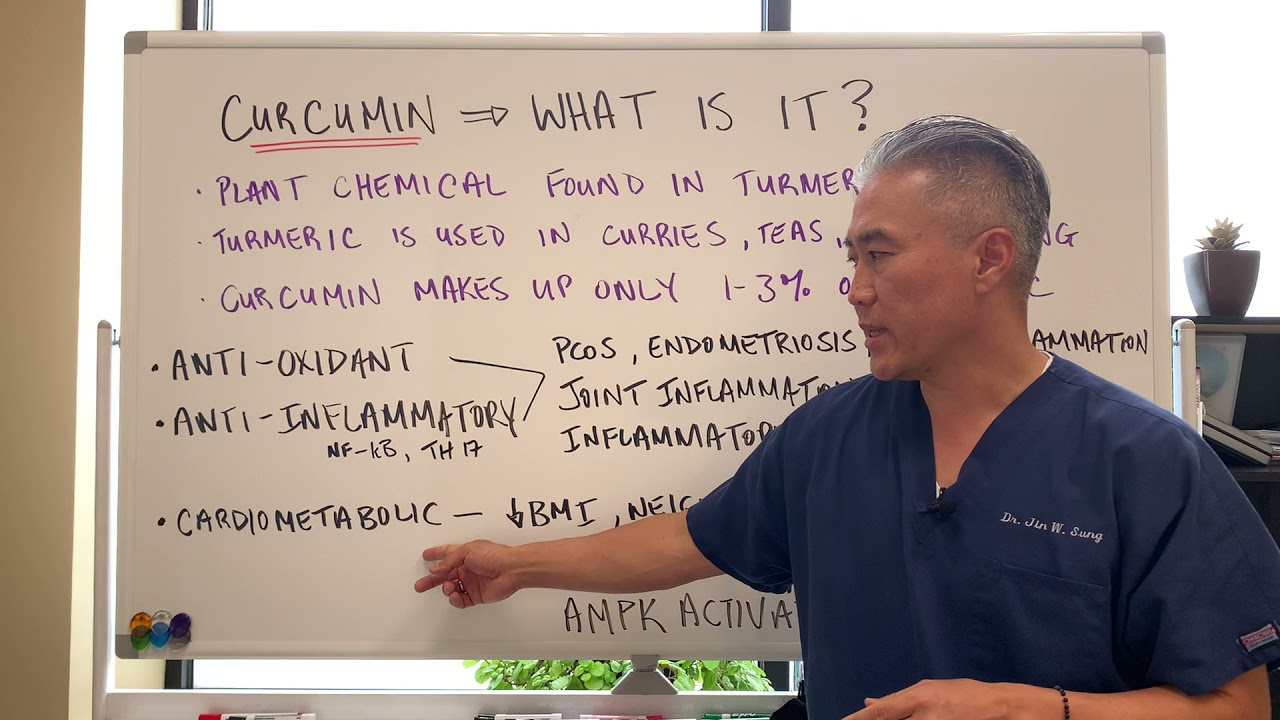
Curcumin is the principal yellow-orange polyphenolic pigment of Curcuma longa (turmeric), concentrated in its rhizome. Turmeric contains three major curcuminoids:
- Curcumin (diferuloylmethane): approximately 60–70% of the curcuminoid fraction
- Demethoxycurcumin: approximately 20–27%
- Bisdemethoxycurcumin: approximately 10–15%
These proportions are approximate and vary with cultivar, extraction method, and preparation. Curcumin is best understood as a pleiotropic signaling molecule: preclinical research describes effects across inflammatory, oxidative-stress, cell-survival, angiogenic, metabolic, and immune pathways. These mechanisms are biologically interesting, but cell-culture and animal findings should not be interpreted as proof of clinical efficacy in humans.
Evidence note: Curcumin has extensive preclinical literature, while human evidence is mixed and depends strongly on the formulation, dose, condition studied, and study quality. It should not replace diagnosis or standard treatment.
Plant role
As a plant secondary metabolite, curcuminoids may help turmeric respond to competing plants, pathogens, and herbivores. Their intense coloration and chemical reactivity are related to their biological activity in experimental systems.
Pharmacology and mechanisms
Reported mechanisms include:
- Modulation of NF-κB, AP-1, COX, lipoxygenase, and other inflammatory signaling pathways
- Reduced experimental expression of inflammatory mediators such as TNF-α, IL-6, nitric oxide, and COX-2
- Antioxidant activity, including direct radical-scavenging and regulation of cellular antioxidant responses
- Effects on cell-cycle regulation, apoptosis, kinases, transcription factors, angiogenesis, adhesion, and matrix-remodeling enzymes
- Experimental modulation of STAT3, Wnt/β-catenin, PPAR-γ, and Nrf2-related signaling
- Reported effects on MMP-2, integrins, FAK, and membrane-type MMPs in selected cancer-cell models
Curcumin interacts with many molecular targets, which may explain its broad experimental profile but also makes isolated pathway claims difficult to generalize. Concentrations effective in vitro are often higher than concentrations achieved in human tissues.
Absorption and bioavailability
Unformulated curcumin generally has low oral bioavailability because of limited absorption, rapid intestinal and hepatic metabolism, and rapid systemic elimination. Human studies have often found very low or transient plasma concentrations after gram-level doses.
Formulations intended to improve exposure include:
- Piperine or black-pepper extract
- Phospholipid complexes and phytosomes
- Liposomes, nanoemulsions, nanoparticles, hydrogels, and polymer systems
- Oil-based or other lipid-containing preparations
Some studies report large relative increases in measured exposure with enhanced formulations. These results are product-specific and do not mean that all formulations are interchangeable or that higher blood levels necessarily produce better clinical outcomes. Piperine can also alter the absorption and metabolism of medicines.
Digestive system
Experimental studies report possible:
- Increased intestinal digestive-enzyme activity
- A choleretic effect, with increased bile production in some models
- Changes in intestinal morphology, including villus dimensions and goblet-cell numbers
- Antioxidant and anti-inflammatory support for intestinal cells
- Prebiotic-like effects on gut microbial communities
These findings remain dependent on model, preparation, and dose. Human digestive benefits should be described cautiously.
Anti-inflammatory and antioxidant effects
Curcumin has been studied for its capacity to modulate inflammatory transcription factors, arachidonic-acid metabolism, oxidative stress, endothelial signaling, and cellular antioxidant defenses. These effects are a major rationale for research in osteoarthritis, metabolic disease, inflammatory disorders, and other conditions. Clinical results vary, and improvements in biomarkers do not necessarily translate into disease modification.
Antineoplastic research
Curcumin has demonstrated antiproliferative, pro-apoptotic, anti-invasive, and anti-angiogenic effects in numerous cell and animal models. Reported experimental targets include protein kinases, AP-1, NF-κB, c-jun, c-fos, c-myc, cell-cycle proteins, MMPs, and carcinogen-metabolism pathways. Curcuminoids have been investigated at initiation, promotion, and progression stages in laboratory cancer models.
These findings are not evidence that curcumin treats or cures cancer in humans. Human oncology research is still developing; curcumin should not be used instead of evidence-based cancer therapy. Discuss any supplement with the treating oncology team, especially during chemotherapy, radiation, surgery, or anticoagulant use.
Tissue State Relevance
Curcumin maps cleanly onto Heat/Excitation as its primary tissue‑state relevance, with secondary effects on Wind/Tension and mild support for Damp/Stagnation.
This mapping is directly grounded in its pharmacology: strong NF‑κB suppression, antioxidant activity, and broad anti‑inflammatory signaling modulation.
Below is a structured, citation‑anchored breakdown.
🔥 Heat / Excitation — Primary relevance
Curcumin is fundamentally an anti‑excitation compound.
Why (grounded in sources):
- Curcumin exerts its core anti‑inflammatory effects by inhibiting NF‑κB activation, reducing inflammatory cytokines and mediators. Frontiers
- It also regulates ERK phosphorylation and the JAK/STAT pathway, further suppressing inflammatory signaling. Frontiers
- These pathways are central drivers of chronic inflammatory “heat” patterns.
Tissue‑state interpretation:
Curcumin cools and calms tissues stuck in inflammatory overactivation—redness, swelling, autoimmune flare, cytokine excess, metabolic inflammatory loops.
🌬️ Wind / Tension — Secondary relevance
Curcumin modulates cellular stress pathways and inflammatory cascades that contribute to tension‑dominant patterns.
Why:
- Its regulation of ERK and JAK/STAT affects cellular stress responses and inflammatory rigidity. Frontiers
- Curcumin shows therapeutic value in neurodegenerative and atherosclerotic conditions, which often involve inflammatory tension loops. Frontiers
Tissue‑state interpretation:
Useful where tissues are tight, inflamed, reactive, or undergoing proliferative tension (vascular tension, neuroinflammatory tension).
💧 Damp / Stagnation — Indirect relevance
Curcumin’s anti‑inflammatory and antioxidant actions can help resolve damp‑heat stagnation patterns.
Why:
- Chronic inflammation contributes to damp‑heat congestion; curcumin’s NF‑κB suppression reduces this inflammatory stagnation. Frontiers
- This is an indirect effect rather than a primary action.
❄️ Cold / Depression — Contraindicated
Curcumin does not treat cold/depressed tissue states.
Why:
- Its primary actions are suppressive (NF‑κB, ERK, JAK/STAT inhibition).
- In tissues already cold, weak, or atrophic, further suppression may worsen collapse patterns (inference based on pharmacology).
⭐ Tissue‑State Summary Table
| Tissue State | Relevance | Mechanistic Basis | Pattern |
|---|---|---|---|
| Heat / Excitation | Primary | NF‑κB inhibition; ERK & JAK/STAT modulation; cytokine suppression | Autoimmune flare, inflammatory heat, metabolic excitation |
| Wind / Tension | Secondary | Stress‑pathway modulation; neuroinflammatory & vascular tension reduction | Fibrosis, vascular tension, neuroinflammation |
| Damp / Stagnation | Indirect | Anti‑inflammatory → reduces damp‑heat congestion | Damp‑heat stagnation |
| Cold / Depression | Contraindicated | Risk of over‑suppression | Fatigue, collapse, atrophy |
Common research and clinical considerations
- Studies use different products: turmeric powder, standardized extracts, isolated curcumin, and enhanced formulations are not equivalent.
- Dose, duration, food intake, formulation, and assay method can substantially change exposure.
- Reported benefits in small trials require confirmation in larger, well-controlled studies.
- “Bioavailability” may refer to plasma curcumin, metabolites, tissue exposure, or pharmacodynamic effects; these are not interchangeable measurements.
Safety and cautions
Curcumin and turmeric products can cause gastrointestinal symptoms and may affect bile flow. Use caution with gallstones, biliary obstruction, significant liver disease, bleeding disorders, upcoming surgery, pregnancy or breastfeeding, and medicines with narrow therapeutic windows. Potential interactions may involve anticoagulants/antiplatelet drugs, diabetes medicines, chemotherapy, and drugs metabolized through hepatic or intestinal pathways. Rare liver injury has been reported with some concentrated turmeric/curcumin supplements.
Seek medical advice for jaundice, dark urine, unusual fatigue, severe abdominal pain, or unusual bleeding. Product quality, contamination, adulteration, and inaccurate labeling are additional concerns; prefer independently tested products when supplementation is appropriate.
Dosage
There is no universally established therapeutic dose for curcumin. Published studies have used widely varying amounts and formulations, from low-dose preparations to several grams daily. Do not infer a safe or effective dose from preclinical studies or from one branded formulation. Follow the product label and obtain individualized advice from a qualified clinician or pharmacist.
Selected source
Nelson KM, et al. The Essential Medicinal Chemistry of Curcumin. Journal of Medicinal Chemistry. 2017;60(5):1620–1637.
Articles and additional reading
Curcumin Conundrum — Townsend Letter
Turmeric can help regenerate the liver
The Spice That Prevents Fluoride From Destroying Your Brain
Curcumin vs. cancer: The scientific evidence continues to flow in
Curcumin Naturally Fights Cancer, Heart Disease, Alzheimer’s Disease and Obesity
Curcumin Reduces Heart Enlargement and May Prevent Heart Failure
Curcumin supplementation is shown to halt the progression of diabetes in pre-diabetics
Curcumin inhibits cancers of the head and neck
Curcumin scientific literature
Existing attachments
Mechanism of Action Curcumin.pdfCurcumin for COVID-19.pdfNotes.md