Mydriasis
Return to Eye/Vision Menu
Mydriasis is the medical term for an unusual dilation or widening of the pupils.
Videos
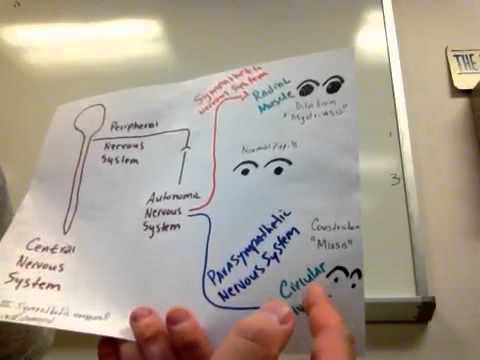
Benign Episodic Pupillary Mydriasis/Springing Pupil

Pupillary Nerve Control - Miosis(constriction) & Mydriasis(Dilation)


Normally, a person’s pupils dilate when the light is dim so that more light can enter the eye. Mydriasis describes a condition where the pupils dilate without a change in the levels of light.
When someone’s pupils dilate in an unusual way, it is called mydriasis. This may be caused by an injury, psychological factors, or when someone takes certain drugs or medications.
Doctors sometimes refer to more pronounced mydriasis, when the pupils are fixed and dilated, as “blown pupil.” This condition can be a symptom of an injury to the brain from physical trauma or a stroke.
The opposite of mydriasis is called miosis and is when the iris constricts to cause very small or pinpoint pupils.
Mydriasis can affect one pupil at a time or both at once. Mydriasis that affects only one eye is called anisocoria.
An estimated 1 in 5 people are born with pupils of slightly different sizes, and their eyes react typically to changes in light. This condition is called physiologic, simple, or essential anisocoria.
In most cases, having dilated pupils does not mean that an individual has a serious health problem, and the condition will go away on its own fairly rapidly. A person should see a doctor if it does not, or if other symptoms are present such as headaches or confusion.
CAUSES
There are many different potential causes for mydriasis, including:
Medications
Several different medications can cause mydriasis in one or both eyes.
Antihistamines, botox, muscle relaxants, and drugs used to treat Parkinson’s disease may all cause the pupils to dilate.
Anticholinergics, which are used to block neurotransmitters in individuals with COPD, urinary incontinence, and other conditions, also have this effect.
Recreational drugs that include cocaine, LSD, ecstasy, and amphetamines can also cause dilated pupils.
Plants
Some plants, such as Jimson weed, angel’s trumpet, and members of the belladonna family, can cause the pupils to dilate.
A person might encounter these plants without realizing it through inhaling particles or touching garden flowers.
Benign episodic pupillary mydriasis
A condition called benign episodic pupillary mydriasis happens when an otherwise healthy individual with a history of headaches suddenly develops dilated pupils.
They may also experience discomfort in, around, or behind the eye and have blurry vision.
Episodes typically last for a short time and go away on their own.