Selenium (SE)
Selenium Summary - Linus Paul Institute
See the studies section for how it can help prevent or mitigate Ebola and COVID-19. It helps proliferate natural killer cells. Vitamin D, vitamin E and selenium work best together. Onions contain phytoncides. Selenium, working with phytoncides, increases T cell proliferation. Selenium reduces thrombi in blood vessels. Its part of glutathione for the antioxidant function.
Minerals are more easily extracted from vegetables and herbs with vinegar and water than with alcohol. When you make an infused vinegar using herbs you capture these minerals in an easily assimilated form.
Videos
The Health Benefits of Selenium
The Importance of Consuming Just Enough Selenium
What Big Pharma Does Not Want You To Know: Selenium, The Master Mineral
How to Manage Your Selenium Status
Selenium is good for your heart & joints (antioxidant)
Selenium Opens Many Doors In The Body
The Amazing Selenium Trace Mineral
Uses
To prevent and treat cancer
Clear evidence is lacking. Some studies suggest it may actually increase the risk of aggressive and secondary cancers.
To reduce chemotherapy-induced adverse effects
Selenium may help reduce fatigue and nausea in young patients. To reduce secondary lymphedema (swelling due to the accumulation of lymph) A clinical trial suggests that selenium supplementation can reduce the swelling that occurs in patients who have undergone extensive surgery or radiation therapy.
To prevent heart disease
Although low blood selenium levels have been associated with heart disease, studies in the general population have not supported the use of selenium to protect against heart disease. This use remains controversial.
To stimulate the immune system
Selenium is essential for proper functioning of the immune system, and a few studies have shown an enhanced immune response in people taking selenium supplements.
To treat rheumatoid arthritis
Low blood levels of selenium have been found in patients with rheumatoid arthritis. However, treatment of rheumatoid arthritis with selenium has not shown benefit in a few clinical trials.
Selenium to detox from fluoride
Selenium is one nutrient that often times is the first answer given to those seeking to combat the existence of sodium fluoride in their bodies. As FoodConsumer reports, selenium has actually been found to help block the effects of fluoride as well as fluoride elimination. A great natural source of selenium is Brazil nuts, but is important to keep your intake in balance. I don’t recommend you start eating handfuls of Brazil nuts. Many in the field of natural health recommend a dose of 100 to 200 micrograms, though this does fall below the National Institute of Health’s ‘upper limit’ of 400 micrograms.
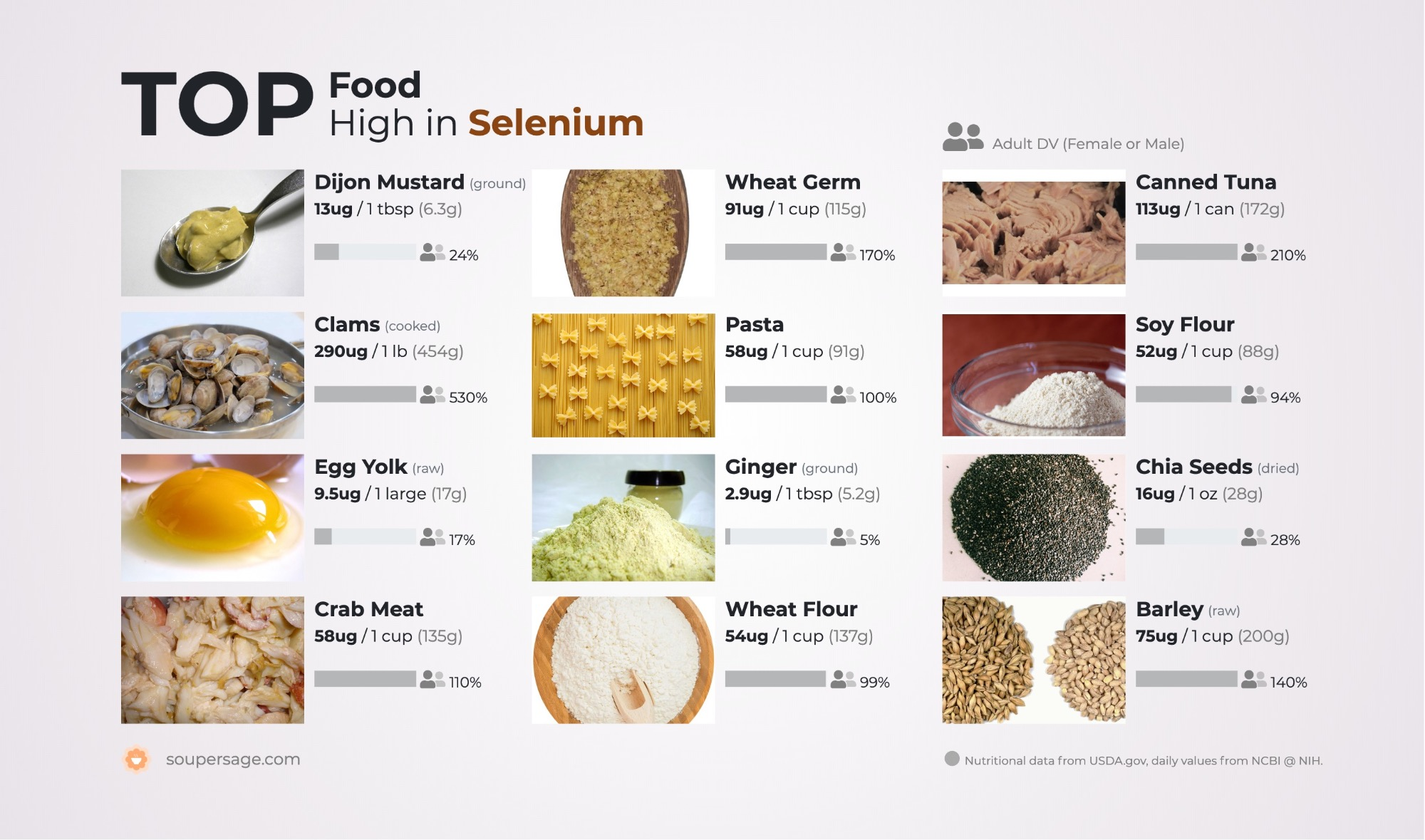
Brazil nutsvary in selenium content depending on a number of factors, but on average you can expect 70 to 90 micrograms per serving. Selenium is also found in fish, meat, and nuts. Don’t forget also that taking selenium along with high doses of vitamin C and zinc can actually inhibit proper absorption. The reason Brazil nuts is preferred as a food source is that the tree cannot grow without adequate selenium in the soil, whereas, other sources aren't as fussy about selenium content so they can grow with lower levels of selenium, reflected in lower levels of selenium in their food products.
Lima & Pinto Beans: 1 cup cooked contains 10 mcg of selenium, about 17% of your daily requirement.
Greens:
- 1 cup cabbage contains 3.5 mcg 6% of DRI and 44 calories.
- 1 cup spinach contains 3 mcg 5% of DRI and 41 calories.
- 1 cup broccoli contains 2.5 mcg 4% of DRI and 55 calories.
Garlic may increase selenium absorption with possible protection against tumorigenesis.
Clinical Summary:
Selenium, an essential dietary trace mineral, is an important component of antioxidant systems such as glutathione peroxidase that neutralize and protect against damage caused by free radicals and reactive oxygen species. It also plays an important role in thyroid function. Selenium can be obtained from the diet by consuming whole grains, meats, seafood, poultry and nuts, and is sold in supplemental form to boost immune function and for prevention of cardiovascular, rheumatic diseases, and cancer.
Several studies have been conducted to determine the role of selenium in reducing the risk of cardiovascular disease but data are inconclusive . Supplementation was found to reduce viral load in individuals infected with human immunodeficiency virus (HIV) . It was also shown to reduce markers of inflammation and oxidative stress in patients with diabetic nephropathy , may improve glucose metabolism, but was not useful in preventing type 2 diabetes and in some cases may increase the risk . In another study of asymptomatic older men, selenium alone or in combination with vitamin E was ineffective in preventing dementia.
The importance of selenium in cancer prevention has been documented in epidemiological studies and clinical intervention trials. Data suggest its benefits in preventing gastrointestinal and lung cancers although findings from bladder cancer research are conflicting . Selenium supplementation also resulted in reduction of side effects including hair loss, abdominal pain, and loss of appetite in ovarian cancer patients undergoing chemotherapy . It was found effective in reducing head and neck lymphedema ; to help reduce diarrhea associated with radiation therapy in gynecological cancer patients without influencing the effectiveness or long-term survival ; and may decrease chemotherapy induced fatigue and nausea in adolescents.
However, a recent review of randomized controlled trials did not find clear evidence of selenium’s cancer preventive potential . The large prevention study SELECT (Selenium and Vitamin E Cancer Prevention Trial) , based on previous data indicating that selenium and vitamin E reduced the incidence of prostate cancer, also failed to find evidence of protective effects of selenium. The trial was suspended in January 2009, when initial data analysis showed that selenium, by itself or when combined with vitamin E, did not prevent prostate cancer in healthy men . Further, a sub-group analysis failed to find any benefit for prevention of colorectal adenomas . In other studies, selenium when used together with soy and Vitamin E, did not prevent prostate cancer progression ; and when used with lycopene, had no effect on modulating risk of prostate cancer . Moreover, results from a cross-sectional analysis of men with prostate cancer indicate that selenium levels may influence the risk of aggressive prostate cancer , and supplementation may increase prostate cancer mortality.
A chemoprevention trial of selenium in patients with NSCLC (non small-cell lung cancer) was also halted after interim analysis as data did not show any benefit of selenium supplementation; there was an increase in secondary lung cancers in selenium users, although it was statistically insignificant . Long term use of selenium may increase the risk of certain types of skin cancer as well .
Additional studies indicate no association between dietary selenium intake and thyroid cancer incidence , but that it may protect radiation-induced damage to salivary glands in patients with differentiated thyroid cancer.
Mechanism of Action:
Selenium is an essential structural element of the antioxidant enzyme glutathione-peroxidase that converts aggressive oxidation products and intracellular free radicals into less reactive or neutral components . Other biological functions of selenium include regulation of thyroid hormone action and regulation of the reduction status of vitamin C.
Selenium has been shown to induce a multi-targeted cell death process characterized by induction of unfolded protein response, ER-stress and occurrence of large cytoplasmic vacuoles, in addition to the formation of reactive oxygen species (ROS) . However, excessive intake of selenium induces hepatic insulin resistance through opposite regulation of (ROS) .
Recent data show that the effects of dietary selenium on progression of malignant mesothelioma tumors depend on arising cancer cells’ redox metabolism, and the tumors able to convert increased selenium into a stronger reducing capacity actually benefit from increased selenium intake . In another study, selenium supplementation was shown to afford protection against adriamycin-induced cardiac dysfunction via restoring ATP-sensitive potassium channels (KATP) expression.