Endoplasmic reticulum
See also: Rough Endoplasmic Reticulum ; Smooth Endoplasmic Reticulum
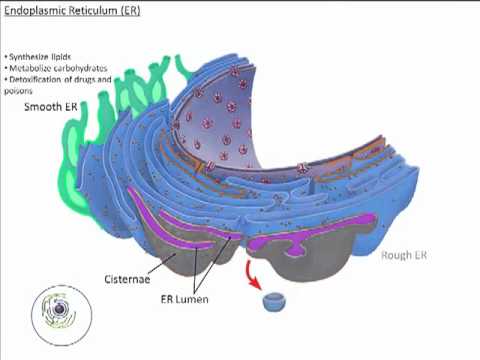
The City’s Factory and Packaging Plant – The Endoplasmic Reticulum and Golgi Apparatus
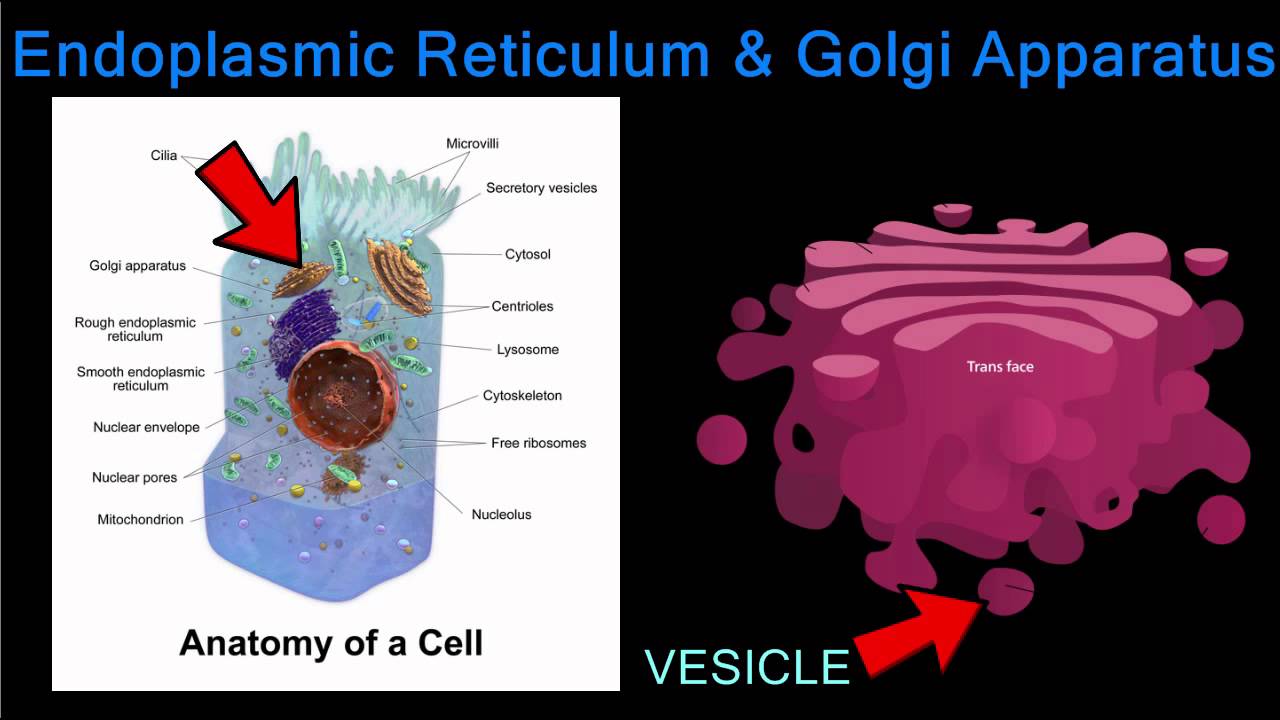
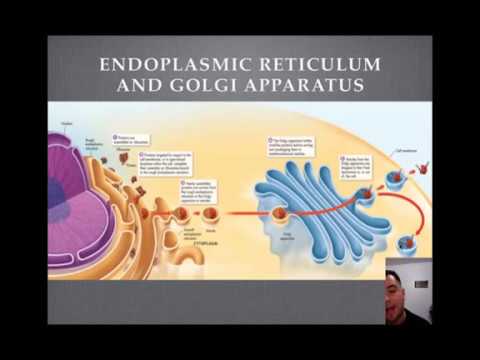
- The ER is a system of membranous tubules and sacs
- The primary function of the ER is to act as an internal transport system, allowing molecules to move from one part of the cell to another
- The quantity of ER inside a cell fluctuates, depending on the cell's activity. Cells with a lot include secretory cells and liver cells
- The rough ER is studded with 80s ribosomes and is the site of protein synthesis. It is an extension of the outer membrane of the nuclear envelope, so allowing mRNA to be transported swiftly to the 80s ribosomes, where they are translated in protein synthesis
- The smooth ER is where polypeptides are converted into functional proteins and where proteins are prepared for secretion. It is also the site of lipid and steroid synthesis, and is associated with the Golgi apparatus. Smooth ER has no 80s ribosomes and is also involved in the regulation of calcium levels in muscle cells, and the breakdown of toxins by liver cells
- Both types of ER transport materials throughout the cell.
To be or not to be in the ER, that is the question - During the process of cellular protein synthesis mistakes can happen. Sometimes, proteins end up being misfolded. They do not shape up into the specific 3-D structure that is required for proper function. Misshaped secreted and transmembrane proteins usually trigger safety mechanisms that dispose of them by shuttling them from their place of synthesis, the endoplasmic reticulum (ER), to the cytosol, where they are degraded in a cellular structure called proteasome.
"Many proteins in the cell have sugar (glycan) chemical groups attached to them. Research has suggested that when these glycosylated proteins are misfolded, removing the N-glycan groups might be one of the steps required for their destruction," said Dr. Hamed Jafar-Nejad, associate professor of molecular and human genetics at Baylor College of Medicine and lead scientist of the study.
For many years, scientists have thought that once misfolded glycoproteins exit the ER and enter the cytosol, the enzyme N-glycanase 1 (NGLY1) removes their N-glycan groups, thereby facilitating the disposal of the misfolded glycoproteins by the proteasome.
"We found that for a critical signaling protein called BMP4, removal of N-glycans by NGLY1 does not occur after the misfolded molecules have been transferred into the cytosol, but is instead required for the transfer itself to be accomplished," said first author Dr. Antonio Galeone, who was a postdoctoral fellow in Dr. Jafar-Nejad's lab during the development of this project. He is currently in the Department of Biosciences at the University of Milan.