Wasabi
See also: Eutrema (genus)

The truth about wasabi:
Constituents
Listing on Duke's Phytochemical Database
A Wasabi Grower's Story
Why Invest in the Hardest Plant to Grow?
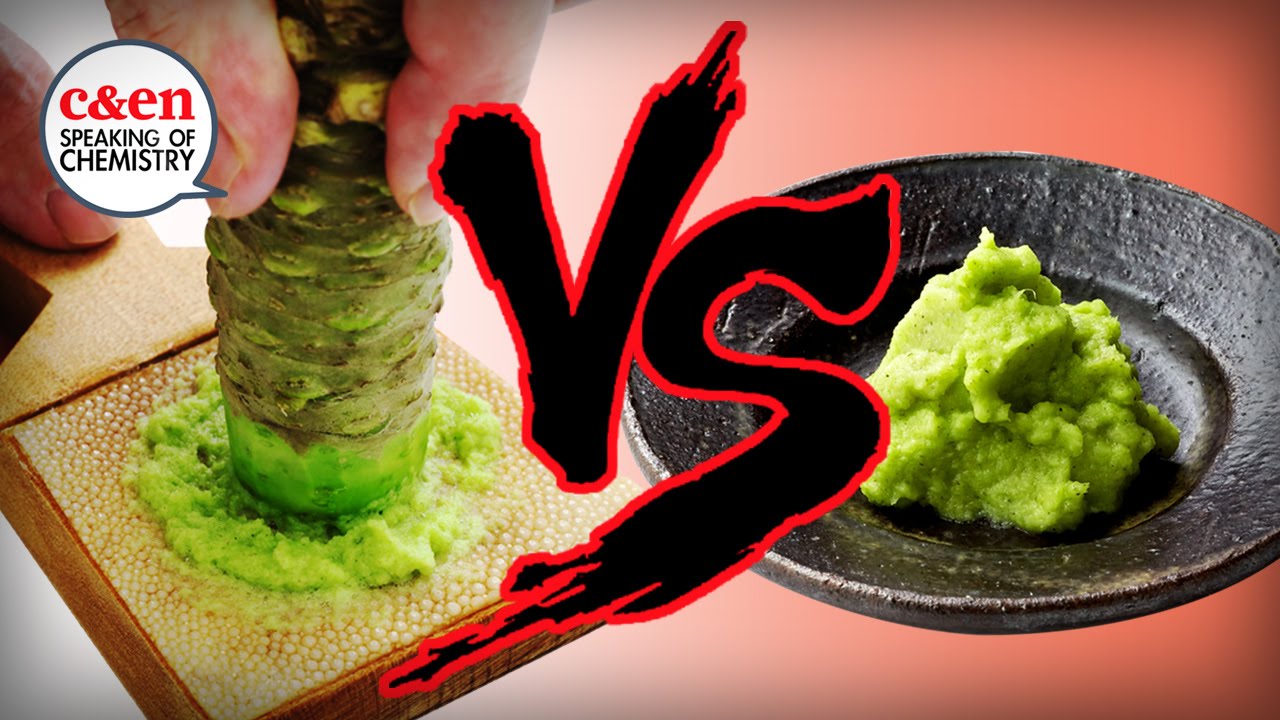
Wasabi is a Japanese native plant from the cabbage family that grows in riparian environments in the deep valleys of Japan. It is intolerant of direct sunlight and requires high humidity in summer and a temperature range between 46-70 degrees F; therefore, there are not many suitable growing areas and real Wasabi fetches high prices on the market. Almost all of the “Wasabi” sold outside of Japan along with sushi is actually Horseradish with added green coloring. As Horseradish has most of the same health benefits and is closely related, perhaps this isn’t a bad thing if sold with natural coloring agents (such as spirolina). In high-end sushi restaurants, Wasabi may be prepared fresh when the sushi order is made, as its flavor quickly degrades (within 15-20 min). Rolling Wasabi shavings into a ball can help the degradation of flavor as minimizes air exposure. Like Horseradish, the hot spicy flavor of Wasabi is from the enzymatic degradation of glucosinolates into mustard oil and other sulfur compounds. For this reason, the hot spicy effect is not like chili peppers which are more oil-based and linger on the tongue, but rather, it is mostly felt in the nasal passage.
In traditional medicine Wasabi is used for treating rheumatism, increasing blood circulation and alleviating pain. It is also known to have digestive effects and is used to stimulate digestion, and also as an antidote against “fish poisoning” (probably poisoning from eating the wrong fish). Wasabi has been found through scientific investigation to have antimicrobial, anti-inflammatory, anticariogenic, antiplatelet, antibacterial against H. pylori, neuroprotective and anticancer properties. Wasabi is also used to clear and open the sinuses. There is preclinical evidence that Wasabi may aid in weight loss by inhibiting the growth of fat cells. Wasabi is being investigated for its potential to prevent inflammatory bowel diseases, including Crohn’s disease and ulcerative colitis, as it has been found to have an anti-colitic effect through inhibition of the NF-kB signaling pathway and recovery of epithelial tight junctions in an colitis model. There is some scientific proof that Wasabi may be a key ingredient that is consumed with fish leading to lower rates of age-related dementia within the Japanese population. (Source)
Wikipedia
A plant of the Brassicaceae family, which includes cabbages, horseradish, and mustard. It is also called Japanese horseradish although horseradish is a different plant (which is generally used as a substitute for wasabi, due to the scarcity of the wasabi plant). Its stem is used as a condiment and has an extremely strong pungency more akin to hot mustard than the capsaicin in a chili pepper, producing vapours that stimulate the nasal passages more than the tongue. The plant grows naturally along stream beds in mountain river valleys in Japan. The two main cultivars in the marketplace are E. japonicum 'Daruma' and 'Mazuma', but there are many others. The origin of wasabi cuisine has been clarified from the oldest historical records; it takes its rise in Nara prefecture.
Wasabi is generally sold either as a stem, which must be very finely grated before use, as dried powder in large quantities, or as a ready-to-use paste in tubes similar to travel toothpaste tubes. Because it grows mostly submerged, it is a common misconception to refer to the part used for wasabi as a root or sometimes even a rhizome: it is in fact the stem of the plant, with the characteristic leaf scar where old leaves fell off or were collected.
In some high-end restaurants, the paste is prepared when the customer orders, and is made using a grater to grate the stem; once the paste is prepared, it loses flavor in 15 minutes if left uncovered.In sushi preparation, sushi chefs usually put the wasabi between the fish and the rice because covering wasabi until served preserves its flavor.
Fresh wasabi leaves can be eaten, having the spicy flavor of wasabi stems.
Legumes (peanuts, soybeans, or peas) may be roasted or fried, then coated with wasabi powder mixed with sugar, salt, or oil and eaten as a crunchy snack.
The sushi condiment wasabi, also known as Japanese horseradish, is extremely sulfur-rich, containing phyto-chemicals called isothiocyanates. Plant physiologist, Gina Mohammed, reports that phyto-chemicals found in the wasabi plant (Wasabia japonia) are antibacterial, antifungal, and are particularly effective in inhibiting blood coagulation.
Surrogates
Wasabi is difficult to cultivate, and that makes it quite expensive. Outside Japan, it is rare to find real wasabi plants. Due to its high cost, a common substitute is a mixture of horseradish, mustard, starch and green food coloring or spinach powder. Often packages are labeled as wasabi while the ingredients do not actually include wasabi plant. Wasabi and horseradish are similar in taste and pungency due to similar isothiocyanate levels. The primary difference between the two is color with Wasabi being naturally green. In Japan, horseradish is referred to as seiyō wasabi (西洋わさび?, "western wasabi"). In the United States, true wasabi is generally found only at specialty grocers and high-end restaurants.
Chemistry
The chemical in wasabi that provides for its initial pungency is the volatile allyl isothiocyanate, which is produced byhydrolysis of natural thioglucosides (conjugates of the sugar glucose, and sulfur-containing organic compounds); the hydrolysis reaction is catalyzed by myrosinase and occurs when the enzyme is released on cell rupture caused by maceration – e.g., grating – of the plant. The same compound is responsible for the pungency of horseradish and mustard.
The unique flavor of wasabi is a result of complex chemical mixtures from the broken cells of the plant, including those resulting from the hydrolysis of thioglucosides into glucose and methylthioalkyl isothiocyanates:
- 6-methylthiohexyl isothiocyanate
- 7-methylthioheptyl isothiocyanate
- 8-methylthiooctyl isothiocyanate
Research has shown that such isothiocyanates inhibit microbe growth, perhaps with implications for preserving food against spoilage and suppressing oral bacterial growth.Because the burning sensations of wasabi are not oil-based, they are short-lived compared to the effects of chili peppers, and are washed away with more food or liquid. The sensation is felt primarily in the nasal passage and can be quite painful depending on the amount consumed. Inhaling or sniffing wasabi vapor has an effect like smelling salts, a property exploited by researchers attempting to create a smoke alarm for the deaf. One deaf subject participating in a test of the prototype awoke within 10 seconds of wasabi vapor sprayed into his sleeping chamber.[18] The 2011 Ig Nobel Prize in Chemistry was awarded to the researchers for determining the ideal density of airborne wasabi to wake people in the event of an emergency.
Nutritional information
Nutrition Facts[19]| NutrientUnitValue | | per 100 gWaterg31.7Energykcal292Proteing2.23Total |
| lipid (fat) | g10.9Carbohydrate | |
| , by differenceg46.13Fiber | ||
| , total dietaryg6.1Sugars | ||
| , totalg13.2 |
Cultivation
A drawing of a wasabi plant, published in 1828 by Iwasaki Kanen.
Few places are suitable for large-scale wasabi cultivation, and cultivation is difficult even in ideal conditions. In Japan, wasabi is cultivated mainly in these regions:
- Izu peninsula, in Shizuoka prefecture
- Nagano prefecture including the Daio Wasabi Farm in Azumino; a popular tourist attraction and the world's largest commercial wasabi farm.
- Iwate prefecture
2009 wasabi production in Japan (metric tonne)[20]| PrefectureCultivatedin | waterCultivatedin | soilTotalStemLeafstalkStemLeafstalkStemLeafstalkTotal | |
| Shizuoka295.1638.24.5232.3299.6870.51 | ,170.1Nagano316.8739.27.216.8324.0756.01 | ||||||
| ,080.0 | |||||||
| Iwate | 8.8 | 1.5 | 2.4 | 620.5 | 11.2 | 622.0 | 633.2 |
| Shimane | 2.4 | 10.1 | 9.0 | 113.0 | 11.4 | 123.1 | 134.5 |
| Oita | 0.5 | 8.9 | - | 94.0 | 0.5 | 102.9 | 103.4 |
| Yamaguchi | 2.5 | 2.2 | 22.5 | 54.2 | 25.0 | 56.4 | 81.4 |
| Others65.848.161.7108.0127.5156.1283.6Total691.91 | |||||||
| ,448.2 | 107.3 | 1,238.8 | 799.2 | 2,687.0 | 3,486.2 |
There are also numerous artificial cultivation facilities as far north as Hokkaido and as far south as Kyushu. As the demand for real wasabi is very high, Japan imports an amount from China, Taiwan, and New Zealand.[citation needed] In North America, a handful of companies and small farmers cultivate Wasabia japonica.[21]
Preparation
Wasabi is often grated with a metal oroshigane, but some prefer to use a more traditional tool made of dried sharkskin with fine skin on one side and coarse skin on the other. A hand-made grater with irregular teeth can also be used. If a shark-skin grater is unavailable, ceramic is usually preferred.[22]
Etymology
The two kanji characters "山" and "葵" do not correspond to their pronunciation: as such it is an example of gikun (meaning, not sound). The two characters actually refer to the mountain Asarum, as the plant's leaves resemble those of a member of Asarum species, in addition to its ability to grow on shady hillsides. The word, in the form 和佐比, appeared in 918 in The Japanese Names of Medical Herbs (本草和名 Honzō Wamyō). Spelled in this way, the particular kanji are used for their phonetic values only, known as ateji (sound, not meaning – opposite of gikun). - Wikipedia