Remyelination
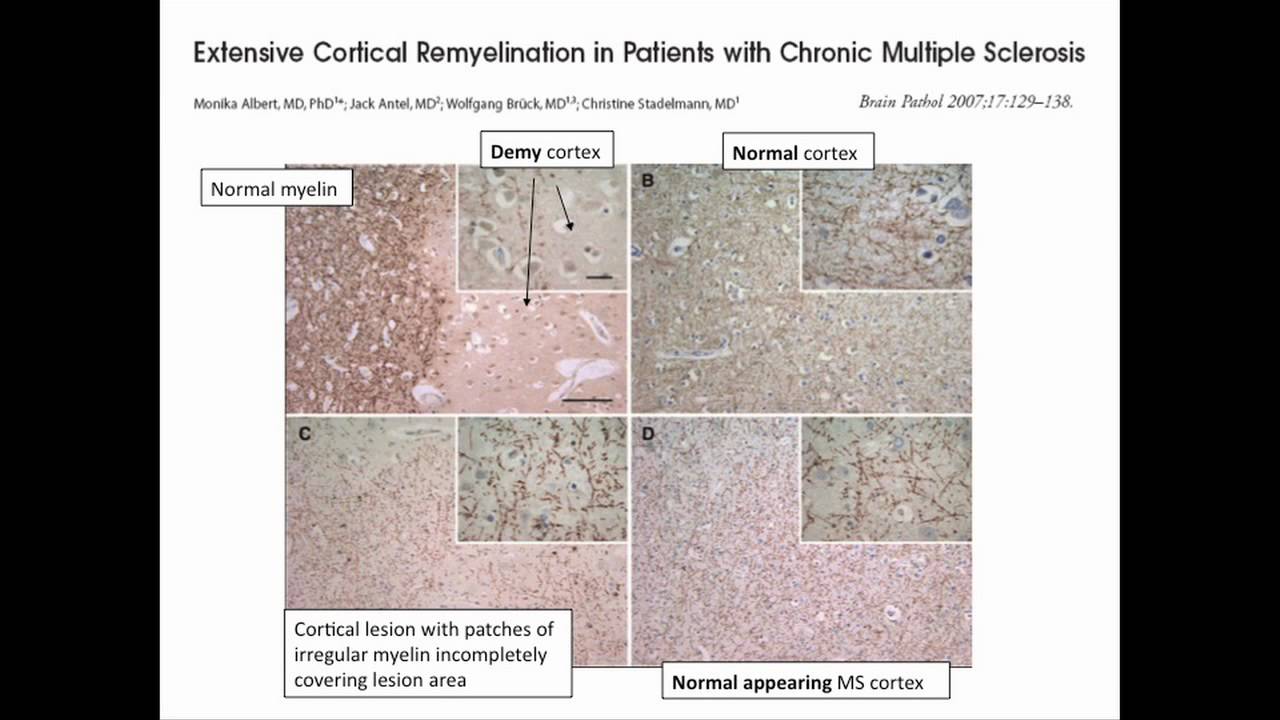
Why is remyelination slower in MS?

Remyelination is the process of propagating oligodendrocyte precursor cells to form oligodendrocytes to create new myelin sheaths on demyelinated axons in the CNS. This is a process naturally regulated in the body and tends to be very efficient in a healthy CNS.[1] The process creates a thinner myelin sheath than normal, but it helps to protect the axon from further damage, from overall degeneration, and proves to increase conductance once again. Demyelinating diseases, such as Multiple Sclerosis, have been of utmost interest within the last couple of decades. Recent research is uncovering some of the many unknown pathways involved with remyelination in hopes of battling demyelinating diseases like MS which can ultimately cripple a person.
- Statin drugs interfere with neurological healing by inhibiting myelin formation.
- Lovastatin may adversely affect myelin formation and the remyelination process.
- Phloretin enhances remyelination by stimulating oligodendrocyte precursor cell differentiation.
- EPA stimulates myelination in the rat brain.
- Melatonin promotes myelination by decreasing white matter inflammation after neonatal stroke.
- Progesterone may offer a therapeutic option for neuroprotection and myelin repair.
- Wasabi has significant neuritogenic-promoting activity, indicating its possible therapeutic role in neurological disorders.
- Vitamin D promotes remyelination by suppressing c-Myc and inducing oligodendrocyte precursor cell differentiation.
- Korean Red Ginseng and Rb1 may improve myelin regeneration during the remyelination phase.