Silverleaf Hydrangea
Used medicinally, see Wild Hydrangea
The Silverleaf Hydrangea, scientifically known as Hydrangea radiata, is a captivating deciduous shrub that belongs to the Hydrangeaceae family. This plant is native to the southeastern United States, where it thrives in the understory of deciduous forests. Known for its striking foliage and delicate blooms, the Silverleaf Hydrangea is a popular choice for gardeners looking to add a touch of elegance to their landscapes.
Botanical Characteristics
Foliage
One of the most distinctive features of the Silverleaf Hydrangea is its foliage. The leaves are ovate to elliptic, measuring between 3 to 6 inches in length. The upper surface of the leaves is a deep green, while the underside is covered with a silvery-white, felt-like texture. This unique characteristic gives the plant its common name, "Silverleaf." The contrast between the dark green upper surface and the silvery underside creates a shimmering effect when the leaves are rustled by the wind.
Flowers
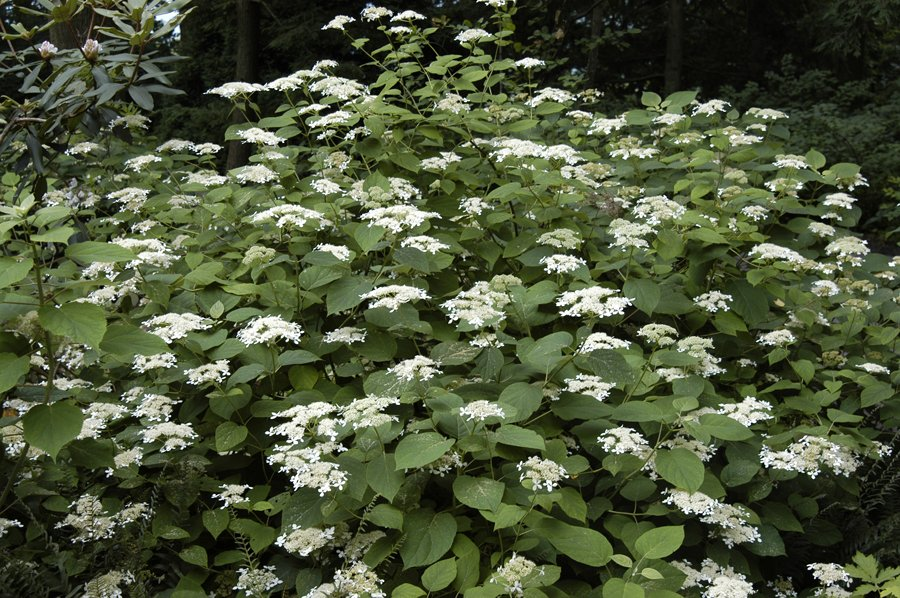
The Silverleaf Hydrangea produces flat-topped clusters of flowers, known as corymbs, which can reach up to 6 inches in diameter. The blooms typically appear from late spring to early summer. Each corymb consists of a mix of small, fertile flowers in the center and larger, showy sterile flowers around the edges. The sterile flowers are usually white, adding a delicate and ethereal quality to the plant's appearance. As the flowers age, they may take on a pinkish hue, adding another layer of visual interest.
Growth Habit
This shrub typically grows to a height of 3 to 6 feet, with a similar spread. It has a rounded, mounding growth habit, making it an excellent choice for borders, woodland gardens, and naturalized areas. The plant's moderate size and attractive form make it versatile for various landscape applications.
Cultivation and Care
Soil and Light Requirements
The Silverleaf Hydrangea prefers well-drained, moist soil that is rich in organic matter. It thrives in partial shade to full shade, making it an ideal choice for woodland gardens or shaded borders. While it can tolerate some sun, too much direct sunlight can scorch the leaves and reduce the plant's overall vigor.
Watering
Consistent moisture is crucial for the health of the Silverleaf Hydrangea. The soil should be kept evenly moist, especially during the hot summer months. Mulching around the base of the plant can help retain soil moisture and regulate temperature.
Pruning
Pruning is generally not necessary for the Silverleaf Hydrangea, but it can be done to maintain the plant's shape and remove any dead or damaged wood. If pruning is desired, it should be done immediately after flowering to avoid cutting off next year's flower buds.
Fertilization
A balanced, slow-release fertilizer applied in early spring can help promote healthy growth and abundant blooms. Over-fertilization should be avoided, as it can lead to excessive leaf growth at the expense of flowers.
Pests and Diseases
The Silverleaf Hydrangea is relatively resistant to pests and diseases. However, it can occasionally be affected by common garden issues such as aphids, spider mites, and powdery mildew. Regular monitoring and appropriate cultural practices, such as proper spacing and watering, can help minimize these problems.
Propagation
Propagation of the Silverleaf Hydrangea can be achieved through several methods:
- Cuttings: Softwood cuttings taken in late spring or early summer can be rooted in a well-draining medium.
- Layering: This method involves bending a low-growing branch to the ground and covering it with soil. Once roots have developed, the new plant can be separated from the parent.
- Division: Mature plants can be divided in early spring or fall to create new specimens.
Landscape Uses
The Silverleaf Hydrangea is a versatile plant that can be used in various landscape settings:
- Woodland Gardens: Its preference for shade and naturalistic appearance make it a perfect fit for woodland gardens.
- Borders and Edges: The plant's moderate size and attractive foliage make it suitable for borders and edges.
- Foundation Plantings: Its rounded form and elegant flowers can enhance foundation plantings around homes and buildings.
- Naturalized Areas: The Silverleaf Hydrangea can be used to create a naturalized look in larger garden spaces.