Wild Hydrangea
See also: Hydrangea (genus)
Videos
Overview
Wild Hydrangea: …this is where she came from
Part used: the rhizome
Qualities: pungent & sweet, neutral, moist; dissolving, restoring, calming
Tropism: kidney, bladder, liver, lungs, fluids
Ground: all krases and biotypes for symptomatic use; Mixed/Phosphoric/Grey-Green Iris constitutions.
Identification Cues
A medium‑sized deciduous shrub (3–6 ft) with opposite, heart‑shaped serrated leaves, flat‑topped or dome‑shaped white flower clusters, dry ribbed capsules, and distinctive peeling “sevenbark” on mature stems.
PlantNative PictureThis Virginia Tech Dendrology and Forest Biology
Vegetative Traits
Leaves
- Opposite arrangement (key diagnostic).
- Simple, broadly ovate to heart‑shaped (cordate base).
- Serrated margins.
- Size: 3–10 inches long, 2–6 inches wide.
- Upper surface: dull dark green.
- Lower surface: paler, sometimes with fine hairs.
PlantNative PictureThis Virginia Tech Dendrology and Forest Biology
Stems & Bark
- Young stems: smooth and green.
- Mature stems: brown, finely shreddy, with papery exfoliating layers revealing multiple colors — the origin of the name “Sevenbark.”
PlantNative PictureThis Virginia Tech Dendrology and Forest Biology
Form
- Rounded, open shrub with many unbranched stems.
- Typical height: 3–6 ft, occasionally up to 8 ft.
PlantNative Virginia Tech Dendrology and Forest Biology
Reproductive Traits
Flowers
- Bloom: May–July (sometimes into September).
- Flat‑topped clusters (corymbs), 2–6 inches across.
- Small white fertile flowers with occasional larger sterile flowers at the edges.
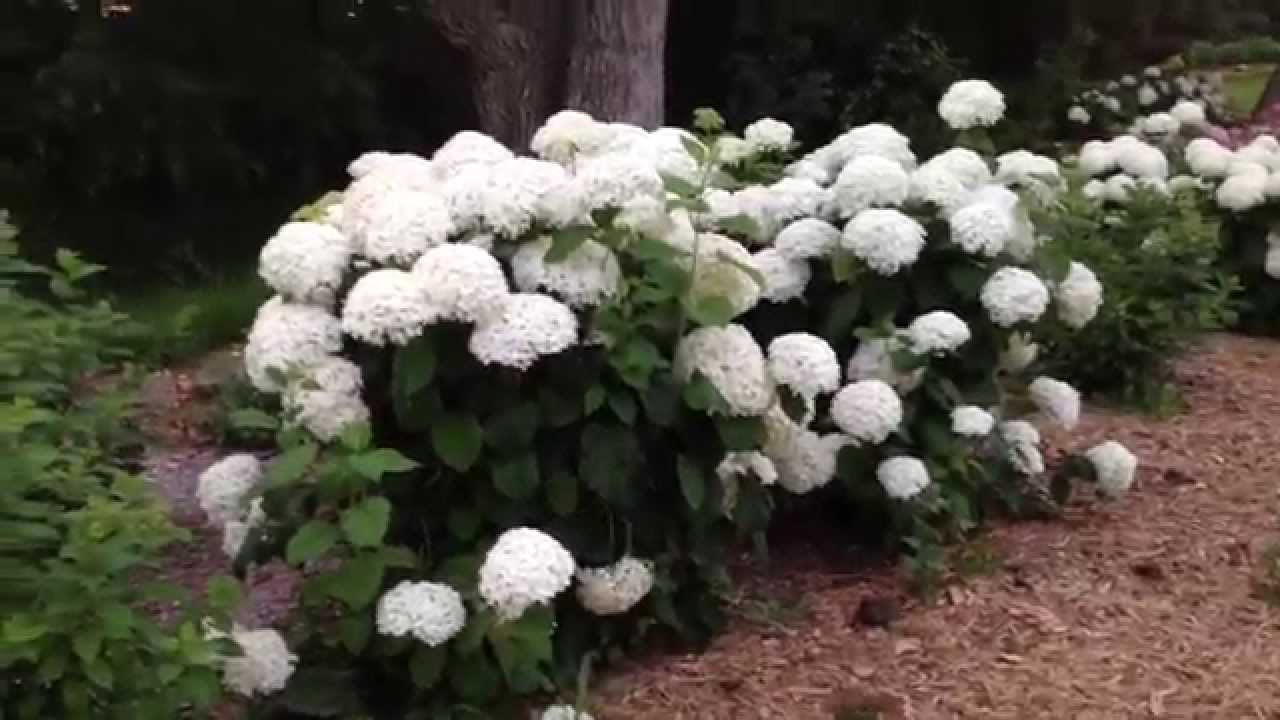
- Cultivars may have globular clusters 8–12 inches across.
PictureThis Virginia Tech Dendrology and Forest Biology
Fruit
- Dry, ribbed brown capsules, elongated and woody.
- Mature July–September, splitting open to release seeds.
PictureThis Virginia Tech Dendrology and Forest Biology
Habitat & Range
- Native to eastern North America, including the Ozarks.
- Prefers rich, moist, shady deciduous forests and dappled understory light.
PlantNative Virginia Tech Dendrology and Forest Biology
Key Look‑Alike Separation
Bigleaf Hydrangea (H. macrophylla)
- Larger, thicker leaves; not exfoliating bark.
- Flower clusters usually more colorful (pink/blue).
Virginia Tech Dendrology and Forest Biology
Oakleaf Hydrangea (H. quercifolia)
- Deeply lobed leaves (oak‑like).
- Distinct peeling bark but very different leaf shape.
Virginia Tech Dendrology and Forest Biology
Panicle Hydrangea (H. paniculata)
- Cone‑shaped panicles, not flat clusters.
Virginia Tech Dendrology and Forest Biology
Quick Field Checklist
- Opposite, heart‑shaped, serrated leaves
- Flat‑topped white flower clusters (2–6")
- Dry ribbed capsules in late summer
- Brown shreddy bark with multi‑layered “sevenbark”
- Rounded 3–6 ft shrub in moist woodland shade
Constituents
Isocoumarin derivatives; including among others, hydrangenol
Glycoside hydrangin, saponins, resins, fixed oils, essential oil, gum, rutin, sugar, calcium sulphide, trace minerals
Effects
It has a diuretic effect
Tissue State Relevance
Primary Tissue States
Damp / Stagnation — Primary relevance
Hydrangea arborescens has a long record of use for urinary calculi, gravel, cystitis, urethritis, prostatitis, nephritis, and other conditions involving congestive fluid pathology.
This is supported by:
- Diuretic and antilithic actions (traditional) Southern Cross University
- Calcium‑chelating activity of hydrangea saponins in renal models (2022 study) medinfoworld.com
- Acidifying activity and osmotic activity (FDA EPC classification) medinfoworld.com
These actions directly address damp accumulation, mineral stagnation, urinary sludge, and congestive inflammation.
Tissue‑state interpretation:
Hydrangea clears damp stagnation, especially in the urinary tract, where fluid congestion and mineral buildup dominate.
Wind / Tension — Primary relevance
Several constituents modulate inflammatory irritability and enzymatic tension:
- Hydrangeol inhibits hyaluronidase and histamine release (in vitro) Southern Cross University
- Traditional use for urethritis and prostatitis, both tension‑pain patterns Southern Cross University
- Some extracts show mild CNS stimulant activity (methylxanthine‑like) medinfoworld.com
These actions reduce irritative tension, spasm, and inflammatory sharpness in mucosal and urinary tissues.
Tissue‑state interpretation:
Hydrangea moderates tension‑linked irritation, especially in urinary mucosa.
Secondary Tissue States
Heat / Excitation — Secondary relevance
Hydrangea is not a strong anti‑inflammatory herb, but it does show:
- Histamine‑release inhibition (via hydrangeol) Southern Cross University
- Traditional use for nephritis, an inflamed, hot tissue state Southern Cross University
These actions give it mild cooling relevance in hot urinary inflammation, though this is not its primary signature.
Dry / Atrophy — Secondary relevance
Hydrangea supports tissue resilience through:
- Saponins, flavonoids, and stilbenoids (hydrangenol, hydrangin) with cytoprotective potential Southern Cross University
- Traditional use as a tonic for urinary tissues Southern Cross University
This suggests mild support for tissues under chronic irritation or degenerative thinning.
Tissue State Not Indicated
Cold / Depression — Not indicated
Hydrangea does not warm, stimulate, or activate collapsed tissues.
Its diuretic and acidifying actions may worsen cold urinary patterns by increasing fluid loss and reducing metabolic tone.
Tissue‑State Summary Table
| Tissue State | Relevance | Mechanistic Basis | Pattern Expression |
|---|---|---|---|
| Damp / Stagnation | Primary | Diuretic; antilithic; calcium‑chelating; acidifying | Urinary sludge, gravel, cystitis, prostatitis, nephritic congestion |
| Wind / Tension | Primary | Hyaluronidase inhibition; histamine modulation; CNS effects | Irritative urinary tension; spasm; sharp mucosal pain |
| Heat / Excitation | Secondary | Histamine‑release inhibition; nephritis use | Hot urinary inflammation |
| Dry / Atrophy | Secondary | Saponins, flavonoids, hydrangenol; tonic use | Chronic mucosal irritation; degenerative urinary tissue |
| Cold / Depression | Not indicated | No warming or activating action | Cold, collapsed urinary function |
TCM & Western Herbal Uses
Native American Uses:
CHEROKEE-female emetic and cathartic-An infusion is made from the roots of Hydrangea arborescens, Alnus rugosa, Platanus occidentalis, Rubus [daws var. strigosus and Rubus occidentalis. This is drunk by women during their catamenial periods. : In this medicine, Alnus rugosa causes the emesis, Hydrangea arborescens causes the catharsis
Used in treatment of the urinary tract, particularly bladder and kidney stones.
1. PROMOTES CLEANSING, CLEARS TOXINS AND RESOLVES TOXEMIA; STIMULATES AND DREDGES THE KIDNEYS, SEEPS WATER , PROMOTES URINATION AND SOFTENS DEPOSITS
general fluids dyskrasia general toxemia with chronic skin eruptions, rheumatism, gout, arthritis
liver & kidney fluid congestion; with local or general edema
URIC ACID DIATHESIS; scrofulosis
HARD DEPOSITS; urinary & biliary stones, arteriosclerosis
2. RESTORES THE UROGENITAL ORGANS, HARMONIZES URINATION, LENIFIES IRRITATION AND RELIEVES PAIN
genitourinary Qi deficiency (Kidney Qi infirmity), with scanty frequent urination
BLADDER & URETHAL IRRITATION, incl. due to painful stone
3. RESTRAINS INFECTION, REDUCES INFLAMMATION AND DRIES MUCOUS DAMP
bladder & kidney damp heat with thirst, backache, burning frequent urination, blood in urine
ACUTE URINARY INFECTIONS
NOTES -- HOLMES
The rhizome of this beautiful mountain shrub has been praised uniformly by American writers on herbal medicine from COLDEN to FELTER and SHOOK as a restoring, lenifying and cleansing remedy, not only for the urinary organs but the entire Fluid organism. Its unique among antidyskratics in combining these effects and resembles Cornsilk in its functions, though with an opposite emphasis.
Unlike Cornsilk, Hydrangea acts very much on the fluids as a whole, rebalancing chronic dyskratic disharmonies such as rheumatoid arthritis, gout, scrofula (saponins, glycosides, trace minerals). This includes a good deposit resolvent action effective in softening and eliminating urinary calculi. (It's one of the best remedies for these). Moreover, like Wu jia pi, cortex radicis Acanthopanacis, in Chinese medicine, it also deals with difficult urination and water retention. The similarity is based on their pungent warmenergetic properties. However, Hydrangea can also simply be used as a urinary demulcent and restorativefor chronic bladder or urethral irritation. Its essential oil content is probably responsible for a good disinfectant effect, best put to use in urinary infections. A very comfortable, gentle, effective remedy.
Physio-Medical Therapeutics, Materia Medica and Pharmacy BY T. J. LYLE, A.M.M. 1897
The root is an aromatic, stimulating and relaxing diuretic and is very valuable for the relief of calcareous deposits. Its greatest value is due to it’s power of preventing any gravelly deposits.
Dr. F. G. Hoener says if equally combined with Collinsonia. Canadensis it will dissolve and expel any gravel without pain. It also gives great relief in severe cases of cystitis. The Doctor also says that if the juice of black Spanish Rettishes be injected into the bladder it will dissolve any hard stone or litho-dialysis and prevent the necessity for the dangerous; operation of lithotomy.
Cautions
Not for long-term use