Cecum
Return to Digestive System Menu
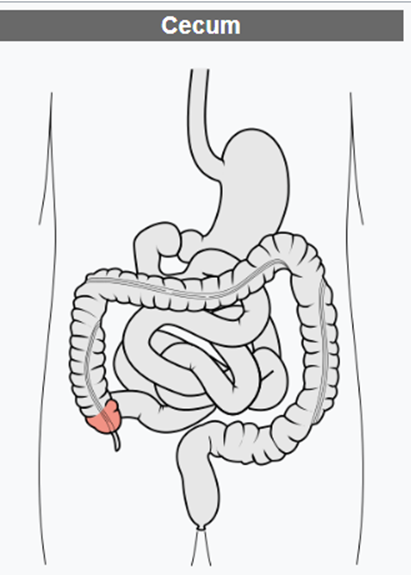
The cecum or caecum is a pouch within the peritoneum that is considered to be the beginning of the large intestine. It is typically located on the right side of the body (the same side of the body as the appendix, to which it is joined).
It receives chyme from the ileum, and connects to the ascending colon of the large intestine. It is separated from the ileum by the ileocecal valve (ICV) or Bauhin's valve. It is also separated from the colon by the cecocolic junction. While the cecum is usually intraperitoneal, the ascending colon is retroperitoneal.
Angiodysplasia A common small vascular abnormality in the stomach. It’s similar to telangiectasia (spider-veins) . It’s a common cause of otherwise unexplained gastrointestinal bleeding and anemia. Lesions are often multiple, and frequently involve the cecum or ascending colon, although they can occur at other places, such as the stomach. These are elastic, dilated, thin-walled vessels that are lined by endothelium alone.
Alliin alters gut microbiota and gene expression of colonic epithelial tissues. PRACTICAL APPLICATIONS: We firstly reported alliin consumption in vivo potentially affected the intestinal immunity of healthy rats by slightly alteration of microbiota composition in small intestine and cecum . The alteration subsequently amplified, resulting in the change of the colonic epithelial expression of several genes related to the intestinal immune network for IgA production. Hence, we suggested the alliin consumption may potentially affect the immune system of healthy individuals by alteration of gut microbiota and epithelial gene expression.