NGF - Nerve Growth Factor
Nerve growth factor (NGF) is a neurotrophic factor and neuropeptide primarily involved in the regulation of growth, maintenance, proliferation, and survival of certain target neurons. It is perhaps the prototypical growth factor, in that it was one of the first to be described. Since it was first isolated by Nobel Laureates Rita Levi-Montalcini and Stanley Cohen in 1956, numerous biological processes involving NGF have been identified, two of them being the survival of pancreatic beta cells and the regulation of the immune system.
Videos
What is Nerve Growth Factor

Response of Cells to Nerve Growth Factor
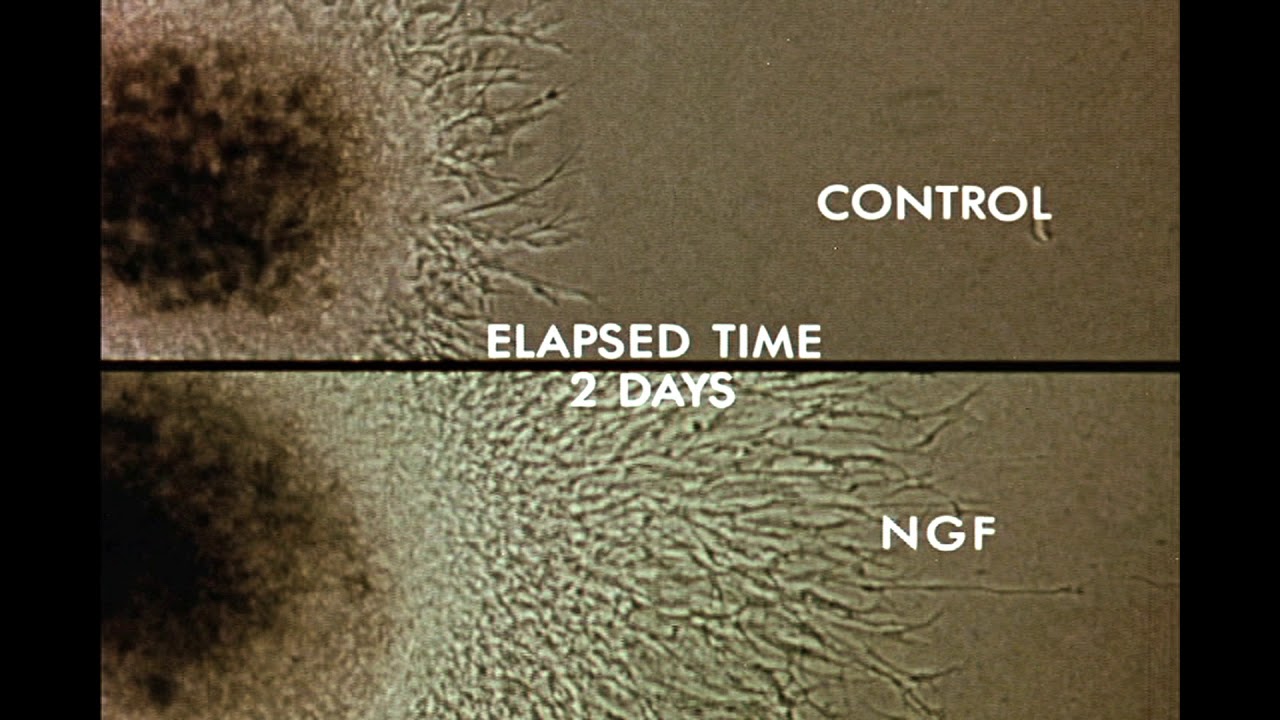
Perpetual Pain - Nerve growth factor and its role in rheumatoid arthritic pain
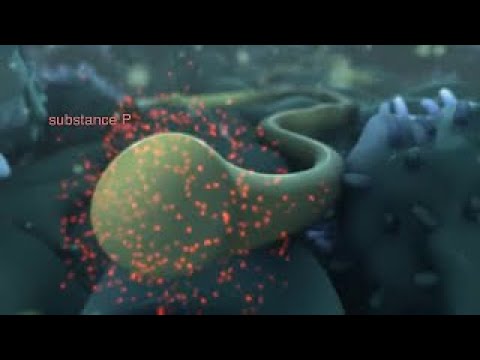
Mast cells produce NGF
After a traumatic injury there’s more NGF, when it binds to it’s receptor it causes chronic pain.
Medicinal Mushrooms
NGF Stimulation
Most of what we know about NGF stimulation by mushroom extracts comes from Lion’s Mane and a few Ganoderma and related species, and the mechanisms are inferred from cell and animal work rather than humans. pmc.ncbi.nlm.nih
1. Lion’s Mane (Hericium erinaceus)
The best‑characterized NGF‑related mechanisms involve Lion’s Mane terpenoids.
- Erinacines and hericenones
- Terpenoids from mycelium (erinacines) and fruiting body (hericenones) increase NGF mRNA and protein expression in astrocytes and other neural cells, leading to higher NGF secretion into the extracellular milieu. alzdiscovery
- These compounds cross the blood–brain barrier in animal models and raise NGF levels in brain regions such as the hippocampus when Lion’s Mane is added to feed. pmc.ncbi.nlm.nih
- TrkA / MEK–ERK and PI3K–Akt signaling
- In NGF‑responsive cell lines (e.g., PC12), Lion’s Mane constituents enhance neurite outgrowth and protect against NGF‑withdrawal–induced apoptosis, with effects blocked by TrkA inhibition, implicating NGF receptor signaling. alzdiscovery
- Downstream, they activate MEK/ERK and PI3K/Akt cascades, which are classic NGF‑linked survival and differentiation pathways; ERK1/2 phosphorylation is a consistent finding. onlinelibrary.wiley
- Synergy with baseline NGF and BDNF pathways
- Aqueous extracts can potentiate the activity of low NGF concentrations: in NGF‑sensitive cells, low‑dose NGF plus Lion’s Mane extract induces more neurite outgrowth than NGF alone, suggesting “sensitization” of NGF signaling or additional NGF production. pmc.ncbi.nlm.nih
- Some purified hericerin derivatives promote neurite outgrowth via ERK1/2 activation through a pathway that converges with BDNF/TrkB signaling, indicating cross‑talk between NGF and other neurotrophin systems. sciencedirect
- Indirect support via antioxidant and Nrf2 activation
- Erinacines also activate Nrf2‑dependent antioxidant pathways, which reduce oxidative stress and may help maintain NGF‑producing cells and NGF‑responsive neurons in hostile environments (e.g., inflammation, ischemia) .[frontiersin]
2. Ganoderma (Reishi and related species)
Ganoderma extracts do not so much “make NGF” as mimic or augment NGF signaling.
- Extracts from Ganoderma lucidum and G. neo‑japonicum induce neuronal differentiation in NGF‑responsive PC12 cells and prevent NGF‑dependent apoptosis, often to a degree comparable with or greater than exogenous NGF in vitro.[pmc.ncbi.nlm.nih]
- Mechanistically, they trigger Ras/ERK and CREB phosphorylation, classical downstream elements of NGF/TrkA activation, and some data suggest NGF‑like bioactive molecules that may act as partial agonists at NGF‑linked pathways or otherwise up‑regulate NGF‑responsive gene programs. [pmc.ncbi.nlm.nih]
3. Other mushrooms with NGF‑linked activity
- Lignosus rhinocerotis (tiger milk mushroom) aqueous sclerotial extracts increase neurite outgrowth in PC12 cells alone and show additive effects when combined with NGF, indicating enhancement of NGF‑driven differentiation, though the exact receptor‑level mechanism is still unclear. [pmc.ncbi.nlm.nih]
- Several other culinary/medicinal species in in‑vitro surveys (e.g., some Ganoderma and related genera) show NGF‑like or NGF‑augmenting effects, typically via increased neurite‑bearing cell percentages and up‑regulation of neurofilament markers, again likely acting on TrkA‑linked pathways or via NGF‑like factors.sciencedirect+1
4. Mechanistic themes across species
Across these mushrooms, NGF‑related effects fall into a few recurring mechanisms:
- Up‑regulation of NGF gene expression and secretion
- Terpenoids (erinacines, hericenones, related compounds) act on glia and possibly neurons to increase NGF transcription and release, raising NGF availability locally.alzdiscovery+1
- Potentiation of NGF receptor signaling
- Extracts enhance TrkA‑dependent cascades (MEK/ERK, PI3K/Akt), leading to stronger survival and differentiation signals in response to the same or even lower NGF concentrations. alzdiscovery
- Neurotrophin‑pathway convergence (NGF–BDNF cross‑talk)
- Some Lion’s Mane molecules activate ERK1/2 through a route partially sensitive to TrkB blockade, suggesting convergence with BDNF/TrkB signaling and a broader “pan‑neurotrophic” effect rather than NGF alone.onlinelibrary.wiley
- Indirect support via antioxidant and anti‑inflammatory pathways
- By activating Nrf2 and related antioxidant systems and dampening pro‑inflammatory cascades, these extracts may preserve NGF‑producing cells and maintain NGF signaling capacity under stress. [frontiersin]
Articles/Studies
The Nerve-Growth Factor: A New Tool for Manipulating Neurons
The evolution of nerve growth factor inhibition in clinical medicine
Lion's mane contains active compounds that stimulate Neural Growth Factor synthesis.