Brainstem
Return to Nervous System Menu
One of the brain's external structures;
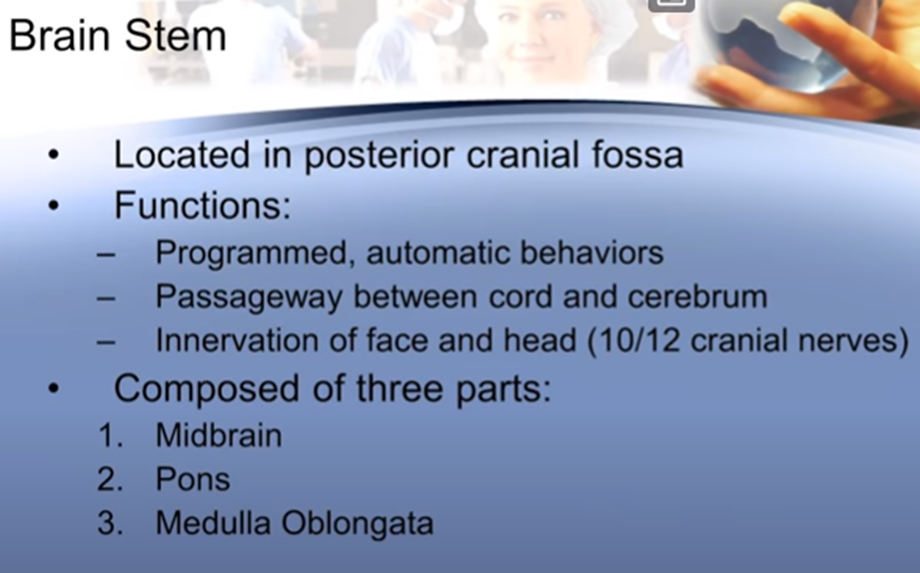
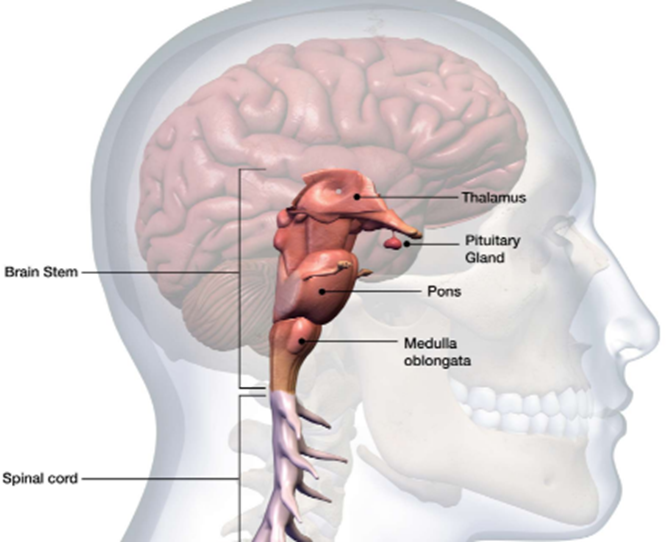
- The brainstem is the posterior part of the brain that connects to the spinal cord (which relays signals to and from the body)
- The brainstem includes the pons, medulla oblongata (often referred to as the medulla) and the midbrain
- The brainstem (via the medulla) controls automatic and involuntary activities (breathing, swallowing, heart rate, etc.)
- There is no conscious processing in the brain stem.

Videos
Brainstem
Brainstem - Structure & Function - Neuroanatomy
Breathing And Its Effect On The Brain Stem
The brainstem is a critical structure in the human brain, serving as a conduit for information between the brain and the rest of the body. It is responsible for many vital functions that are essential for survival. This note will explore the anatomy, functions, and clinical significance of the brainstem.
Anatomy of the Brainstem
The brainstem is located at the base of the brain, connecting the cerebrum with the spinal cord. It is composed of three main parts:
- Midbrain (Mesencephalon): The uppermost part of the brainstem, the midbrain is involved in functions such as vision, hearing, motor control, sleep/wake cycles, arousal (alertness), and temperature regulation.
- Pons: Situated below the midbrain, the pons acts as a bridge between various parts of the nervous system, including the cerebellum and cerebrum. It plays a crucial role in motor control and sensory analysis, particularly in the regulation of breathing.
- Medulla Oblongata: The lowest part of the brainstem, the medulla oblongata is responsible for autonomic functions such as heart rate, blood pressure, and digestion. It also controls reflex actions like swallowing, coughing, and sneezing.
Functions of the Brainstem
The brainstem is essential for several fundamental bodily functions:
- Autonomic Control: The brainstem regulates autonomic functions, including heart rate, blood pressure, and respiratory rate, ensuring that these processes occur without conscious effort.
- Conduit for Information: It serves as a pathway for all the motor and sensory information traveling between the brain and the spinal cord. This includes the transmission of signals that control voluntary movements and the reception of sensory information from the body.
- Cranial Nerve Functions: The brainstem is the origin of most cranial nerves, which are responsible for a variety of functions, including facial sensation, eye movement, hearing, taste, and swallowing.
- Regulation of Sleep and Consciousness: The brainstem plays a pivotal role in regulating the sleep-wake cycle and maintaining consciousness. It contains the reticular activating system, which is crucial for arousal and alertness.
Clinical Significance
The brainstem's role in vital functions makes it a critical area of study in medicine. Damage to the brainstem can have severe consequences, including:
- Stroke: A stroke in the brainstem can lead to life-threatening conditions due to its control over essential functions like breathing and heart rate. Symptoms may include dizziness, difficulty swallowing, and loss of coordination.
- Traumatic Brain Injury: Injuries to the brainstem can result in significant impairments, including coma or vegetative states, due to its role in consciousness and autonomic functions.
- Tumors: Brainstem tumors, although rare, can be particularly challenging to treat due to the dense concentration of critical functions in this area. Symptoms may vary depending on the tumor's location and size.
- Degenerative Diseases: Conditions such as Parkinson's disease and multiple sclerosis can affect the brainstem, leading to symptoms like tremors, muscle stiffness, and coordination problems.