Nucleotides
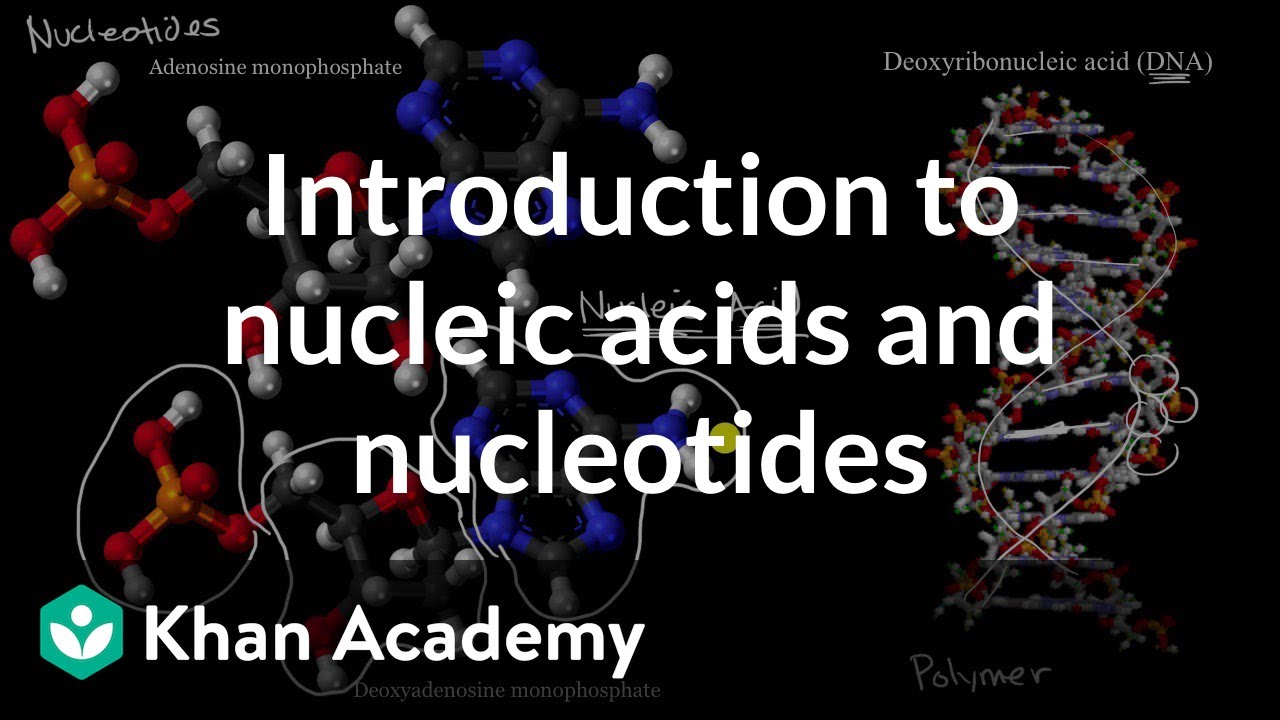
A nucleotide is a unit of DNA that is made up of one sugar molecule, one phosphate molecule, and one base Only four bases exist: adenine (A), thymine (T), guanine (G), and cytosine (C).
Nucleotide Search Engine/Database
Video: David Sabatini (Whitehead, MIT, HHMI) 3: Ribophagy and Nucleotide Recycling
Nucleotides are the building blocks of Nucleic acids acids, which are essential molecules in all living organisms. They play a crucial role in various biological processes, including the storage and expression of genetic information.
Structure of Nucleotides
A nucleotide is composed of three main components:
- Nitrogenous Base: This can be a purine (adenine or guanine) or a pyrimidine (cytosine, thymine, or uracil).
- Pentose Sugar: This is a five-carbon sugar, which can be either ribose (in RNA) or deoxyribose (in DNA).
- Phosphate Group: One or more phosphate groups are attached to the 5' carbon of the pentose sugar.
The combination of these three components forms a nucleotide, which can be represented as a nucleoside (nitrogenous base + sugar) with one or more phosphate groups attached.
Types of Nucleotides
Nucleotides can be classified based on the type of nitrogenous base and the sugar they contain:
- DNA Nucleotides: These include deoxyadenosine triphosphate (dATP), deoxyguanosine triphosphate (dGTP), deoxycytidine triphosphate (dCTP), and deoxythymidine triphosphate (dTTP).
- RNA Nucleotides: These include adenosine triphosphate (ATP), guanosine triphosphate (GTP), cytidine triphosphate (CTP), and uridine triphosphate (UTP).
Functions of Nucleotides
Nucleotides serve several critical functions in biological systems:
- Genetic Information Storage and Transfer: DNA and RNA are polymers of nucleotides that store and transfer genetic information. DNA holds the genetic blueprint, while RNA translates this information into proteins.
- Energy Currency: ATP is the primary energy carrier in cells. It provides the energy required for various biochemical reactions, including muscle contraction, protein synthesis, and cell division.
- Cell Signaling: Nucleotides like cyclic adenosine monophosphate (cAMP) act as secondary messengers in signal transduction pathways, helping cells respond to external stimuli.
- Enzyme Cofactors: Some nucleotides function as cofactors for enzymatic reactions. For example, NAD+ and FAD are involved in redox reactions during cellular respiration.
Significance in Biological Processes
Nucleotides are indispensable for life due to their involvement in numerous biological processes:
- DNA Replication and Repair: Nucleotides are the substrates for DNA polymerases, which synthesize new DNA strands during replication. They also play a role in DNA repair mechanisms, ensuring the integrity of genetic information.
- Transcription and Translation: During transcription, RNA polymerase uses nucleotides to synthesize RNA from a DNA template. In translation, ribosomes read the mRNA sequence and use tRNA molecules to assemble amino acids into proteins.
- Metabolism: Nucleotides are involved in metabolic pathways, such as glycolysis and the citric acid cycle, where they participate in energy transfer and redox reactions.
- Cell Division and Growth: Nucleotides are essential for cell division and growth, as they provide the necessary components for DNA synthesis and energy for cellular processes.
Nucleotide Metabolism
Nucleotide metabolism involves the synthesis and degradation of nucleotides:
- De Novo Synthesis: Nucleotides can be synthesized from scratch using simple molecules like amino acids, ribose-5-phosphate, and carbon dioxide. This pathway is energy-intensive but essential for maintaining nucleotide pools.
- Salvage Pathway: Cells can recycle free bases and nucleosides from degraded nucleic acids to synthesize new nucleotides. This pathway is more energy-efficient and helps conserve resources.
- Degradation: Nucleotides are broken down into their constituent parts, which can be further metabolized or excreted. For example, purines are degraded to uric acid, while pyrimidines are broken down into beta-alanine and other metabolites.
CD38 / cyclic ADP ribose hydrolase CD38 is type II membrane glycoprotein that plays a role in cell adhesion, migration, and signal transduction. Additionally, CD38 is an ectoenzyme involved in generation of nucleotide metabolites, such as ADP-Ribose (Lee, 2006). CD38 expression is highly upregulated on human plasma cells and especially on MM cells.
Coenzyme Q10 is required for pyrimidine nucleotide biosynthesis.
IFITM3 a polymorphism in this gene was purported to increase influenza susceptibility is overrepresented in people hospitalized with pandemic H1N1. The prevalence of this mutation is thought to be approximately 1/400 in European populations.
Intracellular Pattern Recognition Receptors Nucleotide oligomerization (NOD) like receptors (NLR) - these include NODs (NOD1 and NOD2) which recognize bacterial peptidoglycan motifs and NALPs which also recognize microbial pathogens. These NLRs are involved in the regulation of inflammation and apoptosis.