The B-Series Bonds
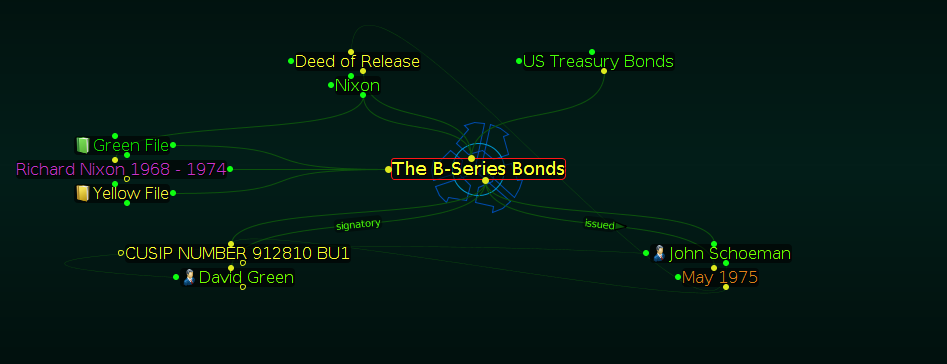
The B‑Series Bonds
GF B‑Series – 15/05/1975 to 15/05/2005 – 8.25% p.a.
Early redemption call by the Clinton administration c. 1999 in exchange for a 5‑year note at 1.25% (2000–2005).
9/11/2002 – $240B written off Deutsche Bank record (see Collateral Damage Part 1).
Clinton White House Budget Context (FY2000)
This is historical material, “frozen in time.” The web site is no longer updated and links to external web sites and some internal pages will not work.
NOTE: THIS FILE WAS NOT PRESENT ON THE ORIGINAL CLINTON WHITE HOUSE WEBSITE. IT WAS ADDED 11/21/2014 BY MICHAEL LINGENFELTER AT THE NATIONAL ARCHIVES AND RECORDS ADMINISTRATION.
President Clinton and Vice President Gore: From an Era of Deficits to an Era of Surpluses
Today, President Clinton and Vice President Gore release their FY2000 Budget: after years of escalating deficits, the U.S. has entered an era of surpluses — with the surplus in that year projected to be $79 billion, the largest on record.
Key points
- Instead of a $404 billion deficit, a $79 billion budget surplus in 1999
When President Clinton and Vice President Gore took office, the Congressional Budget Office (CBO) projected the deficit to be $404 billion in 1999 and heading higher; the Administration instead projected a $79 billion surplus, and growing.
- $79 billion surplus – largest on record
In 1992, the deficit was $290 billion — the biggest dollar deficit in American history. For FY1999, OMB projected a $79 billion surplus — the biggest dollar surplus in American history. As a share of GDP, the surplus would be 0.9%, the largest since 1957.
- Seven consecutive years of fiscal improvement – first time in U.S. history
Achieving a $79 billion surplus in 1999 marked the seventh straight year of improved fiscal balance — the longest such run in U.S. history.
- Surplus estimated to reach $187 billion by 2002
President Clinton had promised to balance the budget by 2002. The budget would be balanced by 1999 — for the second year in a row — and the surplus was expected to reach $187 billion by 2002, contributing to what would be the longest and largest debt reduction in U.S. history.
Instead of the $579 billion deficit projected by CBO for 2002, the Administration projected a $187 billion surplus — a $766 billion swing.
- Debt reduction: lowest debt‑to‑GDP ratio since 1917
As a share of the economy, publicly held debt rose from 26% in 1981 to 50% in 1993. By the end of the 1990s it had dropped to 44%. Under the President’s framework, debt held by the public would be cut by more than two‑thirds, falling from 44% of GDP to 7.1% by 2014 — the lowest level since 1917.
- Smaller government, higher “future‑oriented” investment
The 1993 Economic Plan included $255 billion in spending cuts over five years — more than half the total deficit reduction package. Federal spending as a share of GDP declined for six straight years, reaching its lowest level in 25 years.
At the same time, funding increased substantially in priority areas including education and training, children, the environment, health care, and research and development. Investments in key education and training programs nearly doubled from 1993 levels.
- Deficit elimination alongside middle‑income tax relief
Through tax cuts for working families in 1993 and 1997 — including:
* expansion of the Earned Income Tax Credit (EITC),
* the $500 child tax credit,
* the $1 500 HOPE Scholarship Tax Credit, and
* the Lifetime Learning Tax Credit,
the typical American family of four experienced the lowest federal tax burden in more than two decades.
Forward‑Looking Tax Relief Proposals (Clinton Framework)
President Clinton proposed to build on this record with additional targeted — and fully paid‑for — tax relief, focused on:
- Retirement savings
- Long‑term care
- Child care
- Education
- Community revitalization
- The environment