Connection Circles
Connection Circles
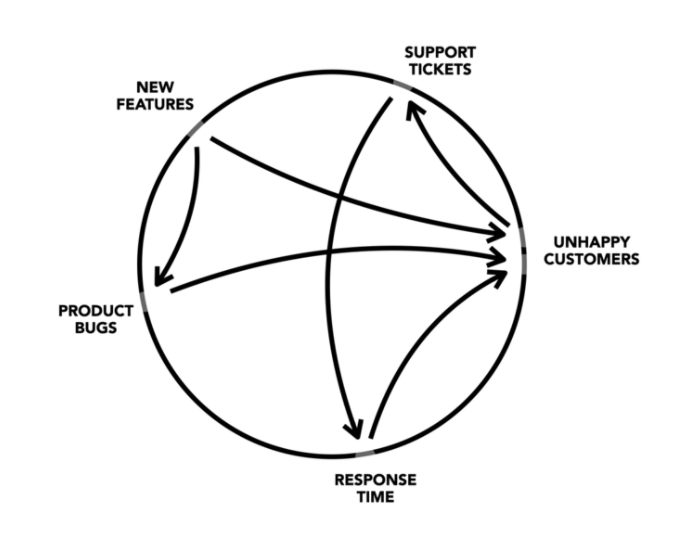
A connection circle is a simple visualization that is used to identify relationships between parts in a system, and some of the potential cause and effect relationships contributing to a complex problem in a system. Connection circles are often used as a preliminary step towards building a causal loop diagram, and defining the undesirable outcomes in a system. However they can still be quite powerful on their own in creating a shared learning experience and understanding of a complex system for those engaged in creating the connection circle as a result of the dialogue it prompts.
It can be helpful to create a rich picture or identify a news story to work with ahead of creating the connection circles, as these two resources identify key system parts to work with, in the circle.
Below is an example of a connection circle related to a new tech product and the businesses ability to improve the software while responding to customer complaints or issues (https://thinkdev.org/blog/connection-circles)
Accessibility:
 This activity requires participants to engage is social learning
 This activity requires participants to engage is sensemaking and pattern recognition
Output: The output from the process produces a map which can later be captured digitally through tools such as MURAL, IDEAFLIP, or MIRO, KUMU.
Process: a medium sized activity, there are a series of steps, usually involving several participants, and is used to achieve a specific output often in 1 session.
Investment*: *low cost, low resources, medium skill, low time
Outcomes
- Identify significant parts in a system
- Identify key relationships and dynamics between parts
- A visualization of these relationships between parts
- Understanding of some of the key dynamics contributing to the way a system functions
- A tool to explore unintended consequences of proposed actions in future work
When and Why Do I Use This
Gain clarity: Gain insights into relationships within a system
Find Leverage: Identify opportunities to strengthen the system by intervening in key system dynamics
Reflect Learn Adapt: Revisiting your connection circles allows you to see how the relationships within your system are shifting and changing as you engage, bringing new insights to light.
Purposeful Engagement: Connection circles invites others into the process and opens up consideration for different perspectives within your system.