Douglas, Lord A
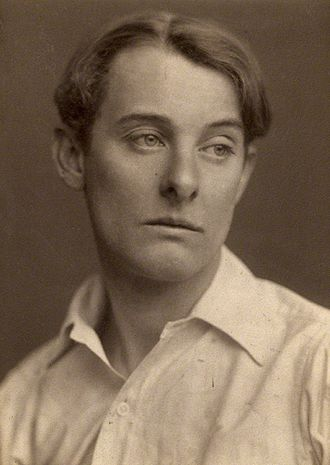
NAME: Douglas, Lord Alfred Bruce
ACHIEVEMENTS: British Poet and Oscar Wilde’s lover
NICKNAME/ALIAS: Bosie
DATE AND PLACE OF BIRTH: October 22, 1870. Worchestershire, England
DATE/PLACE OF DEATH/AGE AT DEATH: March 20, 1945. Lancing, Sussex, Britain. Aged 75
DISCIPLINE: Literature
FIELD: Author
LANGUAGE: English
PARENTS: Mother: Sibyl Montgomery. Father: John Sholto Douglas, the 8th Marquis of Queensberry
SIBLINGS: Francis (1866), Percy (1867), Sholto (1872), Edith (1874)
SPOUSE: Olive Custance
CHILDREN: Raymond Douglas
EDUCATION: Private Lessons: Kinmount. Prep School: Lambrook School, Wixenford School. Winchester. Oxford.
MAJOR WORK: The final line ". . .the Love that dare not speak its name" of his poem "Two Loves" became a standard reference to gay love in the twentieth century. While in prison (1924) he wrote the epic work In Excelsis.
LIFE AND TIMES:
Lord Alfred Douglas is primarily remembered for his relationship with Oscar Wilde and his role in the scandals of the late 19th century; however, his life after Wilde’s death proves that he was more complex than the tabloid reports.
Born October 22, 1870 in Worchestershire, England, “Bosie” (as he was known to his friends) had a tumultuous youth.
Though his father, the 8th Marquis of Queensberry, virtually abandoned his wife and children (for “personal pursuits”), the young Douglas admired his father and was proud of the prominence of his family. He left Lambrook School for Wixenford School amid rumors of a scandal; details were scant, but it appeared to be sexual in nature.
A few years later, while attending Winchester School, Douglas had his first experience with magazine management. He and his friends founded The Pentagram, which rivaled the other school magazine, The Wykehamist, with its witty poems and stories.
It wasn’t until his first year at Oxford that Douglas earnestly followed his literary hero, Shakespeare, and began to write sonnets. His first serious poem, Autumn Days, was published in the Oxford magazine in 1890.
The next year Douglas was introduced to Wilde* by the poet Lionel Johnson. Douglas, years younger than the famous Wilde, was inspired. Their affair was enthusiastically publicized and known to be tumultuous. Douglas’ father was outraged and blamed Wilde; he decided that his only recourse was to destroy the man who had “corrupted” his son.
Queensberry began following the two and hired a private detective to investigate and document their relationship. When Queensberry left a note for Wilde accusing him of “posing as a somdomite [sic]” Douglas insisted Wilde sue for libel. Ultimately, this was a mistake. One trial led to another and Queensberry presented his evidence that Wilde was guilty of gross indecency, punishable by imprisonment. Despite his protests, Douglas was convinced to go to France during the trials, where he published his first collection of work ‘Poems’ (1896).
After he returned to England he was snubbed, ostracized, despised, and rejected by people he knew and other he had never met. When Wilde was released from prison in 1897, the two resumed their relationship; however, they did not remain together long. Wilde’s wife and Douglas’ mother were financing both men and threatened to withdraw their support if they did not part. When Wilde’s wife followed through, they had no choice.
The exact nature of their relationship at the end of Wilde’s life is unsettled; it may have been amicable or disagreeable, but it was definitely emotional. Both Wilde and Queensberry died in 1900.
In 1902 Douglas’ life took another turn when he married Olive Custance. Later that year they had a son, Raymond, who spent most of his adult life in mental institutions. Initially, the marriage was happy; however, Douglas’ love of litigation and confusion about his sexuality led to their separation in 1913. They remained married because Douglas’ conversion to Catholicism in 1911 forbade their divorce.
Douglas found a forum to express his budding homophobic and conservative sentiments as an editor for several magazines. He carried this expression further when he collaborated on a book with T.W.H. Crosland called Oscar Wilde and Myself. Gide*, who spent time with Douglas and Wilde years earlier in North Africa and was influenced by their comfort with their sexuality, said that “hypocrisy can go no further, nor falsehood be more impudent. It is a monstrous travesty of the truth, which filled me with disgust.”
Douglas was not pleased with Gide’s assessment or of his memoir Si le Grain ne Meurt. When he read it he wrote to tell Gide he thought it was malicious, boring, and squalid, written by a poor wretched creature.
From 1909-1923 Douglas’ zeal led him into several lawsuits. There were times when he won, yet those he lost drove him to financial ruin. Among others, he was involved in litigation with Robert Ross, Colonel Custace (his father-in-law), and Winston Churchill.
In 1918 the MP Pemberton Billing claimed that the war effort was being undermined by the “sexual perversion” of men in positions of power. Douglas took the stand in a related court case, where he declared Wilde “the greatest force of evil that has appeared in Europe during the last 350 years.”
His behavior became more outrageous in 1923 when he accused Churchill* of war-profiteering. He claimed that in 1916, while Churchill was First Lord of the Admiralty, he had conspired with high profile Jews to murder Lord Kitchener. Allegedly, there was a conspiracy to prevent Kitchener from reaching Russia to prevent the Bolshevik revolution. Further, he said Churchill had published a false report on the Battle of Jutland so that a select group of financiers could profit on the New York Stock Exchange.
Douglas should have considered the source of his information before challenging Churchill—it all came from former British Secret Intelligence Service Officer, Captain Harold Spenser, who was dismissed from duty for mental instability. Churchill responded with a successful libel suit that resulted in Douglas’ imprisonment at Wormwood Scrubs for six months hard labor.
While in prison Douglas wrote his epic work In Excelsis. Though prison officials would not let him take the work with him when his sentence was finished, Douglas had memorized most of it and had it published in 1924.
By the time Without Apology was published in 1938, Douglas had changed. Perhaps it was his poverty, a cooling of his overzealous Catholicism, or that everyone who had been alive when he was with Wilde was dead; regardless of the reason, his life and work were different. He regularly spent time with his wife until her death in 1944, reconciled with Churchill and wrote him a sonnet, and took financial support from the modernist authors he had railed against for their lack of talent.
Before dying on March 20, 1945 he said he looked forward to seeing his father and Wilde in heaven.
ASSESSMENT: Lord Alfred Douglas is primarily remembered for his relationship with Oscar Wilde and his role in the scandals of the late 19th century.
EXTRA CONNECTIONS: None
ONELINER: Lord Alfred Douglas, poet and lover of Oscar Wilde
BIBLIOGRAPHY:
Knitting Circle Alfred Douglas
http://www.sbu.ac.uk/stafflag/alfreddouglas.html
[Accessed July 10, 2002]
Winston Churchill
http://www.kirjasto.sci.fi/churchil.htm
[Accessed July 4, 2002]
Winston Churchill and the Litigious Lord
http://www.winstonchurchill.org/ffhmcme.htm
[Accessed July 4, 2002]
Paul Valery – The Academy of American Poets
http://www.poets.org/poets/poets.cfm?prmID=343
[Accessed July 4, 2002]
Murray, Douglas, Bosie: A Biography of Lord Alfred Douglas, New York: Hyperion, 2000.
Lord Alfred Douglas - Wikipedia