Gide
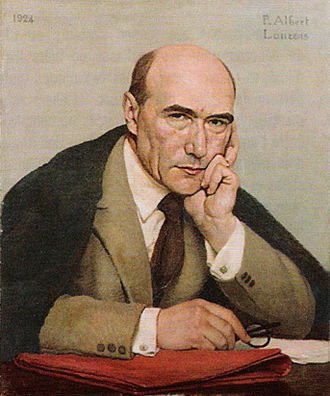
Name: Gide, Andre
ACHIEVEMENTS: Nobel Prize for Literature 1947
NICKNAME/ALIAS:
DATE AND PLACE OF BIRTH: November 22, 1869. Paris, France.
DATE/PLACE OF DEATH/AGE AT DEATH: February 19, 1951. Paris, France. Age 81
DISCIPLINE: Literature
FIELD: Writer
LANGUAGE: French
PARENTS: Paul Gide, Juliette Rondeaux
SIBLINGS: None
SPOUSE: Madeleine Rondeaux
CHILDREN: Catherine Gide (1923) by Elisabeth Van Rysselberghe
EDUCATION: College (Ecole Alsacienne)
MAJOR WORK: La Nouvelle Revue Francaise, Les Caves du Vatican, Corydon, Les Faux-Monnayeurs, Si le grain ne meurt, Voyage au Congo
LIFE AND TIMES:
Andre Gide’s father, Paul Gide was a southern Huguenot peasant and his mother, Juliette Rondueax a Norman heiress. He was educated at the Ecole Alsacienne in Paris, though his attendance was sporadic due to frequent illness. On graduation in 1889, he decided to dedicate his life to writing, music and travel.
His early writing style, as revealed in his first work Les Cahers d’Andre Walter(1891), was a confessional written in the first person.
He was introduced to the Symbolist movement that same year and its influence can be seen in “Narcissus” (1891), Le Voyage d’Urien (1893) and “The Lovers’ Attempt” (1893).
Gide sought liberation from what he saw as the repressive Parisian culture. In 1893 he traveled to North Africa where he found a society where Victorian morality did not dominate the social and sexual conventions. His poem Les Nourritures terrestres (1897) reflects a personal emancipation and a growing awareness of his own homosexuality. When he returned to Paris he wrote the satirical work Marshlands.
He returned to North Africa in 1894; during this visit he met Wilde* and his lover Lord Alfred Douglas*. He was influenced by their comfort with their sexuality. After Wilde’s death and Douglas’s rejection of his past, Gide expressed his disappointment with Douglas’s dishonesty. He wrote that Douglas’s “hypocrisy can go no further, nor falsehood be more impudent. It is a monstrous travesty of the truth, which filled me with disgust.”
Douglas was not pleased with Gide’s assessment, or his 1926 autobiography. Ironically, only a year later, 1895, Gide married his cousin, Madeleine Rondueax. All reports indicate that their relationship was unconsummated.
At 27 he was elected mayor of the commune of La Roque (the youngest mayor in France), and completed The Fruits of the Earth. When it was published in 1897 it was a failure, although the post-WW II generation latched on to the themes of individual expression and made it his most popular book.
His satirical period ended with Le Promethee mal enchainee (1899); his great creative period began with the book L’Immoraliste (1902), and continued with La Porte etroite (1909) and La Symphonie pastorale(1919). In this period, Gide struggled to understand human relations and his own conflicting desires for freedom and marital attachment.
In 1908 he helped found La Nouvelle Revue Francaise(NRF), a progressive literary review that advanced Gide’s reputation as a literary critic. His influence in the journal allowed him to decide who was considered for publication and literary support.
In 1912 Gide recommended that the NRF reject the first volume of Proust*’s A la recherche du Temps Perdus, due in large part to Gide’s impression of Proust as a snob. When he finally read the work he apologized to Proust and offered to publish .
His second great creative period included Les Caves du Vatican(1914), a work indicative of his inclination to refer to his literary acquaintances. For example, the main character is born on the property where Rilke* wrote the first of his Duino Elegies. Gide acted as a translator for Rilke and was his first French literary influence. It was through Gide that Rilke met most of his French friends, including the man he thought was the greatest French poet: Paul Valery*.
The NFR bought Valery’s La Jeune Parque in 1917. Because Gide had encouraged him to return to writing poetry, Valery dedicated it to him.
WW I deepened Gide’s all-pervading anguish and distress. In particular, he could not reconcile his own search for meaning in God and religion. This struggle is reflected in the Journal he began in 1916 (published 1926). Ultimately he was unable to resolve his own conflicts, but decided to achieve his own ethic, and settle his issues with his past.
In 1918, he had a chance to put his theory into practice when he met the young Marc Allegret. Their relationship precipitated a crisis for his marriage;, partly because of the extramarital homosexual affair, but also because it was through his friendship with Allegret that Gide met Elisabeth Van Rysselberghe.
Evidently, Gide and Rysselberghe had a single sexual encounter (his only with a woman) in 1923 and she became pregnant with their daughter, Catherine.
Despite what appears to be severe turmoil, the early 1920s saw the onset of a pervasive serenity in Gide, reflected in his work. In spite of opposition from his friends he wrote Corydon, a defense of homosexuality, in 1918 (pub. 1926). His next work, Les Faux-Monnayeurs (1926), was his first and only novel, and is complex and intricate.
1926 also saw the publication of his autobiography, Si le grain ne meurt. His work Voyage au Congo(1927) began his venture into a compassionate concern for humanity. He fought for the underprivileged and called for their humane treatment.
The death of his wife in 1938 encouraged his growing care for tradition and the past, as well as an exploration of human liberty and freedom. He said that absolute freedom acted to destroy the individual and society and that instead, freedom should be linked to tradition, in response to what he saw as a need for self-awareness and the importance of both individual and collective morality. This work earned him a Doctor of Letters from the University of Oxford and the Nobel Prize for Literature in 1947.
In 1950 he published the last volume of his Journal, which recorded his life until his 80th birthday.
ASSESSMENT: The Nobel Prize winning Gide emphasized both an individual and a collective morality; he is recognized as one of the most important humanists and moralists in French history.
EXTRA CONNECTIONS: He was a friend of poet Stephane Mallarme*
In the 1920s, Gide became an inspiration for such writers as Albert Camus and Jean-Paul Sartre. In 1923, he published a book on Fyodor Dostoyevsky.
ONELINER: Andre Gide, French Nobel for Literature
BIBLIOGRAPHY:
Sheridan, Alan. Andre Gide: A Life in the Present. Cambridge: Harvard University Press, 1999.
Even Proust Got Rejected
http://www.chick.net/proust//reject.html
Andre Gide’s Recovery of the Old Adam
http://www.infopt.demon.co.uk/gide.htm
[Accessed July 4, 2002]
The Gay Male Novel, by Michael N. Stanton
http://www.angelfire.com/ny/gaybooks/gaynovel.html
[Accessed July 4, 2002]
“Gide, Andre” Encyclopedia Britannicahttp://search.eb.com/eb/article?eu=37490