Houdini
https://en.wikipedia.org/wiki/Harry_Houdini
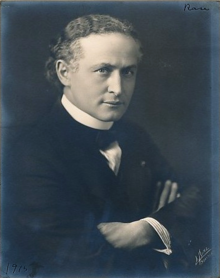
Harry Houdini (born Erik Weisz, later Ehrich Weiss or Harry Weiss; March 24, 1874 – October 31, 1926) was a Hungarian-American illusionist and stunt performer, noted for his sensational escape acts. He first attracted notice in vaudeville in the US and then as "Harry Handcuff Houdini" on a tour of Europe, where he challenged police forces to keep him locked up. Soon he extended his repertoire to include chains, ropes slung from skyscrapers, straitjackets under water, and having to escape from and hold his breath inside a sealed milk can.
In 1904, thousands watched as he tried to escape from special handcuffscommissioned by London's Daily Mirror, keeping them in suspense for an hour. Another stunt saw him buried alive and only just able to claw himself to the surface, emerging in a state of near-breakdown. While many suspected that these escapes were faked, Houdini presented himself as the scourge of fake spiritualists. As President of the Society of American Magicians, he was keen to uphold professional standards and expose fraudulent artists. He was also quick to sue anyone who pirated his escape stunts.
Houdini made several movies, but quit acting when it failed to bring in money. He was also a keen aviator, and aimed to become the first man to fly a plane in Australia.
Contents
- 1Early life
- 2Magic career
- 3Notable escapes
- 4Movie career
- 5Aviator
- 6Debunking spiritualists
- 7Appearance and voice recordings
- 8Death
- 9Houdini grave site
- 10Legacy
- 11Publications
- 12Filmography
- 13See also
- 14Notes
- 15References
- 16Further reading
- 17External links
In the 1920s Houdini turned his energies toward debunking psychics and mediums, a pursuit that inspired and was followed by latter-day stage magicians.[57] Houdini's training in magic allowed him to expose frauds who had successfully fooled many scientists and academics. He was a member of a Scientific American committee that offered a cash prize to any medium who could successfully demonstrate supernatural abilities. None was able to do so, and the prize was never collected. The first to be tested was medium George Valentine of Wilkes Barre, Pennsylvania. As his fame as a "ghostbuster" grew, Houdini took to attending séances in disguise, accompanied by a reporter and police officer. Possibly the most famous medium whom he debunked was Mina Crandon, also known as "Margery".[58] Houdini's exposing of phony mediums has inspired other magicians to follow suit, including The Amazing Randi, Dorothy Dietrich, Penn & Tellerand Dick Brookz.[59]
Houdini chronicled his debunking exploits in his book, A Magician Among the Spirits, co-authored with C. M. Eddy, Jr., who was not credited. These activities cost Houdini the friendship of Sir Arthur Conan Doyle. Doyle, a firm believer in spiritualism during his later years, refused to believe any of Houdini's exposés. Doyle came to believe that Houdini was a powerful spiritualist medium, and had performed many of his stunts by means of paranormal abilities and was using these abilities to block those of other mediums that he was "debunking".[60] This disagreement led to the two men becoming public antagonists and led Sir Arthur to view Houdini as a dangerous enemy.[17]
Before Houdini died, he and his wife agreed that if Houdini found it possible to communicate after death, he would communicate the message "Rosabelle believe", a secret code which they agreed to use. Rosabelle was their favorite song. Bess held yearly séances on Halloween for ten years after Houdini's death. She did claim to have contact through Arthur Ford in 1929 when Ford conveyed the secret code, but Bess later said the incident had been faked. The code seems to have been such that it could be broken by Ford or his associates using existing clues.[17] Evidence to this effect was discovered by Ford's biographer after he died in 1971.[61] In 1936, after a last unsuccessful séance on the roof of the Knickerbocker Hotel, she put out the candle that she had kept burning beside a photograph of Houdini since his death. In 1943, Bess said that "ten years is long enough to wait for any man."
The tradition of holding a séance for Houdini continues, held by magicians throughout the world. The Official Houdini Séance was organized in the 1940s[62] by Sidney Hollis Radner, a Houdini aficionado from Holyoke, Massachusetts.[63] Yearly Houdini séances are also conducted in Chicago at the Excalibur nightclub by "necromancer" Neil Tobin on behalf of the Chicago Assembly of the Society of American Magicians;[64] and at the Houdini Museum in Scranton by magician Dorothy Dietrich who previously held them at New York's Magic Towne House with such magical notables as Houdini biographers Walter B. Gibson and Milbourne Christopher. Gibson was asked by Bess Houdini to carry on the original seance tradition. After doing them for many years at New York's Magic Towne House, before he died, Walter passed on the tradition of conducting of the Original Seances to Dorothy Dietrich.[59]
^
In 1926, Harry Houdini hired H. P. Lovecraft and his friend C. M. Eddy, Jr., to write an entire book about debunking religious miracles, which was to be called The Cancer of Superstition. Houdini had earlier asked Lovecraft to write an article about astrology, for which he paid $75. The article does not survive. Lovecraft's detailed synopsis for Cancer does survive, as do three chapters of the treatise written by Eddy. Houdini's death derailed the plans, as his widow did not wish to pursue the project.[65]
Appearance and voice recordings
[ ](https://en.wikipedia.org/wiki/File:Jack_Dempsey,_Harry_Houdini_and_Benny_Leonard2.jpg)
Heavyweight boxerJack Dempsey mock punching Houdini (held back by lightweight boxer Benny Leonard)

Unlike the image of the classic magician, Houdini was short and stocky and typically appeared on stage in a long frock coat and tie. Most biographers give his height as5 ft 5 in, but descriptions vary. Houdini was also said to be slightly bow-legged, which aided in his ability to gain slack during his rope escapes. In the 1997 biography Houdini!!!: The Career of Ehrich Weiss, author Kenneth Silverman summarizes how reporters described Houdini's appearance during his early career:
They stressed his smallness—"somewhat undersized"—and angular, vivid features: "He is smooth-shaven with a keen, sharp-chinned, sharp-cheekboned face, bright blue eyes and thick, curly, black hair." Some sensed how much his complexly expressive smile was the outlet of his charismatic stage presence. It communicated to audiences at once warm amiability, pleasure in performing, and, more subtly, imperious self-assurance. Several reporters tried to capture the charming effect, describing him as "happy-looking", "pleasant-faced", "good natured at all times", "the young Hungarian magician with the pleasant smile and easy confidence".[66]
Houdini made the only known recordings of his voice on Edison wax cylinders on October 29, 1914, in Flatbush, New York. On them, Houdini practices several different introductory speeches for his famous Chinese water torture cell. He also invites his sister, Gladys, to recite a poem. Houdini then recites the same poem in German. The six wax cylinders were discovered in the collection of magician John Mulholland after his death in 1970. They are part of the David Copperfield collection.[67] ^....