Radar
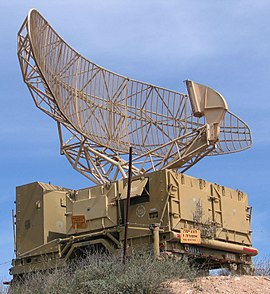
ALTERNATIVE NAME/S: Radio Detecting and Ranging
DETAILS/DESCRIPTION: An electromagnetic phenomenon used to track, locate and identify objects at distance by transmitting electromagnetic pulses of energy towards these targets and receiving back from the targets returning ‘echoes.’ The targets are most commonly aircraft, spacecraft, vehicles, raindrops and celestial bodies. It is most frequently and widely used in air traffic control systems around the world.
Typically the energy pulse sent out is partially absorbed by the target. The rest, reflected back, is used to modify the behavior of a stream of electrons in a cathode ray tune so as to create a signal on a screen. The signal shows up as a ‘blip.’ The time measurement of outgoing and returning energy pulses and the position of the antenna at the time provides direction and distance information and this, in the form of an electronic input, is used to deflect the cathode ray tube electron stream, so as to superimpose the ‘blip’ on a relevant map or graphic representation of the target’s general environment. In this way the operator can see where the target is.
The first practical radar was developed by Robert Alexander Watson-Watt* in 1935.
BIBLIOGRAPHY:
Encyclopedia Britannica
Dictionary of Scientific Biography
Connections II #9