Crick & Watson
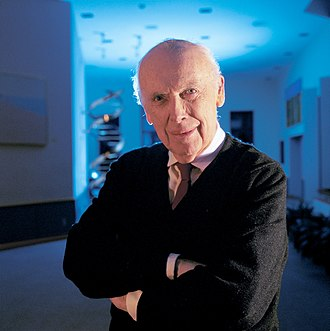
Achievements: Discovered DNA
Born: April 6, 1928; Chicago, Illinois
Died:
Field & Discipline: Science; Genetics; Biophysicist
Language: English.
Education: High school, Chicago; University of Chicago; Indiana University.
Major Works:
Report, jointly with Francis Crick, on the discovery of the structure of DNA in “Nature” (April 1953)
“Molecular Biology of the Gene” (1965)
“The Double Helix” (1968)
“The DNA Story” (1981)
Life & Times:
In 1946, Watson read and was inspired by [inspired by] Schrodinger*'s book, “What is Life?” In it, Schrodinger singled out the gene as the hereditary determinant in each human cell and Watson began to focus his interest on cracking the hereditary code. He graduated in 1947 and went to the University of Indiana for post-graduate studies into viruses. The work of the microbiologist, Oswald Avery, published in 1944, proving that the substance DNA (deoxyribonucleic acid) affected hereditary factors, as well as his own research results, strengthened Watson's aim to find out how genes could carry the hereditary message.
DNA is a complex organic molecule found in all cells and in many viruses. In 1950, when Watson was awarded his doctorate, most biologists still thought that genes were made mostly of proteins, not nucleic acids, in spite of Avery's experiments, Watson was sure that nucleic acid molecules would provide the clues to the structure of DNA and that in turn would lead to the discovery of how DNA transmitted hereditary factors.
In 1951, at a scientific meeting in Naples, Watson went to a lecture given by Maurice Wilkins, a British X-ray crystallographer. Wilkins showed [used] X-ray diffraction* photographs of a DNA molecule (the work of a colleague Rosalind Franklin) , and Watson, in a flash of genius, realised that if genes could be crystallised, they could be studied by ordinary chemical and physical methods. It was [used work of] Laue* who, in 1912, had first had the idea of bouncing X-rays off crystals. He found that the refracted X-rays interfered with each other and produced an interference pattern specific to the structure, therefore the identity, of the crystal.
Soon after his Italian experience, Watson heard that Linus Pauling had produced a three-dimensional structure of proteins, in which the atoms were arranged in a helix. At that time, scientists in the Cavendish Laboratories at Cambridge University were using the X-ray process to view patterns of protein molecules. Watson got a job there and, together with the biophysicist Francis Crick, used the process to study the structure of DNA.
In 1952, he discovered the structure of the protein cover of the tobacco mosaic virus. A year later, he realised that the four organic bases which made up DNA had to be linked in pairs. It was this insight which enabled Watson and Crick to construct their molecular model of DNA in the form of a double helix, and explain how the DNA molecule could replicate itself.
The earth-shaking discovery that they made was that DNA was double helix polymer, a spiral of two DNA strands wound around each other. They saw that each strand was a long chain of monomer nucleotides. The nucleotide of DNA consists of a deoxyribose sugar molecule, to which is attached a phosphate group and one of four nitrogenous bases, A, G, C and T. The bases are two purines: adenine (A) and guanine (G) , together with two pyrimidines: cytosine (C) and thymine (T). The nucleotides are joined together by bonds between the phosphate of one nucleotide and the sugar of the next, forming a phosphate-sugar backbone, on which the nitrogenous bases hang. One strand is held to another by hydrogen bonds between the bases and the sequencing of this bonding is quite specific. Adenine bonds only with thymine (A and T) and cytosine only with guanine (C and G).
DNA replicates by separating into two single strands, each of which serves as a template for a new strand. The new strands are copied by the same principle of hydrogen-bond pairing between bases that exists in the double helix. Two new double-stranded molecules of DNA are produced, each containing one of the original strands and one new strand. Watson and Crick published their discovery in two papers in April-May 1953, in the British journal “Nature”.
From 1955-76, Watson taught at Harvard University, where he also did research on the role of nucleic acids in the synthesis of proteins. In 1962, he was awarded the Nobel Prize, together with Francis Crick and Maurice Wilkins, who had triggered the whole discovery process in Naples. Rosalind Franklin, now dead, was not mentioned. In 1968, Watson became head of the Laboratory of Quantitative Biology at Cold Spring Harbor, Long Island, which he turned into a world centre for molecular biological research. In 1988 he went to the National Institutes of Health, where he worked on the Genome Project. In 1992 he resigned from the project.
Assessment: Watson and Crick's work on the double helix structure of DNA, which led in turn to the establishment of the genetic code, was one of the great
milestones in the work on the human genome.
Oneliner: James Watson, co-discoverer with Francis Crick of DNA
Bibliography:
- Newton, David E., James Watson and Francis Crick: Discovery of the Double Helix and Beyond, Facts on File Inc., New York, 1992.
Father: James Dewey Watson
Mother: Jean Mitchell
Siblings: 1 sister
Spouse: Elizabeth Lewis (married 1968)
Children: Two sons