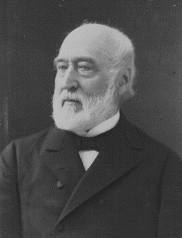
Carnot H
ACHIEVEMENTS:
Worked for republicanism and educational reform
DATE AND PLACE OF BIRTH:
6 August 1801, near Saint-Omer, France
DATE AND PLACE OF DEATH AND AGE AT DEATH:
15 March 1888, Paris, France. Aged 87
DISCIPLINE:
Politician and writer
FIELD:
Politics, social reform
LANGUAGE:
French
PARENTS:
Father: Lazare Nicolas-Marguerite Carnot
Mother: Sophie Dupont de Moringhen
SIBLINGS: 1 brother: Sadi Carnot
SPOUSE: Claire Dupont de Savignat
CHILDREN: ?? and (Marie-Francoise-)Sadi Carnot, President of France in the fourth republic
EDUCATION:
School in Paris
Law school, Paris
MAJOR WORK:
None
LIFE AND TIMES:
Carnot was the younger son of the famous politician and general, Lazare Carnot, who was credited with organizing the military victories which saved France from allied invasion during the Napoleonic era. When Carnot was fourteen, Napoleon* fell and after the restoration of the monarchy his father was sentence to permanent exile. Hippolyte spent the next seven years with his father. They traveled to Brussels and then on to Poland, finally settling in Magdeburg, Prussia at the end of 1816 where they remained until Lazare Carnot died in 1823.
Carnot then returned to France and qualified as a lawyer in Paris. He was a follower of Saint-Simon* who advocated social reforms, and he promoted Saint-Simon’s ideas in journals such as “L’Organisateur” and the “Globe”. Carnot supported the July revolution of 1830 in which the monarchy was overthrown and he organized free public lectures for the ordinary people of Paris in accordance with the Saint-Simonian ideas on education. However, after Enfantin* introduced his eccentric religious ideas into the movement, Carnot publicly broke with the Saint-Simonians.
In 1832, Carnot helped to set up an aid organization during the cholera outbreak in which his brother, Sadi Carnot* died. Carnot was very distressed by his brother’s death and as a distraction he left France for a while to travel in England, Holland and Switzerland. On his return he resumed a life of study and continued to write. He was one of the chief contributors to the “Revue encyclopedique” and one of the founders of “L’Encyclopedie nouvelle.” He was elected a deputy for the Paris Parliament in 1839, and re-elected in 1842 and 1846. In politics, Carnot always followed an independent course and although he was a radical liberal he was moderate and reasonable in his approach.
During the 1848 revolution he was appointed Minister of Public Instruction by Lamartine* who headed the provisional republican government. In the few months he spent in office, Carnot presented a scheme for primary education which included provision for female pupils, he again instituted public lectures for the people and he founded a school of administration.
Together with the writer George Sand* he organized a propaganda scheme for republicanism in the provinces. His proposed reforms were not adopted and he voluntarily resigned his ministry in July 1848. In 1852, after Louis-Napoleon declared himself Emperor Napoleon III*, Carnot left France on his own accord. In his absence he was nominated for the Legislative assembly but when he returned to France he refused to serve under the Emperor.
He continued to write about education and other social matters, wrote a biography of his father (1861-64) and began a history of the French revolution (1869-72). In 1864 he became a representative in the legislative assembly. Carnot was appointed Mayor of the 8th arrondissement in Paris in September 1870 and during the siege of Paris in the Franco-Prussian war he administered this district. With the fall of Napoleon III, he returned to political life and became member of the National Assembly for the department of Seine et Oise in 1871. He again sat on the Left.
He was a major contributor to the re-drafting of the constitution in 1875 and in recognition was name senator for life in 1875. Like his father, Carnot was a member of the Institute of France.
ASSESSMENT: Hippolyte Carnot was a liberal progressive politician and reformer who helped to establish France as a republic.
EXTRA CONNECTIONS: None
ONELINER: Hippolyte Carnot, French liberal reformer
BIBLIOGRAPHY:
Watson, S. J., Carnot, The Bodley Head, London, 1954
Various entries in “Indexes biographiques francaises"