Eijkmann
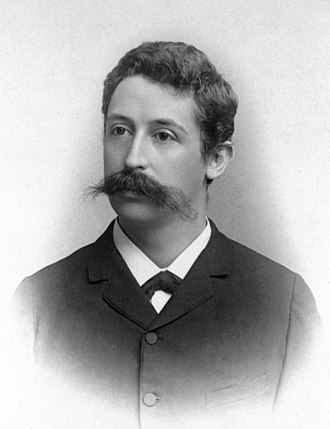
ACHIEVEMENT(S): Diet and vitamins. Nobel.
DATE/PLACE OF BIRTH: 11 August 1858, at Nijkerk, Netherlands
DATE/PLACE/AGE AT DEATH: 5 November 1930, in Utrecht, Netherlands. Aged 72
DISCIPLINE: Pathologist
FIELD: Medicine
LANGUAGE: Dutch
EDUCATION: University of Amsterdam, 1875-83
MAJOR WORK: "Antineuritic Vitamin and Beriberi", 1929
LIFE AND TIMES: In 1883 Eijkman qualified as a physician and received his medical degree for a dissertation: "On Polarization in the Nerves". That same year he married Aaltje Wigeri van Edema, and soon afterwards he was sent as a medical officer to the Dutch East Indies (now Indonesia), where he worked for two years on the islands of Java and Sumatra.
In November 1885 a severe attack of malaria forced him to return home, and two months later his young wife died. During his recuperation, Eijkman decided to train himself in the new science of bacteriology, recently established by the work of Pasteur* and went to study during the summer of 1886 under one of the field's founders, Koch*, in Berlin.
During this period, beriberi was spreading rapidly in Asia, characterized by impairment of the nerves, heart, and digestive system, its symptoms including paralysis (usually of the legs), numbness, swelling, and difficulty in breathing. The disease was appearing especially in closed communities such as the army, navy, prisons and hospitals, and so was of great concern to the Dutch authorities.
Many European doctors were convinced that the epidemic was bacterial in origin. In 1886, the Dutch government appointed a committee to study the disease in the Dutch East Indies, The committee members visited Koch in Berlin in order to be trained in bacteriology, and met and recruited Eijkman.
Eijkman left with them for Java in October 1886, where he set up a bacteriological laboratory to investigate the disease. During the next two years, in search of the microorganism which they believed would ultimately prove to be the source of the disease, Eijkman and his colleagues showed that in beriberi, inflammation of the nerves could be identified by clinical and microscopic examination, and claimed that they had isolated a micrococcus from the blood of beriberi patients, the toxins of which caused the inflammation.
In 1887, the committee returned to Europe with the micrococcus, leaving Eijkman as head of a new purpose-built research laboratory for pathological anatomy and bacteriology in Batavia (now Jakarta). The following year he remarried and was appointed director of the Javanese Medical School, but he remained dedicated to the search for a bacterial cause for beriberi.
In 1890, beriberi-like symptoms appeared in Eijkman's laboratory chickens, and then inexplicably disappeared when the chickens were removed to another place for observation. Having made an extensive study of the episode, Eijkman learned from a laboratory attendant that the duration of the outbreak of the disease coincided with a period when the birds were being fed the leavings of boiled white rice from the officers' table in the military hospital. (Polished, refined or white rice - produced by rubbing the grains together to remove the grey hulls - had been introduced in the 1870s by Europeans for aesthetic reasons).
He also learned that the later disappearance of the disease coincided with the arrival of a new cook who refused to allow hospital rice to be used for this purpose, and so the birds returned to their usual diet of unpolished grey rice, or "paddy". Eijkman soon found that he could produce the disease at will by feeding the chickens hulled and polished rice, and could then cure it with a diet of whole rice.
Eijkman missed the point and hypothesized that the rice hulls contained a substance that neutralized a toxic chemical agent, possibly originating from the action of intestinal microorganisms on boiled rice, which produced beriberi. But his observations led to later researchers tracing the disease to a lack of thiamine (vitamin B1), a vitamin found in the hulls of unpolished rice grains.
Eijkman's work had shown that not every disease could be explained by the then-revolutionary germ-theory, and it became the foundation of an entirely new field concerned with the role of vitamins in human health and nutrition. In 1896, Eijkman fell ill, and returned with his wife and young son to the Netherlands.
Two years later, he was appointed professor of public health and forensic medicine at the University of Utrecht, a job he held for the next thirty years. During this period he also participated in many government committees, including those dealing with the public water supply - conducting a number of fermentation tests by examining water for signs of bacterial pollution produced by human and animal defecation - housing, school hygiene, and physical education, and as a member of the Dutch Health Council and Health Commission he took measures in the attempt to prevent alcoholism and tuberculosis.
In 1929 he was awarded the Nobel Prize in physiology or medicine jointly with the biochemist Sir Frederick Gowland Hopkins* for their contributions to the understanding of vitamins and human nutrition.
He died in Utrecht after a long illness.
ASSESSMENT: A pioneer in the study of diseases that result from dietary deficiencies.
EXTRA CONNECTIONS: His work related to that of Boll*
In Java he caught malaria, which later so impaired his health that he, in 1885, had to return to Europe on sick-leave.
ONELINER: Christiaan Eijkman, Nobel for work on vitamin discovery
BIBLIOGRAPHY:
DSB, EB
Smith, Linda Wasmer, "Christiaan Eijkman", in Notable Twentieth- Century Scientists, ed. Emily J. McMurray, New York & London: Gale Research Inc., 1995
Christiaan Eijkman - Wikipedia
Multimedia:
Connections II #19 "Better Than the Real Thing"
PARENTS: Christiaan Eijkman and Johanna Alida Pool
SIBLINGS: Six elder siblings
SPOUSE: Aaltje Wigeri van Edema (d. 1886), married 1883; Bertha Julie Louise van der Kemp, married 1888
CHILDREN: Pieter Hendrik (b. 1890)