Drake, Edwin
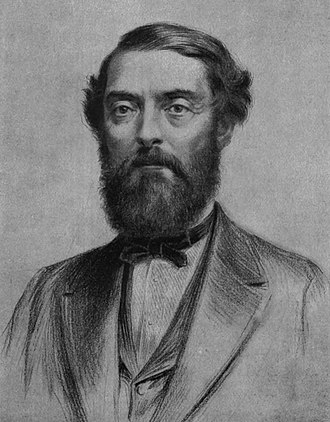
NAME: Drake, Edwin Laurentine.
ACHIEVEMENT(S): The first commercial oil well.
NICKNAME/ALIAS: “Colonel”.
DATE/PLACE OF BIRTH: 29th March 1819, in Greenville, Green County, NY
DATE/PLACE/AGE AT DEATH: 8th November 1880, in Pennsylvania
DISCIPLINE: Oil driller
FIELD: Business
LANGUAGE: English
PARENTS: Unknown
SIBLINGS: Unknown
SPOUSE: First wife, a woman of Springfield, Massachusetts (1845-54). Second wife, Laura Dow of New Haven.
CHILDREN: Four.
EDUCATION: Common School.
MAJOR WORK: None
LIFE AND TIMES:
Edwin Drake grew up attending common school and working on the family farm. At nineteen, he left home to work on his uncle’s farm in Massachusetts, a journey which probably took him seven months. On the way, he worked as a night clerk on a steamboat and began a varied and well-travelled career which lasted for several years.
After about a year at his uncle’s, he found life found boring and unsociable, so he decided to look for work in town. For the next two years, he worked in Tecumseh, Massachusetts, as a hotel clerk. After a visit to his family, he worked in New Haven as a clerk for a dry goods company. Four years later he moved on to the same job in New York.
Around 1845, he moved to Springfield, Massachusetts, and changed jobs again. This time he became an express agent for the Boston and Albany Railroad. After five years, he left to work as a conductor on the New York and New Haven railroad for the next eight years.
Some time during the 1850s, he bought stock in George Bissell’s Pennsylvania Rock Oil Company, which held leases on the land around Titusville, Pennsylvania. It was there that surface oil was being produced and in 1855, Silliman, jnr* analysed the oil and found it to be a valuable raw material, easily and inexpensively converted into commercial products. Unfortunately, enough the oil could not be obtained, so nothing was done for three years.
In December 1857, Drake was sent to Oil Creek, Titusville, to pick up some legal documents. In his letter of introduction, so as to create an authoritative impression he was referred to as “Colonel.” The nickname stuck.
During the journey to Titusville, he observed the techniques being used to drill salt-wells at Syracuse in Pittsburgh. The idea that such a technique could be used to drill for oil (already put forward by George Bissell,) excited Drake's imagination. When he returned home he persuaded the Pennsylvania Rock Oil Company to let him drill for oil on their land, and a lease was agreed.
He was to receive a royalty of twelve cents on every barrel of oil he produced. A new company was formed, the Seneca Oil Company. Although he was only a minor stockholder, Drake was made President and took responsibility for drilling operations in Titusville.
The nearest town, Erie, was forty miles distant, and connected by stagecoach only, so getting a driller, an engine-house and tools to this remote location was difficult. It took Drake months to gather the necessary equipment and then a further wait before he could get a driller who knew how to operate it. By this time it was winter, so work had to be suspended.
In the spring, he borrowed a wagon and drove a hundred miles to Tarentum, where salt wells were still being pumped, in order to find a driller. Back in Titusville it took them several months of experiment and accident before, they struck oil, sixty-nine feet below the surface, on 27th August 1859.
On the first day twenty-five barrels of oil were produced. The successful breakthrough had been made possible by Drake’s drilling invention: a pipe liner which prevented clay and quicksand from filling the drill hole.
The eventual discovery of oil not only dispelled the local rumours that Drake was a madman, but turned the community oil-crazy. Many citizens of Titusville, whose sole prospect had been manual labor on remote farms, now found themselves making a fortune.
The proof that exploitable oil lay beneath the surface of the earth caused a wave of prospective drilling to sweep across the entire country. Drake was not a good businessman and neglected to patent his invention. Ignoring advice to produce oil for himself, he acted as an oil commission agent for four years.
In 1863, he moved to New York, where he later lost all his savings, then drifted for several years until returning to Pennsylvania, ill and poor. The citizens of Titusville, who had profited so much by his earlier discovery, were moved by his condition and collected money for him.
In 1870, he moved to Bethlehem, Pennsylvania. In 1876 he was voted an annuity of $1,500 by the State of Pennsylvania. Four years later he died and his body was taken to Titusville, where a monument was erected in his honour.
ASSESSMENT: Despite his lack of knowledge, Drake's perseverance made possible the American oil revolution.
EXTRA CONNECTIONS: His work affected Maybach* and Rockefeller*
ONELINER: Edwin Drake, first oil-driller
BIBLIOGRAPHY:
Ida M. Tarbell, The History of the Standard Oil Company, Peter Smith, Gloucester, Massachusetts. 1963.