Uranium
ALTERNATIVE NAME/S: u-238, yellowcake
DETAILS/DESCRIPTION:
Uranium is a fairly common, heavy metal used as a source of nuclear energy. It is the heaviest of all the naturally occurring elements (hydrogen is the lightest) and is found in most rocks in concentrations of 2 to 4 parts per million. Uranium is 18.7 times as dense as water.
Uranium was first discovered in 1789 by German chemist Martin Klaproth*, who extracted uranium dioxide from the mineral pitchblende (primarily a mix of uranium oxides) and named it after the planet Uranus (which had just been discovered eight years before).
Pure uranium was finally isolated (by French chemist Eugène-Melchoir Péligot) by heating uranium dioxide with potassium in a platinum crucible.
In 1896 uranium was then found to be radioactive by French physicist Antoine Henri Becquerel*.
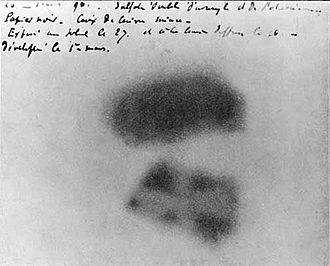
Antoine Henri Becquerel discovered the phenomenon of radioactivity by exposing a photographic plate to uranium in 1896.
Since it is naturally radioactive, uranium is most commonly used in the nuclear power industry to generate electricity. The process involves burning the uranium in a nuclear reactor then using the heat to make steam that drives turbines to produce electricity.
Uranium is also used in X-ray production, as ammunition for some types of military weapons, as protection against radiation, as a counterweight for aircraft control surfaces, and in the gyroscopes of inertial guidance systems.
ONELINER: Uranium
OTHER CONNECTIONS:
During the Cold War between the Soviet Union and the United States, huge stockpiles of uranium were amassed and tens of thousands of nuclear weapons were created using enriched uranium and plutonium made from uranium. After the break-up of the Soviet Union in 1991, an estimated 600 short tons (540 metric tons) of highly enriched weapons grade uranium (enough to make 40,000 nuclear warheads) had been stored in often inadequately guarded facilities in the Russian Federation and several other former Soviet states.
Above-ground nuclear tests by the Soviet Union and the United States in the 1950s and early 1960s and by France into the 1970s and 1980s[23] spread a significant amount of fallout from uranium daughter isotopes around the world.[59] Additional fallout and pollution occurred from several nuclear accidents.[60]
Uranium miners have a higher incidence of cancer. An excess risk of lung cancer among Navajo uranium miners, for example, has been documented and linked to their occupation...
The Niger uranium forgeries were forged documents initially released in 2001 by SISMI (the former military intelligence agency of Italy), which seem to depict an attempt made by Saddam Hussein in Iraq to purchase yellowcake uranium powder from Niger during the Iraq disarmament crisis. On the basis of these documents and other indicators, the governments of the United States and the United Kingdom asserted that Iraq violated United Nations sanctions against Iraq by attempting to procure nuclear material for the purpose of creating weapons of mass destruction.
BIBLIOGRAPHY:
Encyclopedia Britannica
http://education.jlab.org/itselemental/ele092.html