Radioactivity
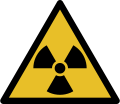
ALTERNATIVE NAME/s: radioactive decay
DETAILS/DESCRIPTION:
Radioactivity happens when certain unstable atoms, such as uranium and thorium, naturally lose energy by radiation (the most common radiation being: alpha, beta and gamma particles/waves) and in doing so arrive at a stable state, after which no further energy loss occurs. This process is known as 'decay.' was first discovered in 1896 by French physicist Henry Becquerel*, and causes the atom to change from one element to another.
The rate at which decay happens is expressed in terms of the 'half-life' of the element: i.e. the time required for half of any given quantity of the element to decay. Half-lives range from a billion years to tiny fractions of a second, depending on the element.
Radioactivity is also produced by nuclear explosions and in nuclear reactors. As was discovered in the early years after the discovery of radioactive materials, radioactivity is also harmful to life. On the global scale, the Earth is protected from solar radiation by the Earth's magnetic field. At the individual level, an entire field of study known as health physics has grown up to deal with the challenge.
ONELINER: Radioactivity
EXTRA CONNECTIONS: None
BIBLIOGRAPHY:
Dictionary of Scientific Biography