Post Card
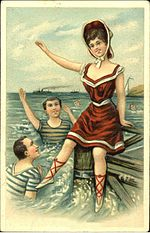
NAME: Postcards.
ALTERNATIVE NAME/S:
DETAILS/DESCRIPTION: The concept of postcards was originally thought up by Doctor Heinrich von Stephan. At the time, he was working for the German Confederation of postal services and would later be instrumental in the setting up of the <triggered by> Universal Postal Union*.
At the Austro-German Postal Conference in Karlsruhe in 1865, von Stephan suggested the idea of an ‘Offenes Postblatt’ or ‘open post sheet’. The idea was rejected by the German Confederation, because they thought that their postal system wouldn’t be able to operate the service profitably.
On 26thJanuary 1869, Doctor Emanuel Herrmann, a civil servant and economics teacher, refined the idea in the Vienna ‘Neue Freie Presse’ and he called it a scheme for mailing ‘Postkarten’. He showed how the concept would increase the volume of mail and bring in extra revenue, and, in less than a year, the system was put in place by the Austrian Post Office, on 1st October 1869.
The very early postcards were made out of thin, buff coloured pasteboard, about 4½ by 3½ inches in size and carried the heading ‘Correspondenz-Karte’. At first, the cards were only issued by the post office and were printed with a yellow 2-kreuzer stamp, which was less than the price of letter mail.
Initially, when the idea was proposed to the British Post Office, they rejected it out of hand, but, after favorable publicity in the 'Scotsman', the public became interested and, when the article was distributed in pamphlet form, public pressure grew for the Post Office to adopt the system.
In 1870, <promoted by> Lyon Playfair*, a Member of Parliament, presented a petition to the British Postmaster General, signed by a large number of influential people, which was in favour of the halfpenny postcard.
Aware of the great success of the system in Austria and under political pressure, the Post Office reconsidered. The Austrian Post Office system was quickly studied and postcards were introduced in Great Britain by Act of Parliament on 1stOctober, 1870. The postal price was set at exactly half of that of an inland letter, a halfpenny when the price was paid at the time of purchase and two pence when payment was made on delivery. In Britain, postcards became an instant success.
The US Postmaster General, John Cresswell, introduced America to postcards on 8thJune 1872. By 9thJanuary 1873 he was able to report that they had become popular with the public and clearly a good source of new business.
The first postcard to be printed as a souvenir in the was created in 1893 to advertise the World's Columbian Exposition; The Eiffel Tower also was a popular subject that boosted sales.
As in other countries with a similar system, the US Post Office controlled the issue of postcards and they were sold ready stamped. The postage rate was set at one cent, which remained basically unchanged until 1952. In 1878, four years after being successfully launched in Britain, privately produced postcards or, as they were known in the US, ‘private mailing cards’, on which a stamp was stuck after they had been bought, were authorized under the one cent postage rate.
At the first congress of the Universal Postage Union, the decisions of which had been binding since 1stJuly 1875, the international mailing of postcards was taken under consideration. It was decided that postcards could be sent between countries for half of the normal letter rate.
By the 1880s, Austria, Germany and Switzerland were producing cards with black-and-white views on them. The Swiss took a lead when they introduced colored postcards that showed scenic views and national costumes.
Picture postcards were especially popular in the German-speaking countries. They were used for all sorts of occasions, birthday and Christmas greetings, Valentine’s Day cards and pictures of all kinds, comic, scenic, romantic and artistic. Postcards were also used throughout Europe to commemorate all kinds of events. A craze for picture postcard collecting grew and was widespread during the 1890s.
ONELINER: Postcards
OTHER CONNECTIONS:
Golden age of postcards (ca. 1890 to 1915)
Cards showing images increased in number during the 1880s. Images of the newly built Eiffel Tower in 1889 and 1890 gave impetus to the postcard, leading to the so-called "golden age" of the picture postcard.[7] This golden age began slightly earlier in Europe than the United States, likely due to a depression in the 1890s.[7] Still, the Chicago World's Fair in 1893 excited many attendees with its line of "Official Souvenir" postals, which popularized the idea of picture postcards.[1][16] The stage was now set for private postcard industry to boom, which it did once the United States government changed the postage rate for private cards from two cents to one in May 1898.[1][16]
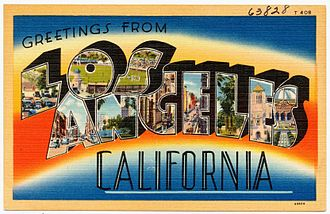
Spanning from approximately 1905 to 1915 in the United States, the golden age of postcards stemmed from a combination of social, economic, and governmental factors.[1][16] Demand for postcards increased, government restrictions on production loosened, and technological advances (in photography, printing, and mass production) made the boom possible.[1] In addition, the expansion of Rural Free Delivery allowed mail to be delivered to more American households than ever before.[1] Billions of postcards were mailed during the golden age, including nearly a billion per year in United States from 1905 to 1915, and 7 billion worldwide in 1905.[17][18] Many postcards from this era were in fact never posted but directly acquired by collectors themselves.[19]
BIBLIOGRAPHY:
Staff, Frank, The Picture Postcard & its Origins, Lutterworth Press, London, 1979.
Dagnall, H., The Evolution of British Stamped Postcards & Letters, published by the author, Edgware, Middlesex, England, 1985.
https://upload.wikimedia.org/wikipedia/commons/thumb/7/7b/Bathing_beauty_1908.jpg/150px-Bathing_beauty_1908.jpg
<a href="http://en.wikipedia.org/wiki/Postcard"><b>Postcard</b></a>
<b> </b>
<b>Cards with messages had been sporadically created and posted by individuals since the creation of postal services.</b>
<b>The concept of postcards was originally thought up by Doctor Heinrich von Stephan. At the time, he was working for the German Confederation of postal services and would later be instrumental in the setting up of the [triggered by] <a href="https://webbrain.com/brainpage/brain/C6015FA0-82BF-F1FA-9D05-0EA9FD7F845E#-269">Universal Postal Union</a>*. At the Austro-German Postal Conference in Karlsruhe in 1865, von Stephan suggested the idea of an “Offenes Postblatt” or “open post sheet.” The idea was rejected by the German Confederation, because they thought that their postal system wouldn’t be able to operate the service profitably. </b>
<ul>
<b>On 26<sup>th</sup> January 1869, Doctor Emanuel Herrmann, a civil servant and economics teacher, refined the idea in the Vienna “Neue Freie Presse” and he called it a scheme for mailing “Postkarten.” He showed how the concept would increase the volume of mail and bring in extra revenue, and, in less than a year, the system was put in place by the Austrian Post Office, on October 1, 1869. However, recently it was found that the earliest known picture postcard was a hand-painted design on card, posted in London to the writer <a href="http://en.wikipedia.org/wiki/Theodore_Hook" title="Theodore Hook">Theodore Hook</a> (a playwright and novelist noted at the time for his "wit and drollery") in 1840 bearing a <a href="http://en.wikipedia.org/wiki/Penny_black" title="Penny black" class="mw-redirect">penny black</a> stamp. He probably created and posted the card to himself as a practical joke on the postal service, since the image is a caricature of workers in the post office. In 2002 it sold at auction for over thirty-one thousand Pounds.</b>
<b>The very early postcards were made out of thin, buff coloured pasteboard, about 4½ by 3½ inches in size and carried the heading “Correspondenz-Karte.” At first, the cards were only issued by the post office and were printed with a yellow 2-kreuzer stamp, which was less than the price of letter mail. Initially, when the idea was proposed to the British Post Office, they rejected it out of hand, but, after favorable publicity in the “Scotsman Magazine,” the public became interested and, when the article was distributed in pamphlet form, public pressure grew for the Post Office to adopt the system.</b>
<b>In 1870, [promoted by] <a href="https://webbrain.com/brainpage/brain/C6015FA0-82BF-F1FA-9D05-0EA9FD7F845E#-1193">Lyon Playfair</a>*, a Member of Parliament, presented a petition to the British Postmaster General, signed by a large number of influential people, which was in favour of the halfpenny postcard. Aware of the great success of the system in Austria and under political pressure, the Post Office reconsidered. The Austrian Post Office system was quickly studied and postcards were introduced in Great Britain by Act of Parliament on October 1, 1870. The postal price was set at exactly half of that of an inland letter, a halfpenny when the price was paid at the time of purchase and two pence when payment was made on delivery. In Britain, postcards became an instant success. </b>
<b>The US Postmaster General, John Cresswell, introduced America to postcards on June 8, 1872. By January 9, 1873 he was able to report that they had become popular with the public and clearly a good source of new business. The immediate popularity of postcards is obvious from the statistics of the time, with 64,302,300 being issued between May 1 and September 30, 1873, growing to 272,550,000 in 1880. The first postcard to be printed as a <a href="http://en.wikipedia.org/wiki/Souvenir" title="Souvenir">souvenir</a> in the <a href="http://en.wikipedia.org/wiki/United_States" title="United States">United States</a> was created in 1893 to advertise the <a href="http://en.wikipedia.org/wiki/World%27s_Columbian_Exposition" title="World's Columbian Exposition">World's Columbian Exposition</a> in <a href="http://en.wikipedia.org/wiki/Chicago" title="Chicago">Chicago</a>. The Eiffel Tower also was a popular subject that boosted sales.</b>
<b>As in other countries with a similar system, the US Post Office controlled the issue of postcards and they were sold ready stamped. The postage rate was set at one cent, which remained basically unchanged until 1952. In 1878, four years after being successfully launched in Britain, privately produced postcards or, as they were known in the US, “private mailing cards,” on which a stamp was stuck after they had been bought, were authorized under the one cent postage rate.</b>
<b>At the first congress of the Universal Postage Union, the decisions of which had been binding since July 1, 1875, the international mailing of postcards was taken under consideration. It was decided that postcards could be sent between countries for half of the normal letter rate. By the 1880s, Austria, Germany and Switzerland were producing cards with black-and-white views on them. The Swiss took a lead when they introduced colored postcards that showed scenic views and national costumes.</b>
<b>Picture postcards were especially popular in the German-speaking countries . They were used for all sorts of occasions, birthday and Christmas greetings, Valentine’s Day cards and pictures of all kinds, comic, scenic, romantic and artistic. Postcards were also used throughout Europe to commemorate all kinds of events. A craze for picture postcard collecting grew and was widespread during the 1890s (enthusiasm for German cards dampened in America by WWI).</b>
<b> The steam railroad made seaside holidays feasible, and the seaside souvenir postcard became quite common, some risque. Donald McGill, who lost a foot playing rugby at the Blackheath school (his friend, a future Vicar of Wakefield, as well as the inventor of the tank were alums), was a prolific and witty practitioner. His cards were popular among soldiers in WWI, and also were anti-German propaganda. In 1941 <a href="https://webbrain.com/brainpage/brain/C6015FA0-82BF-F1FA-9D05-0EA9FD7F845E#-1826">George Orwell</a> wrote an essay on his work, but in the 1950's he was the object of Conservative scrutiny and found guilty of violating <a href="http://en.wikipedia.org/wiki/Obscene_Publications_Act_1857" title="Obscene Publications Act 1857">the Obscene Publications Act 1857</a> (he later testified before Parliament in getting it amended). Many of his cards were collected in raids and destroyed, though the market recovered somewhat later. Despite creating over twelve thousand designs and two hundred million copies, he received no royalties and died in 1962 with a modest estate of less than a thousand Pounds.<br />
</b></p><p class="MsoNormal"><b>
</b></p><p class="MsoNormal"><b ><a href="http://www.engology.com/eng5torvalds.htm">Linus Torvalds</a>, instead of asking for money for the LINUX operating system, asked for post cards.</b>
<b> </b>
<b>Oneliner: Postcards</b>
<b> </b>
<b>Bibliography:</b>
<b> </b></p>
<ul type="disc" >
<li class="MsoNormal"><b>Dagnall, H., <i>The Evolution of British Stamped Postcards & Letters</i>, published by the author, Edgware, Middlesex, England, 1985. </b></li>
<li class="MsoNormal"><b>Staff, Frank, <i>The Picture Postcard & its Origins</i>, Lutterworth Press, London, 1979. </b></li>
</ul>
<p><b> </b>
http://en.wikipedia.org/wiki/Postcard