Pitman, Issac
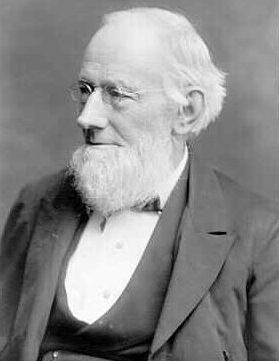
ACHIEVEMENTS: Shorthand
DATE AND PLACE OF BIRTH:
4 January 1813, Trowbridge, Wiltshire, England
DATE AND PLACE OF DEATH AND AGE AT DEATH:
12 January 1898, Bath, Somerset, England. Aged 85
DISCIPLINE:
Educator
FIELD:
Business education
EDUCATION:
Grammar school, Trowbridge
Private tutors
British and Foreign School Society, London
MAJOR WORK:
"Stenographic Sound-Hand" (1837)
"Phonography, or Writing by Sound" (1840)
LIFE AND TIMES:
Pitman was allowed to leave factory work when his father, who was interested in public education, decided he should become a teacher. Pitman trained in London and taught for four years in Lincolnshire before being asked to set up a school in Gloucestershire.
He had found shorthand a tremendous help in his own studies and wanted to include it in the curriculum but could find no cheap textbooks on the subject. So he wrote a pamphlet explaining the method he used, and sent it off to a publisher in London. The publisher did not want to recycle a system already on the market and asked Pitman to produce his own system, which he promised to publish very cheaply so it would be widely available for popular education. The result was "Stenographic Sound-Hand" which came out as a booklet on 15 November 1837.
Pitman's system, like other methods already in use, was phonetic: it provided written signs which corresponded to each separate sound of a word. The word 'shoe' for example required just two signs: for 'sh' and 'oo'. The originality of Pitman's method was in the comprehensive list of symbols he provided for vowel sounds, as in the different sounds made by the letter 'a' in: cab, cake, car and caught. He also introduced the use of thick and thin strokes for symbolising the difference between paired consonants such as 'p' and 'b', 't' and 'd'.
When Pitman was dismissed as headmaster from the school in Gloucestershire in 1837 because the management disapproved of his openly expressed belief in the doctrines of the Swedish philosopher <a follower of> Swedenborg*, he moved to Bath and opened a private school there in 1839.
In 1840 an improved edition of his book was brought out and in addition he was responsible for the publishing of standard texts in shorthand, among them the Bible, the Book of Common Prayer and works by writers including Charles Dickens, Jonathan Swift and Francis Bacon.
Pitman was a passionate about popularizing shorthand and he began to go on lecture tours in his school holidays. Thanks to <used postal service of> Rowland Hill’s* introduction of the penny post in Britain meant he could afford to send publicising literature all over the country and by 1843, the popularity of his system was such that Pitman gave up teaching so that he could concentrate on producing even more books of instruction on his shorthand system.
His lecture tours were taken over by his brothers, one of whom went to America and another to Australia to publicize the Pitman method. In 1845 Pitman founded the "Phonetic Journal", of which he became editor, and two years later he established a Phonetic Institute in Bath.
Over the next hundred years, phonetics became an accepted academic study due to the work of men philologists like <influenced> Sweet* and <influenced> Daniel Jones* in England, <influenced> Jespersen* in Denmark and <influenced> Passy* in France. Pitman also became involved with the spelling reform movement which was beginning to become popular. The idea failed thanks to the difficulty of introducing new types in printing.
The Pitman shorthand system, however, flourished wherever English was spoken and by the end of his life Pitman was an honored figure.
ASSESSMENT: Pitman invented the phonetic shorthand system which was widely adopted all over the English-speaking world.
EXTRA CONNECTIONS:
<a rival was> AM Bell*’s Visible Speech was a rival system.
He was also the vice-president of the Vegetarian Society. The Pitman Vegetarian Hotel was named after Pitman, Pitman was knighted by Queen Victoria in 1894.
ONELINER: Isaac Pitman, who invented phonetic shorthand
LANGUAGE:
English
PARENTS:
Father: Samuel Pitman
Mother: Maria Davis
SIBLINGS:
6 brothers: Abraham, Joseph, Benjamin, Henry, Frederick, Jacob
4 sisters: Rosella, Jane, Mary, Melissa
SPOUSE:
- Mary Holgate
- Isabella Masters
CHILDREN:
by Masters:
2 sons: Alfred, Ernest
BIBLIOGRAPHY:
Baker, Alfred, The Life of Sir Isaac Pitman, Inventor of Phonography, Sir Isaac Pitman & Sons Ltd., London, 1913.