Daimler
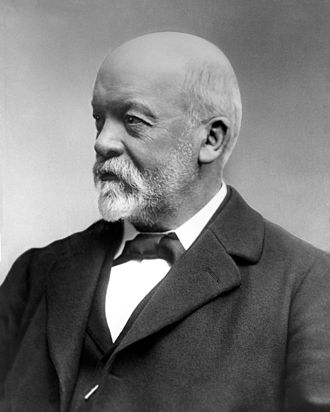
NAME: Daimler, Gottlieb (Wilhelm)
ACHIEVEMENT(S): Invented the automobile and motorcycle
NICKNAME/ALIAS: None
DATE/PLACE OF BIRTH: 17 March 1834, at Schorndorf, near Stuttgart, Wurttemberg [Germany]
DATE/PLACE/AGE AT DEATH: 6 March 1900, at Cannstatt, near Stuttgart, Germany. Aged 65
DISCIPLINE: Mechanical engineer
FIELD: Automotive engineering
EDUCATION: Stuttgart Polytechnic, 1853-59
MAJOR WORK: None
LIFE AND TIMES:
After working in England, Daimler returned to Germany in 1863 and became manager of a heavy-engineering plant in Reutlingen (Bruderhaus Maschinen-Fabrik), where he spent the next six years and met the engineer Maybach*, with whom he was to be closely involved for the rest of his life. In 1869 he then moved to Maschinenbau Gesellschaft Karlsruhe as manager, then director.
Daimler's work on the internal-combustion engine* began in 1872, when he was appointed technical director of the Gasmotoren-Fabrik Deutz by Otto* (the inventor of the four-stroke internal-combustion engine).
Almost immediately, Daimler hired Maybach as chief designer, and over the next decade Daimler and Maybach (in collaboration with Otto and Peter Langen) studied gas (and possibly petrol) engines, and developed the Otto gas engine to its limit.
In 1881, after a dispute with Otto, Daimler and Maybach left the firm, with the intention of investigating the potential of petrol-fuelled engines, an idea which had originated with Julius Hock in Vienna in 1870. Hock had built an engine in which a piston drew in half a cylinder-full of mixture, which was fired when the piston was half way down the cylinder. However, without compression, the power produced was very low, and the fuel consumption enormous.
Having left Otto, Daimler first made a brief trip to Russia to study the properties of oil and petrol, and then returned to Germany, bought a house in Cannstatt, a suburb of Stuttgart, and began experimenting with petrol-fueled engines.
In 1882, Daimler and Maybach set up a factory in Stuttgart to manufacture light, high-speed internal combustion engines for use on the roads. When they started work, gas engines were being operated at 150 to 250 rpm, but within a year they had constructed and patented their first high-speed petrol-fuelled unit, an air-cooled, single cylinder engine with a large cast-iron flywheel running at 900 rpm.
With four times the number of power strokes per unit time, this engine had a very much greater output for a given size and weight. The key to their success lay in the development of a surface carburettor, that vaporized the petrol and mixed it with air, and a hot tube (rather than Lenoir's electric) ignition, that was light, reliable and operated independently of engine speed.
Daimler's second engine, a 0.5 hp vertical unit, was developed the following year and was fitted to a bicycle by November 1885, creating the world's first motorcycle. Daimler went on to try his one-cylinder engine on a four-wheeled carriage (1886), a boat on the River Neckar (1887), and for the Wolfert airship (1888).
Then, in 1889, Daimler and Maybach produced two more four-wheeled vehicles, this time designed from the start as an automobile. The first was a light four-wheeler with a tubular frame and a vertical, single-cylinder, water-cooled engine in the rear, and featuring a novel four-speed gear transmission to the rear wheels and a water-cooling mechanism circulating throughout the frame, acting as a radiator. The second car had a belt drive and a V-twin engine, and was the first commercially feasible vehicle, with a top speed of 11 m.p.h.
This second automobile* was shown at the Paris exhibition of 1889, and the same year Daimler hired Sarazin, also a representative of Otto and Langen at the Deutz works, to get overseas orders for his engines. Within a few weeks, Sarazin had persuaded the French Panhard Company to manufacture Daimler engines under licence. Panhard succeeded in entering the motor industry with the Daimler licence in 1890.
In 1894 a Daimler-powered car won the 1894 Paris to Rouen race, the first international motor competition which had been organized to promote the automobile. In 1899 the firm built the first Mercedes* car, equipped with a four-cylinder engine. The same year Daimler's health began to decline. He died from heart disease in 1900, aged 65, and was buried at Cannstatt.
Meanwhile, in 1899 Maybach had begun to work with Zeppelin*, placing Daimler engines in Zeppelin's airships, and after Daimler's death he continued to develop the Mercedes car and the Zeppelin Airship.
ASSESSMENT: A major pioneer in the development of automobiles.
EXTRA CONNECTIONS: Provided engine for Kress* who nearly beat the Wright brothers to flight.
Independently of each other, Karl Benz and Gottlieb Daimler each produced an automobile in 1886, both in Germany, about 60 miles apart....Driven by Daimler's desire to use the engine as many ways as possible,[17] Daimler and Maybach used the engine in other types of transport including:
- on water (1886), by mounting it in a 4.5 m (15 ft) long boat and achieving a speed of 6 knots (11 km/h; 6.9 mph). The boat was called Neckar after the river where it was tested. (patent DRP 39-367). This was the first motorboat and boat engines soon would become Daimler's main product for several years. The first customers expressed fear the petrol engine could explode, so Daimler hid the engine with a ceramic cover and told them it was "oil-electrical".
- street-cars and trolleys.
- in the air in Daimler's balloon, usually regarded as the first airship, where it replaced a hand-operated engine designed by Dr. Friedrich Hermann Wölfert of Leipzig. With the new engine, Daimler successfully flew over Seelberg on 10 August 1888.
They sold their first foreign licenses for engines in 1887 and Maybach went as their representative to the 1889 Paris Exposition to show their achievements....
ONELINER: Gottlieb Daimler, who built the first Mercedes
BIBLIOGRAPHY:
EB
Biog Dict of Technology
Johnson, E., The Dawn of Motoring, 1986
LANGUAGE: German
PARENTS: Johann Daimler (1801-75) and Wilhelmina Friederika Fensterer (1803-64)
SIBLINGS: ?
SPOUSE: Emma Kurz (1843-89), married 1867; Lina Swend (1855-1932), married ?
CHILDREN: One son (Paul, 1869-1945) and one daughter by first marriage;
three sons (including Paul and Adolf) and two daughters by second marriage.