Diesel
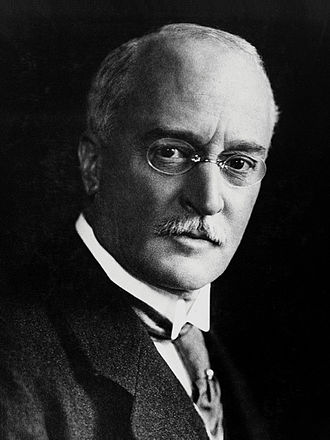
NAME: Diesel, Rudolf Christian Karl
ACHIEVEMENTS: Invented diesel engine
DATE AND PLACE OF BIRTH: 18 March 1858, Paris, France
DATE AND PLACE OF DEATH AND AGE AT DEATH: 29/30 September 1913, at sea off the Dutch coast. Aged 55
DISCIPLINE: Engineer
FIELD: Engineering
LANGUAGE: German, French, English
EDUCATION:
Protestant school, Paris
Royal CountyTrade School, Augsburg
Industrial School, Augsburg
Munich Technical School
MAJOR WORK: inventor of the Diesel engine
LIFE AND TIMES:
Diesel’s father was a bookbinder from Augsburg who settled in Paris. As a boy, Diesel was interested in engineering and mechanical objects and was inspired by <inspired by> Otto’s* atmospheric gas engine at the Paris World Fair in 1867.
The family moved to England at the outbreak of the Franco-Prussian war in 1870 and Diesel was sent to complete his education in Augsburg. He won a scholarship to the Munich Technical School where he was taught by <taught by> von Linde* who was an authority of heat engines and refrigeration machines.
Inspired by <inspired by> Sadi Carnot’s* theories about the ideal heat engine which involved heat supplied at a constant temperature, Diesel began mull over plans to design such an engine. He graduated with the highest marks ever recorded and Linde arranged for him to work in the Sulzer factory in Winterthur Switzerland where the Linde ice-making machines were manufactured.
Diesel was more interested in heat-making machines than in ice but he applied himself to the work in hand and after a few months was transferred to the new Hirsch refrigeration factory in Paris where he was soon promoted to factory manager.
Influenced by Benz and <influenced by> Daimler* who were now making gasoline engines, Diesel then began to think about using a combination of air and a liquid fuel for his high compression engine. In 1890 he moved to Berlin and two years later wrote a paper entitled “Theory and Design of a Rational Thermal Engine to Replace the Steam Engine and the Combustion Engines Known Today”.
Diesel’s idea was based on obtaining the most efficient use of heat in order to get the maximum amount of work from a given quantity of fuel. He proposed to do this by using extremely high pressure to produce a very rapid rise in temperature in an internal combustion engine. Although his ideas were controversial, he was now getting the support of Linde and other well-known engineers and in 1893 he obtained his first two German patents for a heat engine.
These patents set down the main principles of all diesel engines: that only air should be taken in by the engine and that fuel should be injected only after the air had been compressed to the stage when its temperature was above the ignition temperature of the fuel. Mixing the air and fuel any earlier would incur the danger of spontaneous ignition of the fuel. In Diesel’s method, the fuel self-ignited only after the compression of the air had produced the highest possible temperature.
In 1893 Diesel signed a contract for the manufacture of an experimental engine with Von Buz at Augsburg and with <commissioned by> Krupp*.In May 1893, Diesel turned on the fuel tap in his experimental prototype at Augsburg at the wrong moment. The fuel immediately ignited, resulting in a massive explosion which nearly killed him and his assistants. The compression gauge burst, proving Diesel’s theory about compression pressure producing high temperatures.
By the end of 1895 he had produced a prototype engine with a thermal efficiency at least twice that of conventional steam engines. Von Buz persuaded a wavering Krupp to stay on board and a pre-production engine was built in 1896.
In January 1897, using kerosene as the fuel, the engine’s efficiency was four times that of the steam engines currently being manufactured. The figures for efficiency, power and fuel consumption were so incredible that an engineering professor was sent from MunichUniversity to verify them. He did so on 17 February 1897, declaring that the diesel engine was the most economical heat engine in the world.
Diesel became rich and famous almost overnight – mostly due to his wife who had the sense to object to the engine being called the Rational Heat Engine, or Delta or Beta, and suggested it be called the <invented> Diesel engine*. Licenses were sold for manufacture of the engine with firms in Britain and America and all over the world. In 1898 <licensed engine to> Nobel* signed a license agreement to build diesel engines in St Petersburg and in the same year four working diesel engines were on view at the Munich engineering exhibition in 1898.
Diesel was increasingly troubled by the severe headaches which had plagued him since childhood, and he was upset by the numerous claims to prior invention of the diesel engine by other engineers. He undertook a rest cure in a nursing home at the end of 1898 and at the beginning of the next year spent four months in the Austrian Alps.
In 1903 he published “Solidarismus”, the book he had been writing since 1899 on social policies for the industrial age. He advocated worker share ownership and the use of new machines not just to make money for the owner-class but to free the worker-class from debasing enslavement and physical toil. He hoped that publication of his book would lead to a social reform movement but it only sold a few hundred copies and made no impact.
When his patents expired in 1907-8, Diesel was free to extend the use of the diesel. He designed a diesel-engined locomotive which was used for a only a brief period on the Hessian-Prussian State Railways but a small diesel engine of about five horsepower won the Grand Prix in 1910. There was a great deal of interest in his engine but the cost and size of Diesel’s engines affected their sales. In Diesel’s lifetime their use in marine engineering was already apparent but it was only later in the century that the use of diesel engines took off. After use in the Holt* tractor general use of diesel-powered locomotives, trucks, buses followed. In 1910, however, Diesel was losing huge amounts of money through financial speculation and not selling enough engines.
In 1912 he went on a lecture tour in the United States where he met <met> Edison*. Diesel was suffering increasingly from headaches, gout and insomnia and also feared that his heart was failing. On a sea journey from Antwerp to Ghent in 1913 he disappeared during the night. His hat and coat were found neatly folded on deck and his body was recovered two days later off the Dutch coast.
ASSESSMENT: Diesel invented the first compression-ignition engine.
EXTRA CONNECTIONS: None
ONELINER: Rudolf Diesel, inventor of the Diesel engine
BIBLIOGRAPHY:
Moon, John F., Rudolf Diesel and the Diesel Engine, Priory Press Ltd., London, 1974
Nitske, W. Robert and Wilson, Charles Morrow, Rudolf Diesel, University of Oklahoma Press, Norman, Oklahoma, 1964.