Smuts
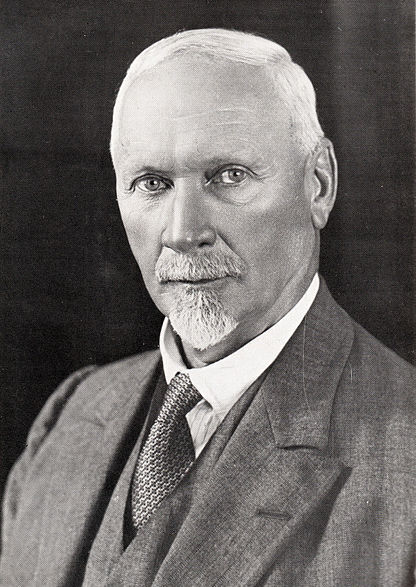
NICKNAME/ALIAS: Smuts, Jan
ACHIEVEMENTS: Prime minister of South Africa
NAME: Smuts, Christiaan
DATE AND PLACE OF BIRTH: May 24, 1870, Bovenplaats, (Riebeeck West), South Africa
DATE/PLACE OF DEATH/AGE AT DEATH: September 11, 1950, Irene, (Pretoria), South Africa. Aged 80
DISCIPLINE: Soldier/Politician
FIELD: Military/Politics
LANGUAGE: Afrikans, English
PARENTS: Jacobus Abraham Smuts; Cato (Maiden name unknown)
SIBLINGS: One brother; one sister
SPOUSE: Isie Krige
CHILDREN: Jan; Japie; Koosie; Catherina; Louis Annie; Susannah; Sylma
EDUCATION: School in Riebeeck; West Victoria College, Stellenbosch; University of Cambridge, England; Inns of Court Law School, London
MAJOR WORK: "Holism and Evolution"
LIFE AND TIMES:
After graduating in law in England, Smuts returned to Cape Town in 1895. Finding legal work scarce, he began writing book reviews and poetry and through writing reports of parliamentary debates became interested in South African politics.
At the time, the Cape Colony was headed by English-born Prime Minister <collaborated with> Rhodes*. His administration, backed by both the English and the Afrikaaner Bond party (an organization of farmers), was trying to deal with Boer hostility in the independent republic of Transvaal.
Transvaal leader Paul Kruger was determined to resist further annexation of land by the British. Smuts agreed with Rhodes's policy of a united Africa, stretching from the Cape to the Zambesi and beyond, approved of both the imperial tie with Britain which guaranteed the defense of the country, and the liberal, so-called "color blind" policy of the Cape, and disagreed with the Boers' policy of racial inequality.
Nevertheless, in 1886, Smuts renounced his British citizenship and moved north to Johannesburg. Twelve years later, Kruger appointed him state attorney in Pretoria. As animosity between the Boers and the British worsened, Smuts tried to bring the sides together.
He introduced a law which provided a retroactive franchise for the non-Boer Europeans in the Transvaal. British emissary, Sir Alfred Milner, however, was determined to go to war with the Boers and persuaded Joseph Chamberlain, the British secretary of state for the colonies, that armed conflict was inevitable.
The Boer war began in 1899. Smuts fought with the Boers while still state attorney, alternating between the front and his office in Pretoria. When Pretoria became occupied by the British in June, 1900, Smuts abandoned the city and became a full-time soldier. He led 350 men on a 300-mile trek from western Transvaal across the Orange Free State and into the Cape Colony.
By November, 1900, he had reached the Western Province. His force increased to 1,000 but in April, 1902, the Boers surrendered and Smuts and his force, only 120 miles from Cape Town, could not fight on alone. He was summoned by Lord Kitchener to take part in peace negotiations.
Under the peace terms, the Boer republics lost their independence. Smuts worked with General Louis Botha to protect the rights of Boers and to establish self-government. He traveled to London in 1905 to ask British Prime Minister Campbell-Bannerman, to restore self-government to the Transvaal, which Campbell-Bannerman granted in December, 1906.
After elections, Smuts became colonial secretary and minister of education in Botha's government. Both men pursued a policy of reconciliation, and in 1907, Smuts led the campaign to give the Cullinan diamond to Edward VII and his heirs. Smuts's campaign for a united South Africa succeeded in 1910.
As Minister for the Interior, Smuts had to deal with <negotiated with> Gandhi*, who was campaigning for Indians' rights in South Africa. Perplexed about how to cope with Gandhi's non-violent protests, Smuts eventually agreed to Gandhi's demands.
The First World War (1914-18) divided the Union. Smuts fought against pro-German forces in South Africa and in German South West Africa. After launching a campaign against the Germans in East Africa, Smuts went to England for an Imperial War Conference in March, 1917. Prime minister <appointed minister by> Lloyd George* recognized Smuts's qualities and had him appointed minister of air.
At the Versailles peace conference after the War, economist <worked with> Keynes* praised Smuts for his support for a fair peace for Germany, and Smuts correctly foresaw that the punitive terms imposed on Germany could lead to another war. Smuts also took a part in establishing the League of Nations.
After Botha's death in 1919, Smuts became Prime Minister of South Africa and remained in office until he was defeated by a coalition of the Nationalist and Labour parties in 1924. In opposition, he wrote "Holism and Evolution", a treatise partly based on the theories of evolutionist <based work on> Charles Darwin*. It was acclaimed as a valuable contribution to the philosophy of science. In 1933, he joined a coalition government with the nationalist party against the extreme nationalists, serving under the nationalist leader, General J. Hertzog.
When the Second World War broke out in 1939, Smuts argued that South Africa should join the war on Britain's side, and won the parliamentary debate by a narrow margin. Prime minister once again, he declared war on Germany. He represented South Africa at the 1945 San Francisco UN Charter conference. His party was defeated in 1948 at a general election.
ASSESSMENT: Successful in attaining a united independent South Africa, Smuts's acceptance of imperial ties still made him deeply distrusted within his own country.
EXTRA CONNECTIONS: While studying in England, wrote a book about American poet <wrote book on> Whitman*, but could not get it published
ONELINER: Jan Smuts, South African leader
BIBLIOGRAPHY:
Joseph, Joan, Jan Christiaan Smuts, South African Statesman, Bailey Bros. & Swinfen Ltd., Folkestone, England, 1970