Rolfe, John
ACHIEVEMENTS: Started Virginian tobacco export
DATE AND PLACE OF BIRTH: Baptized May 6, 1585, Heacham, Norfolk, England
DATE/PLACE OF DEATH/AGE AT DEATH: 1622, Colony of Virginia. Aged 37
LANGUAGE: English
DISCIPLINE: Virginia Colonist FIELD: Exploration
PARENTS: John Rolfe; Dorothea Mason
SIBLINGS: Edward
SPOUSE: 1) Unknown; 2) Pocahontas; 3) Jane Pierce
CHILDREN: By Pocahontas: Thomas. By Jane Pierce: Elizabeth
EDUCATION: Unknown
MAJOR WORK: None
LIFE AND TIMES:
In the spring of 1609, Rolfe and his first wife sailed from London for the English colony of Jamestown in Virginia. By now more and more English citizens were becoming interested in the idea of colonizing, and persuasion by people like geographer Hakluyt* and adventurer Raleigh* made the prospect especially appealing.
After King James granted a charter for a colony in 1606, a group of merchants and enthusiasts formed the Virginia Company to administer the settlement. Sailing with Rolfe were the new governor of Jamestown, Sir Thomas Gates, and a group of craftsmen, laborers, and members of the gentry. Nearly at its destination, however, the fleet of nine ships ran into a gale.
Rolfe's ship, "Sea Venture", was driven onto a Bermudan reef. The group stayed on Bermuda for some months, built two new ships, and finally arrived in Jamestown in May, 1610, 10 months after they were due.
They were horrified at what they found. The Jamestown settlement, which began with 500 people, had been reduced to about 60, all of them starving and some insane.
The winter of 1609-10 had been particularly cruel and their supplies had run out and their houses were in ruins. There were incessant fights, and misery prevailed. To add to Rolfe's despair, his wife died shortly after their arrival. Reluctantly, Rolfe and the new colonists decided the settlement was beyond saving. They had brought little food from Bermuda and there was nothing to spare in Jamestown.
The group decided to return to England, and set sail in June, 1610, about a month after they had arrived. They were not far down the estuary when they spotted the arrival of another ship from England, bringing a new Governor, the de la Warr*, fresh supplies and 150 new settlers.
Heartened by de la Warr's arrival, Rolfe, the rest of his group, and the surviving first settlers returned to Jamestown, agreeing to give it another go. De la Warr set up a more democratic form of government than had been imposed by Gates in 1609, and used his considerable personality to put fresh heart into the colonists.
De la Warr's main task was to find a means of support for the settlement. Many industries and projects had already failed. Rolfe suggested that tobacco might be made to grow. He was a smoker, knew that the use of tobacco was becoming popular in England, and had seen London merchants spending huge sums on South American tobacco exported by the Spanish.
Rolfe concluded that the tobacco grown by the North American Indians was too strong for English tastes, so looked elsewhere. Somehow, he managed to get hold of seeds of the fragrant "Spanish leaf" (possibly from the Spanish governor of Trinidad who was dismissed from his post in 1612 for "trading with the enemy") and planted his first crop. Satisfied, he sent a few rolls to England. It would be some months before he heard how they had been received.
Meanwhile, Rolfe planted his second crop, mixing seeds from Caracas, Venezuela, with Trinidadian seeds. He also sent a few rolls of this back to England. In 1613, enthusiastic word came from London about his first crop. Upon this news, virtually all the land in the colony was turned over to tobacco.
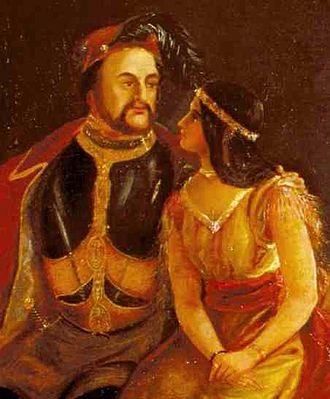
Rolfe met Pocahontas*, the daughter of an Indian chief who was being held as hostage by the acting English governor, Sir Thomas Dale. After she converted to Christianity, Rolfe received permission from Dale to marry her, in 1614. Rolfe and Pocahontas moved to Henrico, a settlement developed by Dale near Jamestown.
In 1615, they had a son, Thomas. In 1616, they visited England with a number of Pocahontas's relatives. London received them warmly. Pocahontas, commonly referred to as Lady Rebecca (the name she had taken when she became Christian) was the guest of honor at a banquet given by the Bishop of London and feted at court. But in 1617, she died, probably of influenza or smallpox, just as she and Rolfe were starting their journey back to Virginia.
Rolfe left his son in England and returned to America alone.
Rolfe became a councillor and sat in the House of Burgesses, the first representative legislative body to be established in America. He married the daughter of a colonist and over the years made many improvements in the growing of tobacco. In 1617, tobacco production had risen to 20,000 pounds, about 10-fold from the year before. Jamestown was now enjoying a booming economy. More settlers began arriving, and in 1620, the Puritans landed at Plymouth Rock, though their destination had been Jamestown. Rolfe is believed to have died in 1622, likely before an Indian attack that year in which 347 colonists were massacred.
ASSESSMENT: His initiative in planting tobacco seeds of the South American variety saved the Jamestown colony in Virginia from extinction and was the start of the American tobacco industry
EXTRA CONNECTIONS: None
ONELINER: John Rolfe, early Virginia tobacco-grower
BIBLIOGRAPHY:
Barbour, Philip L.,Pocahontas and her World, Robert Hale & Company, London,1969.
"The Story of John Rolfe", The Jamestown Foundation, Williamsburg, 1962